By early August the torch is going out. The bright ranks of orange and yellow tubes at the top of a red hot poker (Kniphofia) fade from the bottom up, the spike browns, and where the flowers were you get a fat green knuckle of seed pods leaning over the leaves. That leaning brown spike is the plant’s signal to you — and most gardeners answer it in one of two wrong ways. They either leave it, and let the plant pour a summer’s energy into seed, or they grab the shears and cut the whole clump down like a spent perennial. Kniphofia wants neither. It wants the spike gone and the leaves left exactly where they are.
Cut the spike right down to the base
Follow the flowered stem down past the leaves, into the clump, and cut it off as low as you can reach — right at the base, not halfway. A spike snipped off at mid-height leaves an ugly bare stump that stands there browning for the rest of the season and does nothing useful. Cut low and the whole stalk lifts out cleanly, and the eye goes straight back to the fountain of arching leaves, which is what you actually planted the thing for.
Cutting the spike off also does real work below ground. A finished poker is trying to set seed, and seed is expensive — it’s the single biggest draw on the plant’s reserves in late summer. Take the spike before the pods ripen and you keep that energy in the crown, where it builds next year’s flowering shoots. On the repeat-flowering cultivars — the long-season ones like ‘Bees’ Sunset’, ‘Tawny King’ or ‘Ember Glow’ — that redirected energy often buys you a second, lighter flush of spikes into September. The older one-flush species won’t always reflower, but they still bulk up better for the deadheading.
 . A close-up shot of vibrant red coleus plants with purple flower spikes — AI-generated illustration
Never shear the leaves
Here’s the cut that quietly weakens a poker: treating it like a herbaceous perennial and shearing the whole clump — leaves and all — to a stubble once flowering’s done. Kniphofia foliage is evergreen or semi-evergreen. Those arching grassy leaves keep working through autumn and stand over the crown all winter like a thatched roof, shedding rain away from the growing point at the centre. Cut them off in August and you strip that protection off exactly when the plant heads into its most vulnerable season, leaving a bare crown to sit open to every cold, wet week between now and spring.
So the rule is simple: the spike is what you remove, the leaves are what you keep. If a leaf has gone fully brown and dead you can pull or trim that individual leaf away, but leave every green and half-green blade standing. The proper haircut — cutting the old foliage down to make way for fresh growth — belongs to early spring, just before the new leaves push. Not now.
This is the same split you make on a couple of the poker’s strappy-leaved neighbours: with agapanthus you cut the flower stalk and spare the leaves, and crocosmia gets its spent spikes cut while the sword foliage stays to feed the corm. Deadhead the flower, protect the leaf — it’s the through-line for all three.
 The image shows muddy red seedlings in a garden with natural daylight — AI-generated illustration
The muddy seedlings you’re avoiding
There’s a second reason to take the spike before the pods split. Named kniphofias don’t come true from seed. Let a clump ripen and scatter its pods and next summer you’ll find seedlings coming up around the crown in washed-out, in-between shades — a bit of orange, a bit of dirty yellow, none of them the clean colour you chose. Given a few seasons the self-sown crowd muscles in and the border drifts to a muddle. It’s the same trap that turns a good phlox back to muddy magenta if you let it seed. Cutting the spent spike now closes that door before it opens.
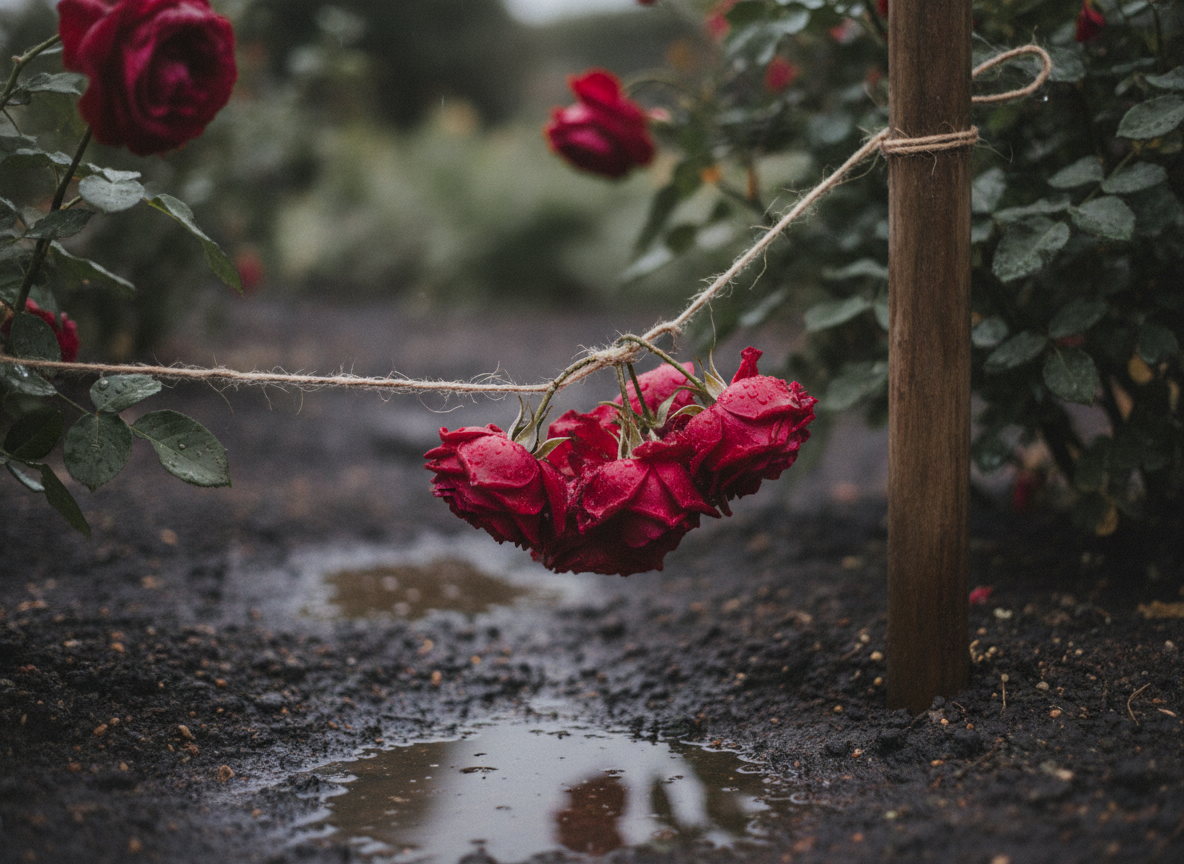 Red roses tied to a wooden stake above wet soil — AI-generated illustration
In a wet spot, tie the fan up
The one thing a red hot poker won’t forgive is a cold, wet winter with its feet in the water. Sitting crowns rot. If your soil holds moisture, or the plant is in a spot that stays soggy after rain, gather the whole fan of leaves in autumn and tie it loosely near the top with soft string — a topknot. That does two things: it lifts the leaves clear of the crown so they don’t trap wet at the centre, and it funnels rain out to the edge of the clump rather than down into the heart of it. Untie it in spring when you cut the old foliage back. On sharply drained soil you can skip the string, but the deadheading and the leave-the-leaves rule still hold.
At a glance
- Cut the spent spike to the base, not halfway — no bare stumps left standing.
- Deadhead as each spike browns through summer; repeat cultivars often push a second flush.
- Leave the leaves. The evergreen foliage protects the crown over winter — cutting it back is a spring job.
- Don’t let it seed. Named pokers throw muddy, off-colour seedlings if the pods ripen.
- On wet soil, tie the fan into a topknot for winter to keep the crown dry, and untie it in spring.
Get the August cut right and a red hot poker asks almost nothing else of you. Take the spike, spare the leaves, and next summer’s torches light on schedule.