Right now, in early August, cotton lavender (Santolina chamaecyparissus) is doing the one thing that divides gardeners: it’s throwing up hundreds of little acid-yellow buttons on wiry stems, held clear above that tight cushion of silver, thread-fine foliage. Some people love the lemon-and-silver combination. Others think the flowers cheapen the whole point of the plant, which is the foliage. Either way, the moment those buttons start to brown is the moment cotton lavender needs you — because left to its own devices, it doesn’t just get untidy. It falls apart from the centre out.
Why the dome collapses into a ring
Santolina is a Mediterranean sub-shrub, the same broad family of plant as lavender, and it behaves the same way. It builds a woody framework low down and clothes it in soft new growth each year. Flowering is expensive: as those stems extend and the buttons open, the plant puts its weight up and out. On a hot, dry site the mound holds. On richer soil, in a wet summer, or simply left a year too long, the flowering stems flop outward under their own weight and the tight silver dome splits open into a bare, brown-stemmed ring with a hole in the middle.
And here’s the part that catches people out: once that centre is bare old wood, it stays bare. Like lavender, cotton lavender will not reliably reshoot from thick, leafless brown stems. There are no dormant buds waiting there. So the whole game is to keep cutting into soft, leafy growth before the plant sprawls and exposes wood you can never cover again.
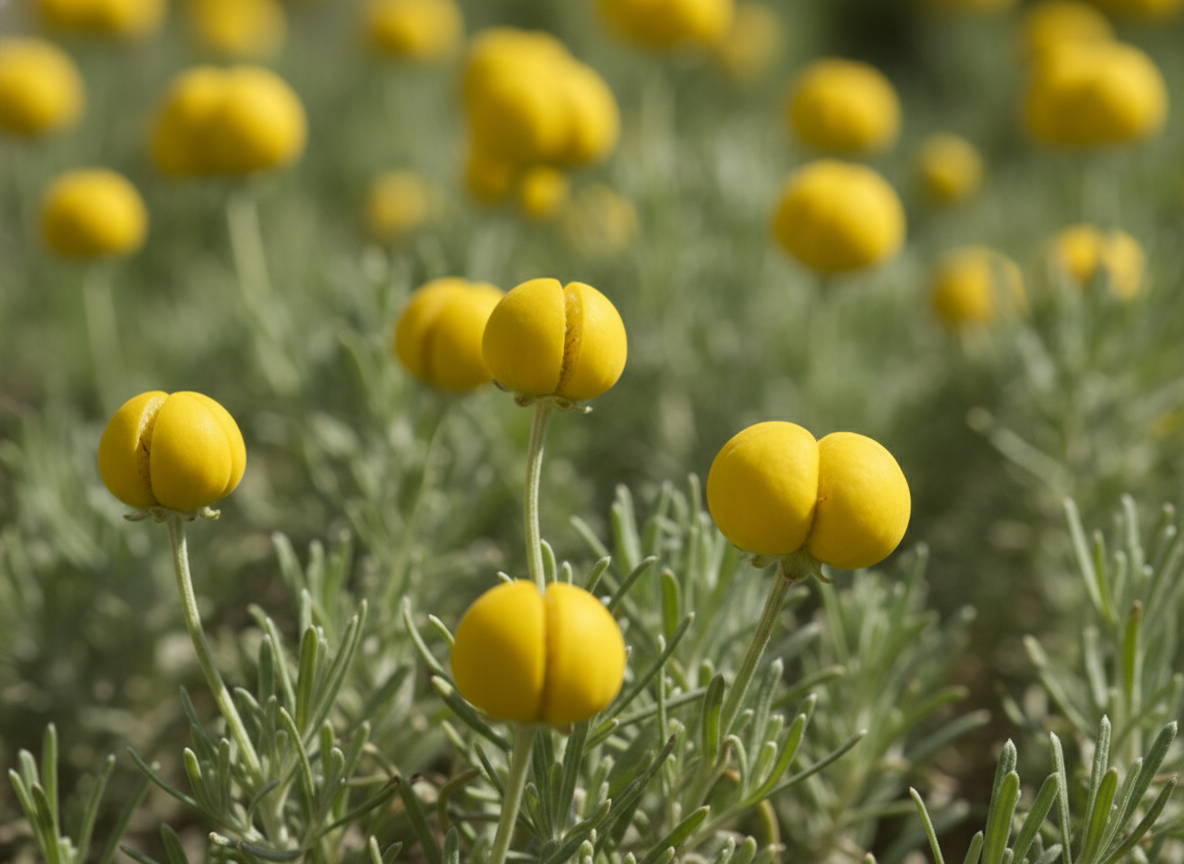 The image shows yellow cotton lavender flowers — AI-generated illustration
The two schools on those yellow buttons
Before you cut, decide what you want the plant to be — because there’s a genuine, long-standing split here.
- Foliage first (the knot-garden approach). If you grow santolina for its silver, or as low clipped edging, many gardeners shear the flower buds off before they open — usually in June — so the plant never spends energy flowering and stays a dense, even cushion. No yellow at all.
- Let it flower. Others enjoy the buttons: the lemon-yellow against silver is a proper Mediterranean look, and bees and hoverflies work them. If that’s you, you enjoy the show through July and cut once it fades.
Neither is wrong. But if you let it flower, the after-flowering cut in late July into August is not optional — it’s the one that stops the flop.
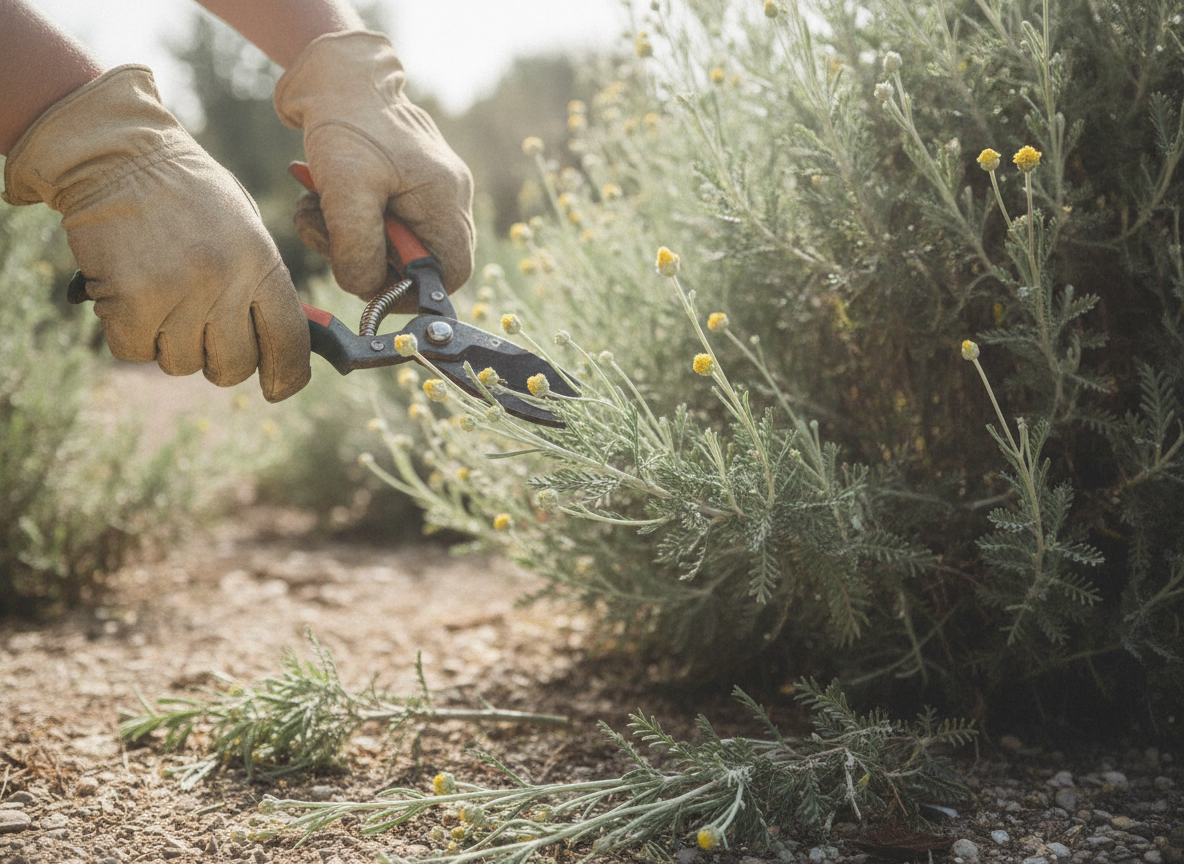 Hands in gloves pruning cotton lavender with secateurs — AI-generated illustration
The cut to make now
Wait until the flowers have clearly gone over — the buttons dulled from bright yellow to a tired ochre — and then do two things in one pass:
- Take off the spent flower stems, low. Follow each flowered stem back down into the leafy mound and cut it out as far in as you can still see soft foliage. You’re removing the tall, now-woody flowering wands that would otherwise splay and pull the plant open.
- Trim the whole plant back to a dome. With shears, shape the mound over — a light, even all-over cut of a few centimetres, rounding it into a tight cushion. The aim is a firm silver ball, not a flat-top.
The single rule that governs the whole job: stay in the green. Keep every cut in this-year’s soft, leafy growth. The instant your blades meet bare grey-brown stem, stop — that’s the point of no return. If you have to leave a stub of leaf to avoid cutting into wood, leave it.
This is exactly the discipline that keeps lavender from going woody and bald, and it’s the same reason hebe won’t grow back from bare wood. Silver and grey-leaved Mediterranean shrubs almost all share it: trim little, trim often, and never past the leaves.
The second cut that does the real shaping
One summer trim keeps santolina tidy, but it’s the spring cut that keeps it young. In mid-spring — once you can see fresh shoots breaking low down on the plant, usually around April — go back in and cut harder: reduce the whole mound by at least half, taking each stem back to just above those emerging new shoots.
That spring cut is safe because you can see exactly where the new growth is starting, so you cut to living buds rather than guessing. Done every year, this two-cut rhythm — a light shear after flowering now, a hard reduction in spring — is what holds a cotton lavender as a tight, dense dome for a decade instead of letting it stretch into a gappy, woody sprawl in three or four years.
Skip the spring cut and rely on the summer trim alone and the plant slowly climbs on its own bare legs. Skip both and you get the collapsed ring.
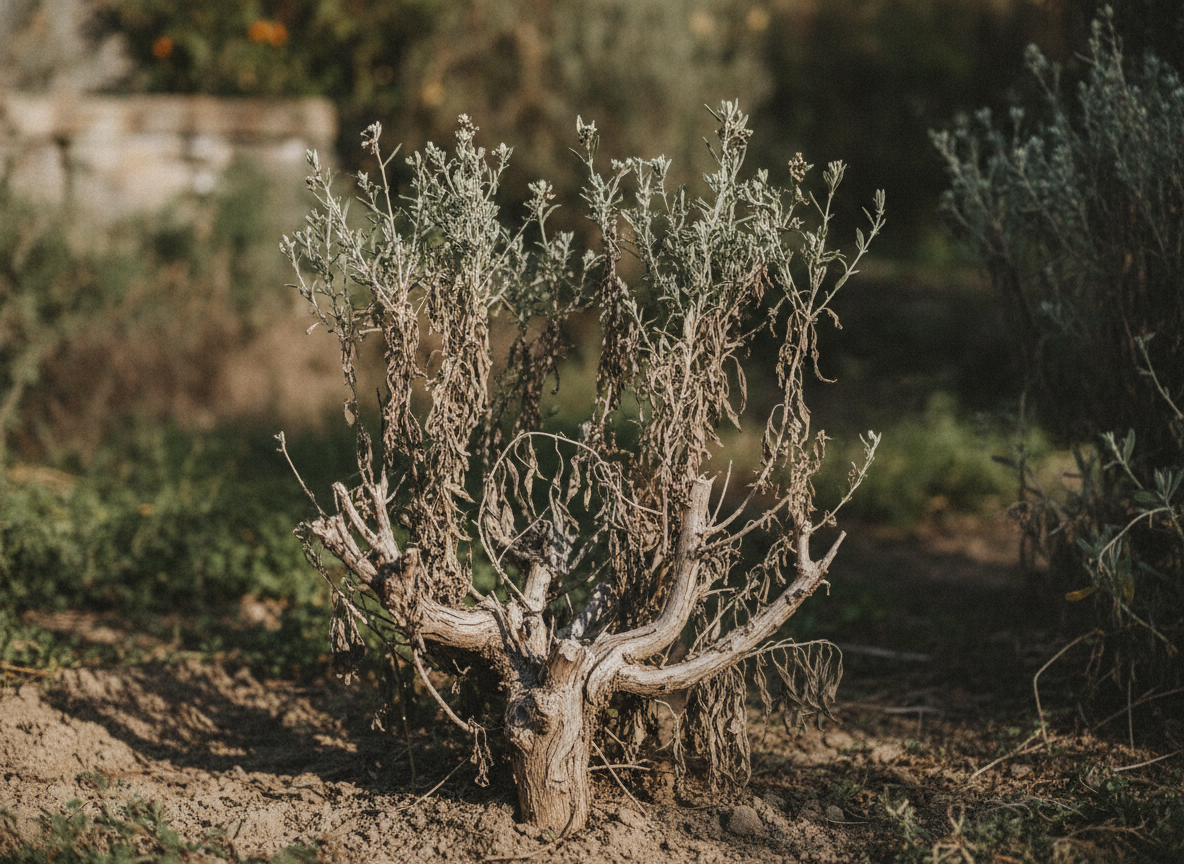 A cotton lavender plant with woody stems and some green foliage — AI-generated illustration
If it’s already gone bare and woody
Sometimes you inherit a santolina that’s already split open — a brown woody skeleton with a tuft of green only at the very tips. Be honest with it: a hard renovation cut into that old wood usually kills it, or leaves an ugly stump that never re-clothes. It’s not lavender-tough; it’s worse.
The better fix is to start again from the plant you already have. Santolina roots incredibly easily from summer cuttings: pull or cut a few non-flowering shoots 8–10 cm long, strip the lower foliage, push them into gritty compost, and most will root within weeks. By next year you have fresh, tight young plants to replace the tired one — for free. It’s the same escape route as an old lavender: don’t renovate the wood, replace the plant.
The one-line version
If you let it flower, shear cotton lavender all over into a tight dome the moment the yellow buttons fade — staying in the green, never into old wood — then cut it back by half in spring to living shoots. That two-cut rhythm is the whole difference between a silver cushion and a bald brown ring.
Not sure whether that silver mound is cotton lavender, a young lavender or curry plant — or exactly when its window closes in your garden? Cresco identifies it from one photo and tells you precisely when to cut, and when to leave it alone.