The shrub that saves its best for last
For eleven months of the year, beautyberry (Callicarpa bodinieri) is the plant nobody looks at twice. It’s a loose, upright deciduous shrub with plain green leaves and a scatter of tiny lilac flowers in summer that you’d walk straight past. Then the leaves fall, and the stems light up.
From October onward, bare branches are strung with tight clusters of berries in a violet-purple so bright and so metallic it looks artificial — a colour almost nothing else in the garden produces. They line the whole length of the stem like beads on a wire, and they hang on long after the foliage has gone, carrying the display deep into winter.
Which is exactly why reaching for the secateurs now is the one mistake that undoes the plant. Those berries are the entire point of growing it, and an autumn cut lops off the very thing you waited all year for. The prune beautyberry wants comes months later, when the show is finally over.
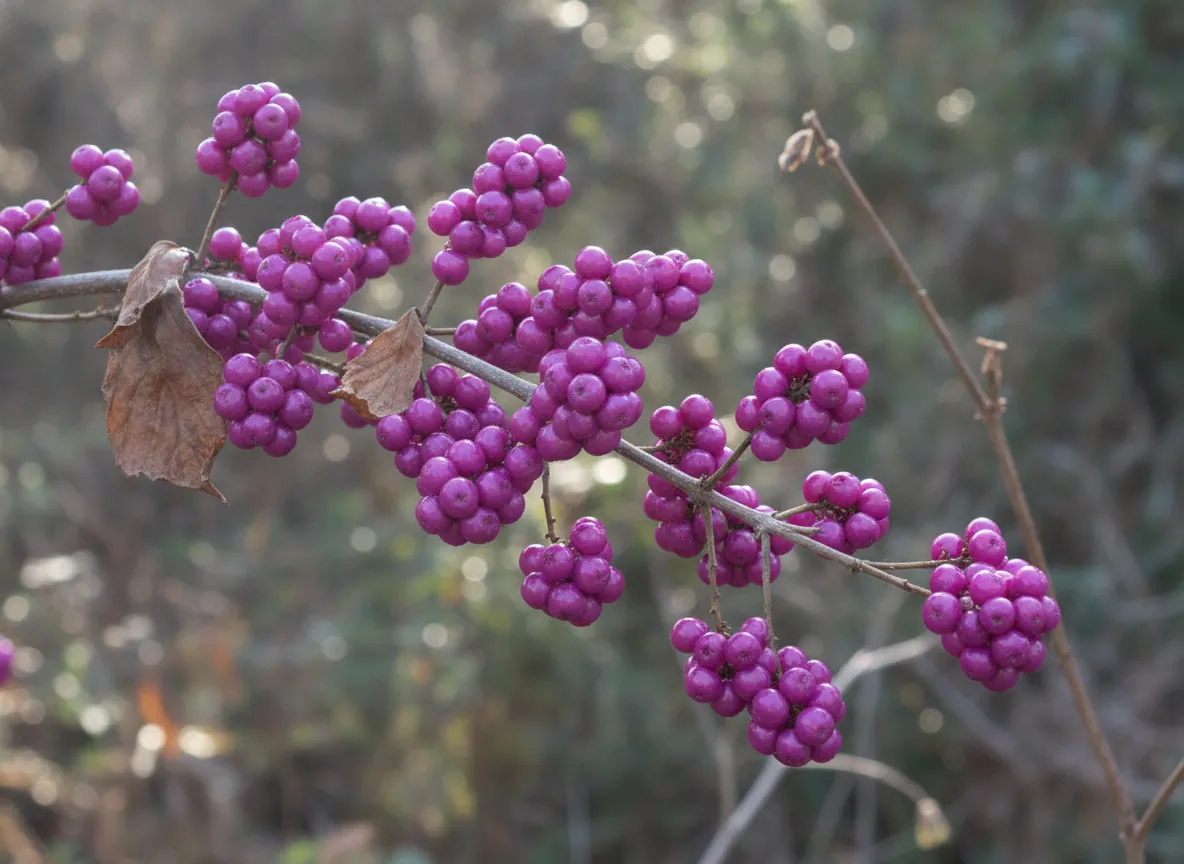 Purple beautyberries on a branch with soft background bokeh — AI-generated illustration
Why the berries last — and why you leave them
The berries aren’t just bright; they’re persistent, and that’s half their value. Birds find them fairly low down the menu, so unlike a rowan or a holly that’s stripped bare in a week, a beautyberry keeps its violet beads for weeks or even months. The birds do eventually take them in a hard spell, but you get the long display first.
That makes it a winter-structure plant in the same bracket as a sedum left standing for its seedheads or coneflowers held back for the birds: the dead-looking stage is the ornamental stage. Cut it off in the name of autumn tidiness and you’ve thrown away the best month the plant has.
So the rule for now is simple: hands off. Enjoy the berries, let the birds work through them at their own pace, and wait.
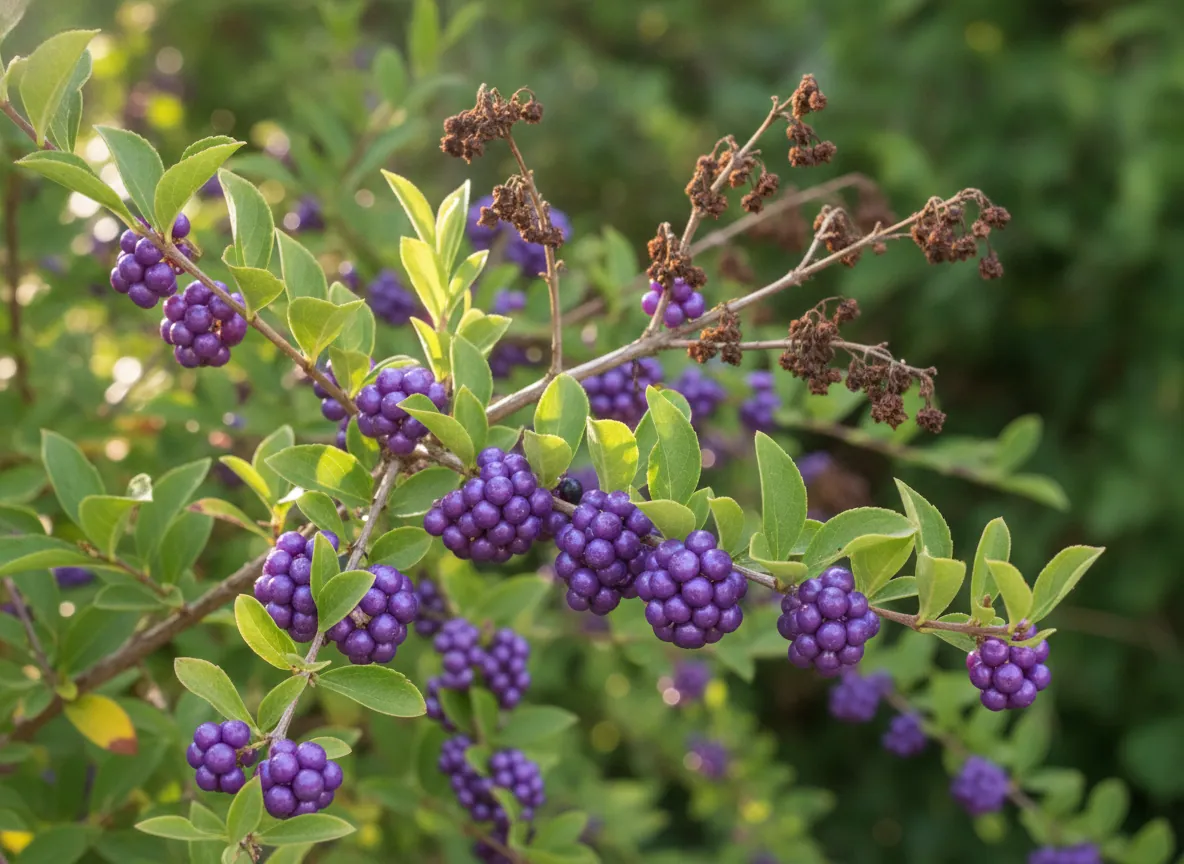 Beautyberry branches with purple berries and spent brown branches — AI-generated illustration
It fruits on new wood — which changes the timing
Here’s the fact that settles when to prune. Beautyberry flowers, and therefore fruits, on the current season’s growth — the new wood it pushes out each spring. It’s the same growth habit as a buddleia: whatever the plant makes this year is what carries this year’s display.
That has one liberating consequence. Because next autumn’s berries will form on shoots that don’t exist yet, a hard prune while the plant is dormant costs you nothing. You are cutting away old wood that has already done its job, and the fresh growth that replaces it will flower and fruit on schedule. Prune a spring-flowering shrub like forsythia or lilac at the wrong moment and you lose a season of bloom; prune beautyberry in late winter and you lose nothing at all.
So the question isn’t whether a hard cut is safe — it is. The only question is when, and the answer is: after the berries have gone and before the new growth starts.
The late-winter cut
Wait until late winter or very early spring — roughly February into March, once the worst frosts have passed and the berries are spent, but before the buds break. On a mild, dry day:
- Take out the dead and the weak first. Remove any stems that are dead, damaged or spindly, cutting them right back to a healthy main branch or to the base.
- Thin the crossing and congested stems. Beautyberry can get twiggy and tangled in the middle. Take out a few of the oldest, thickest stems low down to open it up and keep air moving through.
- Shorten the rest to shape. Cut the remaining stems back by a third to a half to a healthy bud or side-shoot, keeping the loose, upright habit rather than clipping it into a ball.
If an older plant has become a thicket of unproductive wood, you can renovate harder — cut a third of the oldest stems to the base each year over three years, or, on a vigorous plant, cut the whole thing down low in one go. Either way it breaks freely from the base and bounces back the same season. Beautyberry is tough — rated hardy to around −20°C — so a late-winter prune won’t set it back.
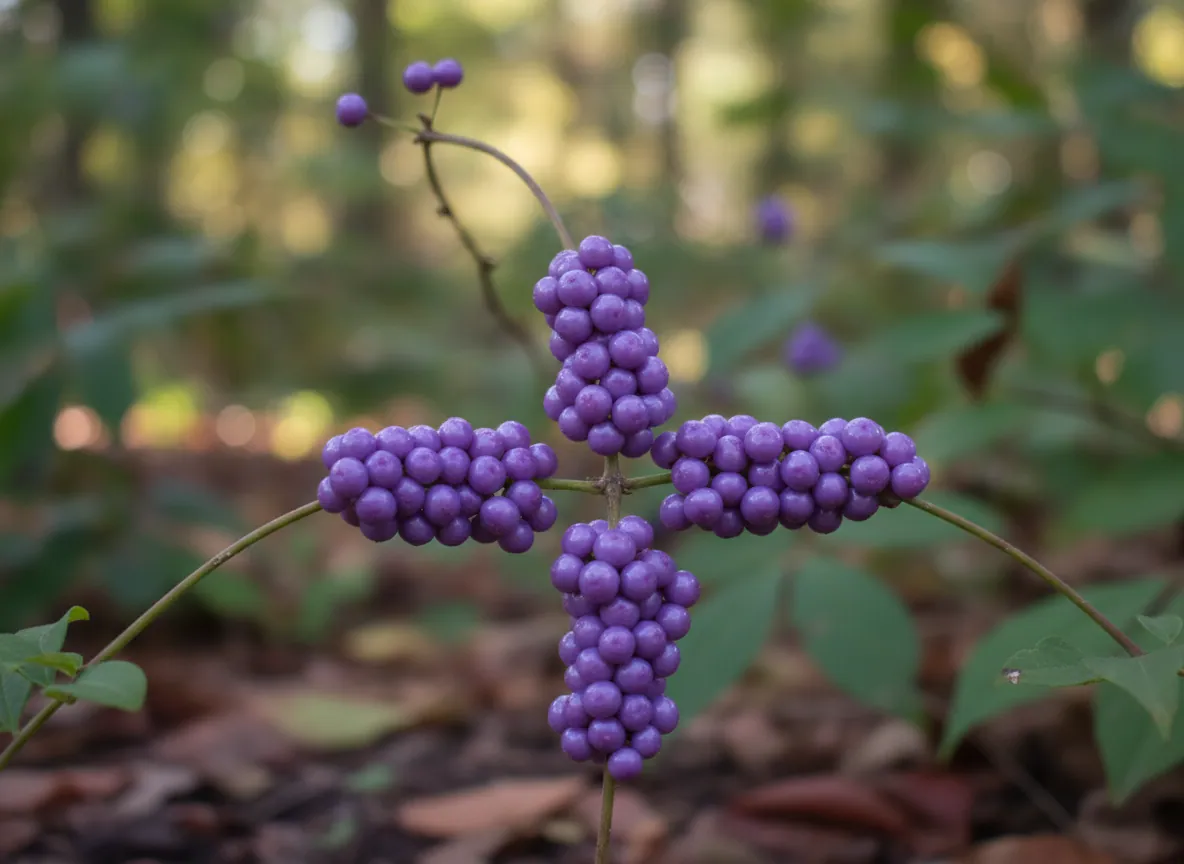 Purple beautyberry berries on a plant in a garden — AI-generated illustration
Plant in threes, or skip the berries
One thing that catches people out has nothing to do with pruning: a lone beautyberry often sets a disappointing crop. The flowers need cross-pollination for a heavy fruit set, so a single plant on its own can flower well and still give you only a sparse scatter of berries.
The fix is to plant two or three together — a small group, or a short informal row — so the flowers can pollinate each other. Give them full sun for the deepest berry colour (they’ll grow in part shade but fruit and colour up less), shelter from the worst wind, and fertile, well-drained soil. Get the group planting right and the autumn display is transformed.
In short
- Now (autumn/winter): leave it completely. The violet berries are the whole display, and they feed the birds through the cold.
- Late winter (Feb–Mar): prune while dormant — remove dead and weak stems, thin the congested middle, and shorten the rest to shape. It fruits on new wood, so you lose no berries.
- When planting: put two or three together in full sun for proper cross-pollination and a heavy crop.
Not sure which of your shrubs want a winter prune and which, like beautyberry, should be left well alone until the show is over? That’s exactly the plant-by-plant timing Cresco works out for your own garden and local weather.