The tidy-up that quietly kills it
Gunnera is the plant people mean when they say “that giant rhubarb by the pond.” The leaves can span well over a metre, and by mid-October they start to collapse — edges browning, stems softening, the whole thing slumping into a heap. The instinct is obvious: cut the lot off, barrow it to the compost, and leave a neat bare crown.
That neat bare crown is exactly what dies.
The growth buds for next year sit clustered on top of the crown, fully exposed once you strip the leaves away. They are among the most frost-tender parts of the whole plant. Leave them naked through a hard frost and you don’t get a smaller gunnera next spring — you get a dead one, or a crown that rots from the damaged centre outward. The leaves you just carted off were the insulation those buds needed.
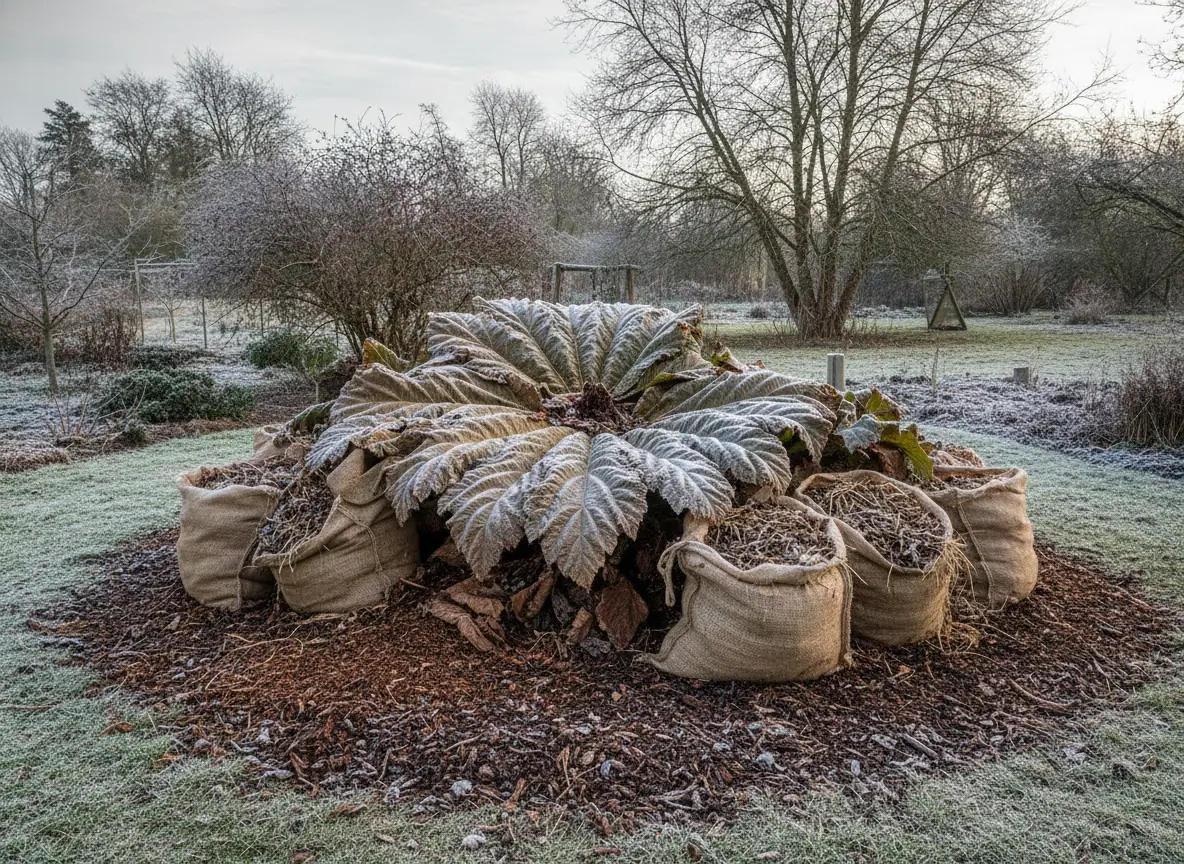 Gunnera plant with leaves folded over the crown, surrounded by burlap sacks — AI-generated illustration
What to do instead — and when
The method is almost comically simple, which is why it gets skipped:
- Wait for the leaves to brown and flop. This usually follows the first proper frost, often late October into November. Don’t rush it — while the leaves are still green they’re feeding the crown and the roots.
- Cut the leaf stalks, but keep the leaves. Sever each stem near the base. You’re not binning these.
- Fold the leaves back over the crown, underside up. Pile them into a thick, overlapping mound so the whole crown disappears under a dome of its own foliage.
That’s it. The leaves slowly break down over winter, so there’s very little to clear in spring — you just pull back whatever’s left as the new buds push through.
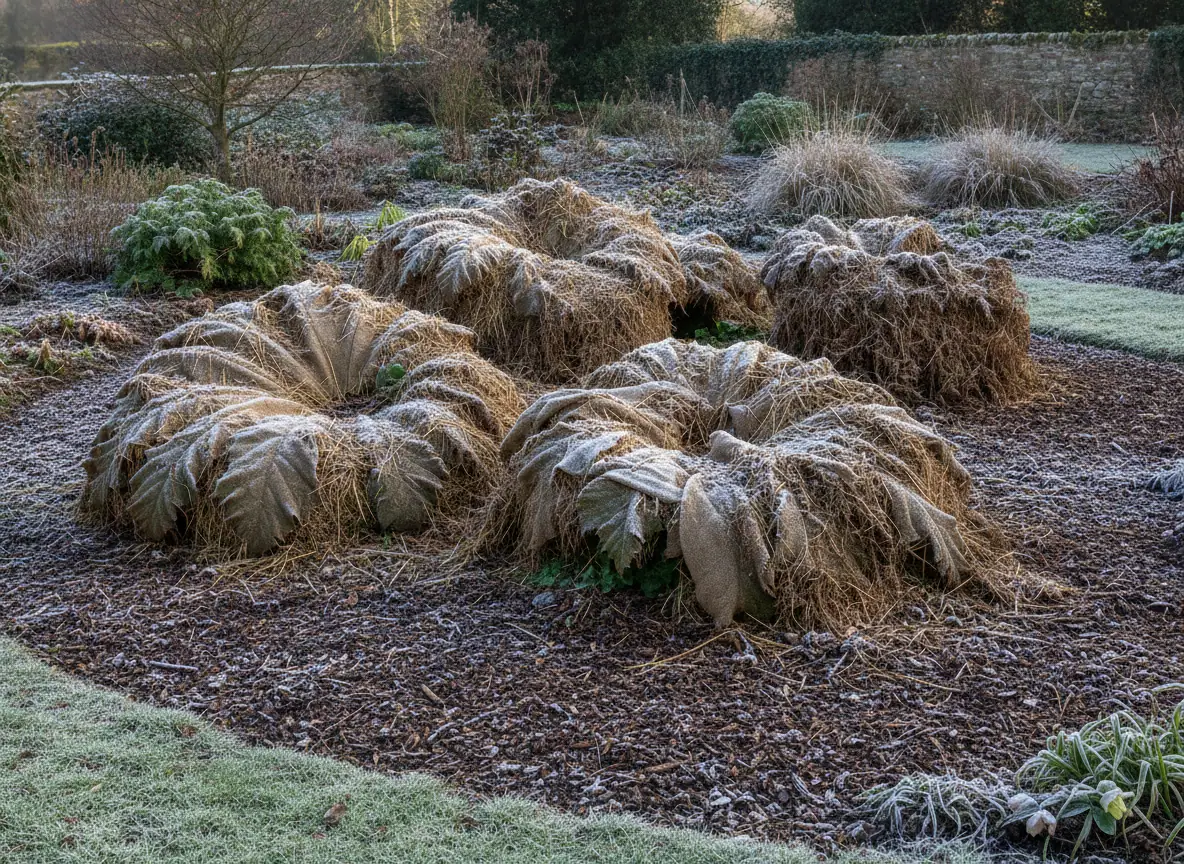 Gunnera plants covered with protective layers in a frosty winter garden — AI-generated illustration
For cold gardens and frost pockets, add a layer
In a mild garden, the plant’s own leaves are usually enough. If you’re in a frost pocket, a low valley, or anywhere that regularly drops well below freezing, give the crown a bit more:
- A dry mulch under the leaves — a handful of straw, dry bracken, or coarse bark tucked over the crown before you fold the leaves back on top.
- Fleece over the whole mound in the hardest spells, weighted at the edges so it doesn’t blow off. Take it off once the worst passes so the crown can breathe.
The point of every layer is the same: keep the buds dry and off the freezing air. Soggy, waterlogged protection is worse than none, so don’t pack wet material straight onto the crown.
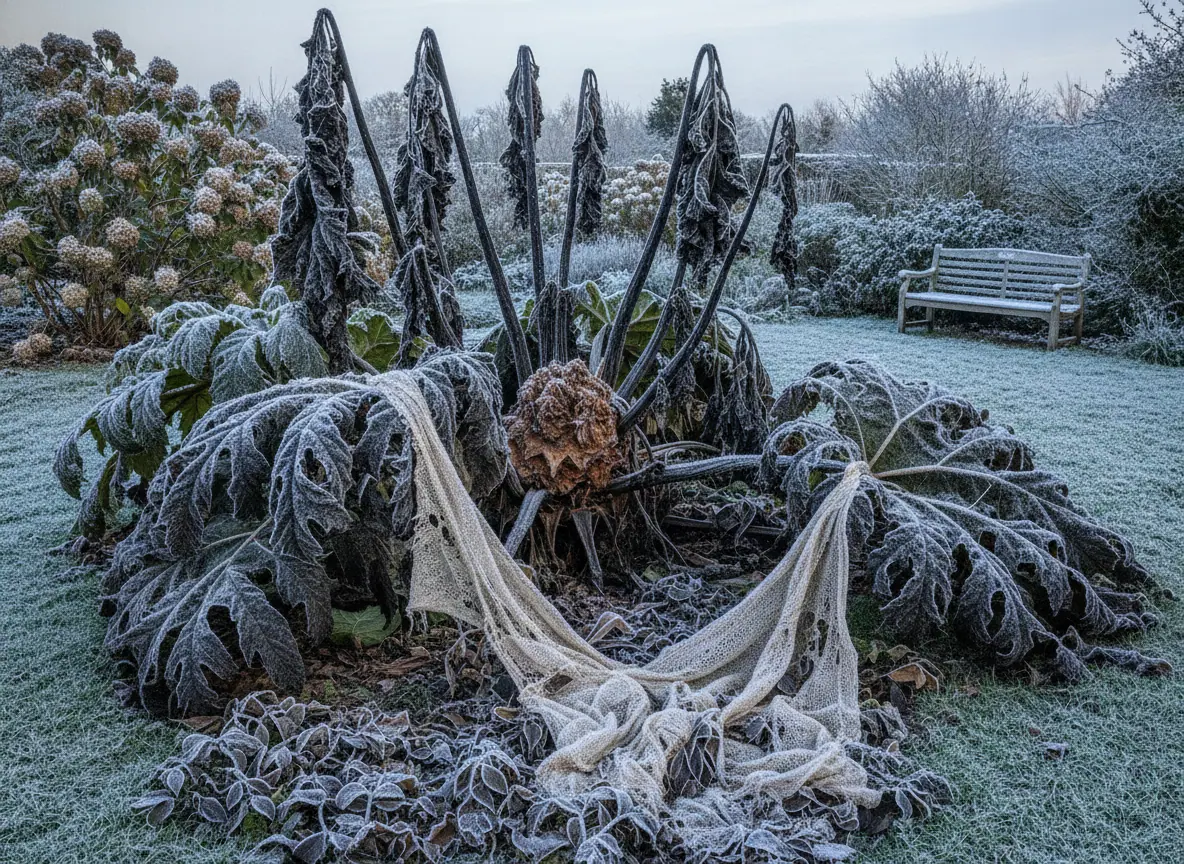 A frosted garden with a large, damaged gunnera plant in the foreground — AI-generated illustration
Why “it survived last year uncovered” is a trap
Plenty of established gunneras shrug off a mild winter with no protection at all, and that lulls people into skipping the job. Then one hard winter takes the lot. The older and bigger the clump, the more it can take — but the buds are tender every year, and the cost of covering them is ten minutes and leaves you already have. There’s no upside to leaving them bare.
If you’re weighing up other plants that get hurt by an over-eager autumn tidy, the same “leave it alone, protect the crown” logic runs through tree ferns before frost and the cannas you can leave in the ground. And if you’re timing the whole autumn clear-up around that first frost, dahlias follow the same signal.
The one-line version
Don’t bin gunnera’s dying leaves — cut them, fold them over the crown, and let the plant insulate itself. The leaves you were about to compost are the blanket that gets it to spring.
Not sure when the first frost is due in your garden, or which plants to cover first? Cresco builds the timing around your own location and the plants you actually grow — so the gunnera gets covered before the cold arrives, not after.