The short answer depends on your soil, not your nerve
Cannas (Canna x generalis and friends) are tender, jungle-edge plants pretending to be borderline hardy. Whether they come back next summer has almost nothing to do with how brave you are and everything to do with two things: how cold your garden actually gets, and how wet the soil stays over winter.
In a mild, coastal or sheltered city garden on free-draining ground, cannas will often sail through under a deep dry mulch and reshoot in late spring. On cold inland clay that sits sodden from November to March, the same plants turn to slime by February. It isn’t the frost on the leaves that finishes them — it’s frost reaching the rhizome, and rot getting in while it sits cold and waterlogged. So the honest answer to “can I leave them in?” is: sometimes, and this post is about how to tell which garden you have — and how to lift and store them if the answer is no.
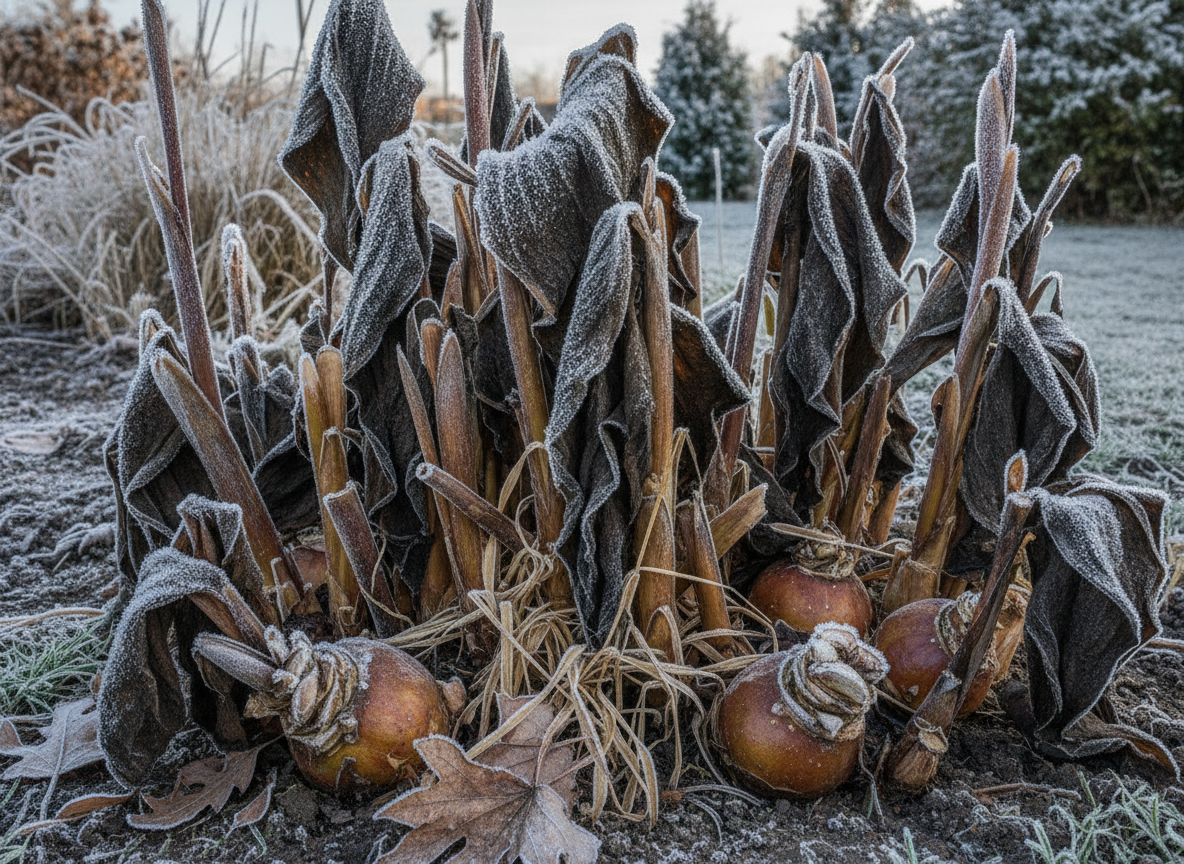 Frozen canna plant with frost-covered leaves and exposed tubers in a garden — AI-generated illustration
What actually kills a canna over winter
Two separate things go wrong, and it helps to keep them apart.
The first is a hard freeze reaching the rhizome. A light early frost only blackens the foliage — that’s cosmetic and, as with dahlias, it’s actually your signal to act. The danger is a deep, prolonged freeze that gets down into the top few centimetres of soil where the fat rhizomes sit. Cannas store water in those rhizomes, and when that water freezes it bursts the cells; a thawed, mushy rhizome never recovers.
The second is rot, and it’s the bigger killer in our climate. Cannas come from warm, seasonally wet ground that drains. Cold soil that stays saturated for months is a different thing entirely: fungal and bacterial rots move through the rhizome while it’s dormant and defenceless. This is why two gardeners a mile apart get opposite results — the one on sand with a south wall shrugs off the winter, the one on heavy clay in a frost pocket loses the lot. Drainage and cold decide it, not luck.
Wait for the first frost to blacken the top — then move fast
If you’ve decided to lift, the timing is the same as for dahlias, where you wait for the frost rather than jumping in early. Let the first proper frost knock the foliage down and blacken it. That frost does two useful jobs: it triggers the plant to pull the last of its energy back into the rhizome, and it tells you the season is genuinely over so you’re not lifting a plant that’s still feeding.
But don’t leave a blackened plant standing for weeks. This is the opposite of the gladiolus, whose shallow corm is happiest lifted before any frost at all — with cannas you want the first frost, then you want them out before a hard, ground-penetrating freeze follows. In most seasons that gives you a window of a week or two in mid-to-late autumn. Once the top is black, cut the stems down to a stub about 10–15 cm above the ground so you’ve got a handle to work with.
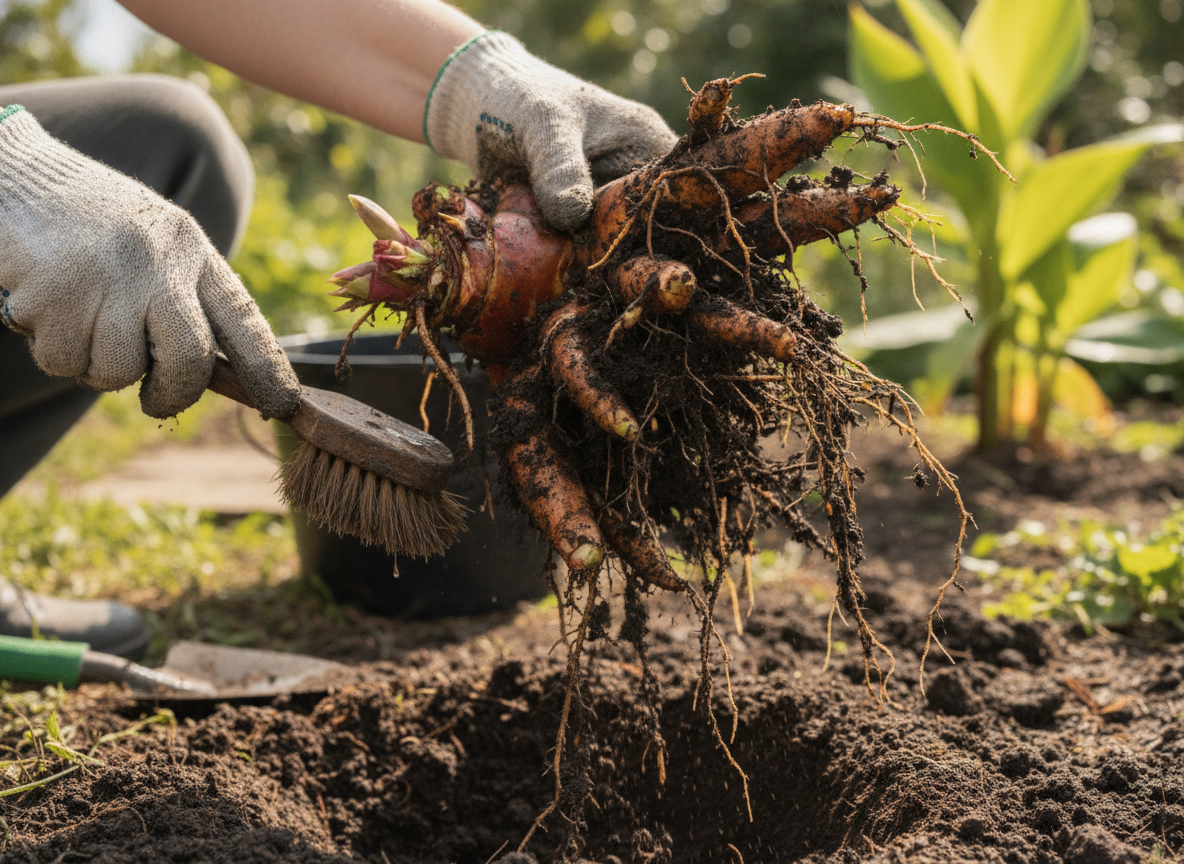 A person cleans soil from a canna rhizome with a brush — AI-generated illustration
Lifting and cleaning the rhizome
Drive a fork in well outside the clump — cannas make a surprisingly wide, chunky rhizome and a fork through the middle of it is a wasted plant. Lever the whole clump up gently and lift it out in one piece. Knock or brush off the loose soil, but don’t scrub or wash it: here cannas differ from bone-dry-stored bulbs, and a little clinging soil actually helps stop them drying out too far in store.
Trim the roots back lightly and cut any remaining stem down close to the rhizome. Then let the clump sit somewhere frost-free and airy for a day or two so the cut surfaces dry off and any wounds seal — a few hours of drying skin is enough to keep rots from starting, without letting the fleshy rhizome shrivel. You can divide now or in spring; most people find spring easier, when the pink growing buds (“eyes”) are obvious and you can be sure each division has one.
Store them frost-free and barely damp — not bone dry
This is where cannas break the rule you may have learned for gladioli and dahlias. A gladiolus corm wants to be stored dry; a canna rhizome is fleshier and will shrivel to a dead cork if you store it that way. The target for cannas is barely damp — moist enough not to desiccate, dry enough not to rot.
Pack the clumps in a box or crate of just-moist coir, spent compost, or bark — the medium should feel cool and faintly damp, not wet enough to squeeze water from. Keep the box somewhere frost-free but cool, around 5–10 °C: a frost-free shed, a cool garage, an unheated spare room. Check them once a month. If a rhizome is going soft or growing grey mould, cut the rot away or bin that piece before it spreads. If they’re looking wizened and light, mist the medium very lightly to top up the humidity. A conservatory or heated greenhouse works too — there you can simply keep the whole plant in its pot, kept almost dry, ticking over frost-free.
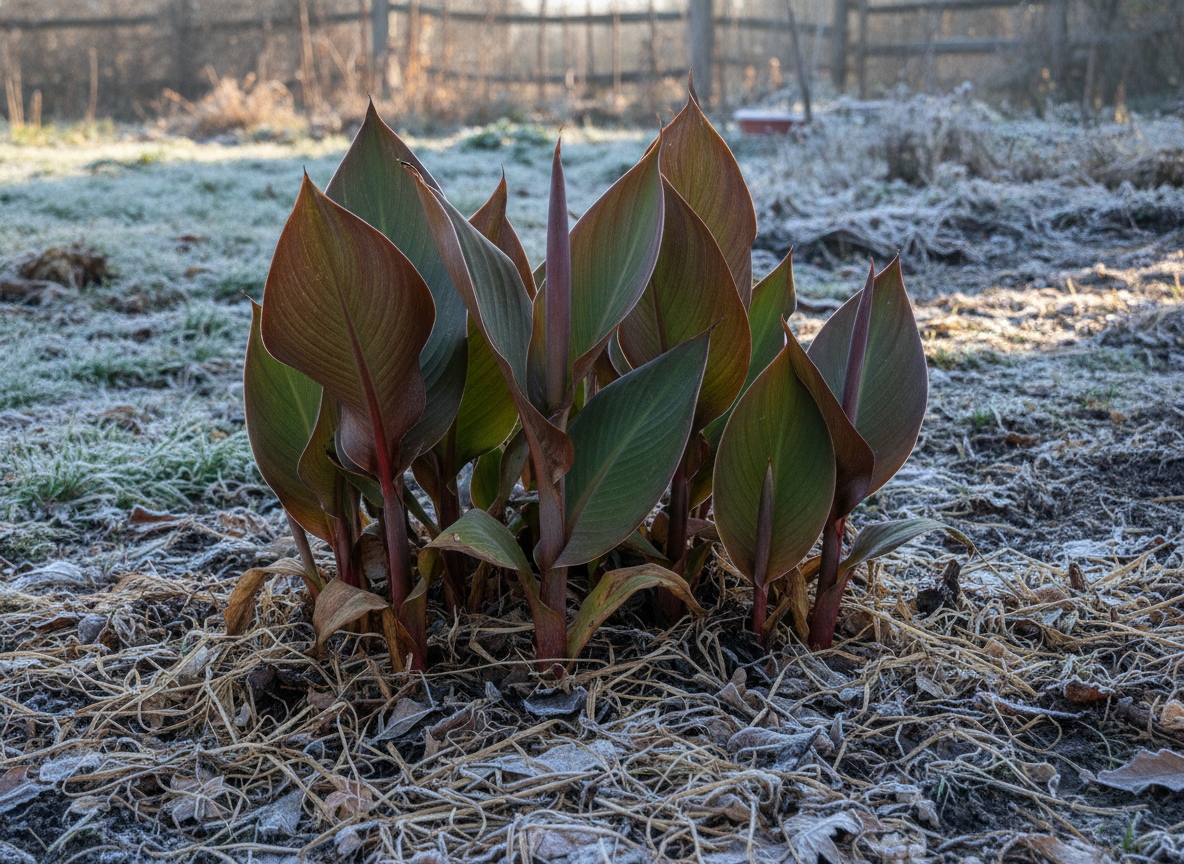 AI-generated illustration
Leaving cannas in the ground — when it actually works
If you’re on the mild, well-drained side of the ledger, leaving them in is a legitimate choice — and less work. After the first frost blackens the foliage, cut the stems back to a short stub and pile a thick, dry mulch over the crown: 15 cm or more of straw, bark, bracken, or leaf mould. The point of the mulch is not really warmth; it’s keeping the crown dry through the wet months, because winter wet, not cold, is what usually rots an in-ground canna. A cloche or a sheet of something over the top to shed the rain earns its keep.
It’s the same judgement call that decides whether tender perennials generally get lifted before the frost or left under a deep mulch: drainage and cold, not bravery. If you’re on heavy clay, in a frost pocket, or you simply can’t face losing a good clump, lift them — it’s the safe bet, and a lifted rhizome divides into more plants anyway.
Come spring: wake them, divide them, don’t rush them out
Don’t be alarmed when nothing happens for months — cannas are among the last things to stir. From April, bring the rhizomes into warmth and light, pot them into fresh compost, and start watering. This is the moment to divide: snap or cut the rhizome into pieces, making sure each piece has at least one fat growing eye, and pot them individually. Grow them on somewhere frost-free until the shoots are up and strong.
Then harden them off and — this is the bit people rush — do not plant them out until the last frost is genuinely past. A canna set out too early sulks for weeks or gets cut down by a late frost, undoing a winter’s careful storage. Late spring, once nights are reliably mild, is the time.
The one-line rule
Cannas survive winter in the ground only where it’s mild and free-draining — there, cut them back after the first frost and cover the crown with a thick dry mulch. Everywhere else, wait for that first frost, cut the tops to a stub, lift the clump, and store it frost-free in barely damp compost at 5–10 °C, checking monthly. Dry storage kills a canna; wet ground kills a canna; the sweet spot is cool and just-moist.
Not sure whether your garden is a leave-it-in spot or a lift-every-autumn one — or when your own first frost is really due? Cresco reads a photo of your plant, works out exactly what you’re growing, and tells you the job for this week in your own local weather, instead of a one-size-fits-all date.