At the end of September the Michaelmas daisies are doing the one thing almost nothing else in the border can: opening sheet after sheet of blue, violet and pink daisies just as everything around them winds down. And right on cue, the bottom third of the plant looks dreadful — lower leaves greyed over, dusted white, curling brown at the edges — while the flowers up top carry on regardless. The instinct is to grab the shears and cut the mess away. With this plant, at this moment, that’s the wrong move — and it doesn’t touch the actual problem.
Why the shears are the wrong reflex now
The plant is in full flower. Cut it back in late September and you throw away the entire reason you grow it — the last big hit of colour before the border goes over. But there’s a second, less obvious reason to keep the blades in the shed.
When you prune bee balm’s mildew away in July, it works because the plant has two clear months of warm growing weather left to push clean new shoots from the base. A Michaelmas daisy at the end of September has no season left. Cut it now and it won’t regrow — you’re left with a bare stump for the rest of autumn, and the mildew was never the plant’s real problem in the first place. Reaching for the shears feels decisive, but here it just swaps a flowering plant for a bald one.
 AI-generated illustration
The mildew is a root problem, not a leaf problem
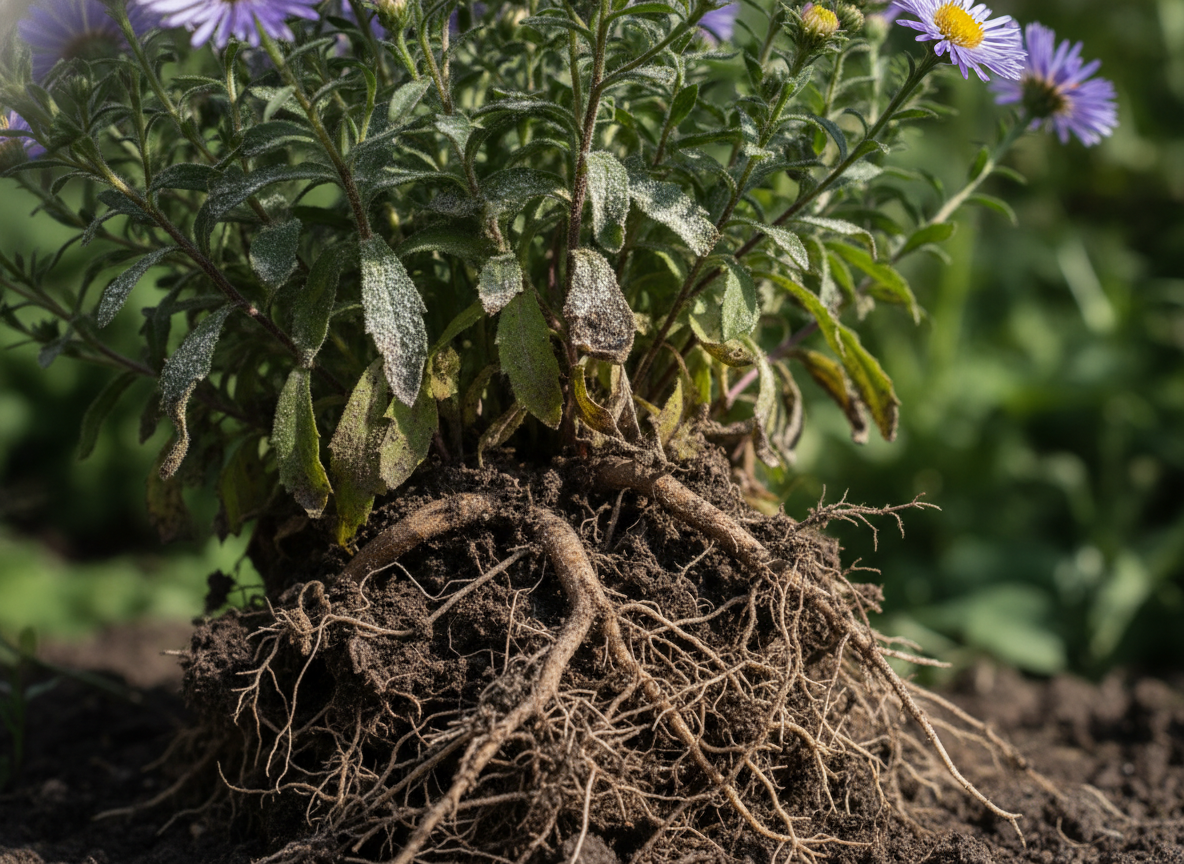
Powdery mildew looks like a damp disease, so the standard advice — improve air flow, don’t overcrowd — sends people the wrong way with asters. The New York Michaelmas daisy (Symphyotrichum novi-belgii, the classic tall border aster) has a different trigger: dry roots. It descends from moisture-loving plants and sulks the moment the soil goes short. A hot, dry late summer, a spot near a hungry hedge or a wall, a season you never quite got round to watering — the plant goes into stress, and stressed asters mildew almost on schedule.
That’s why the white always starts low and works up. The bottom leaves are the oldest and the furthest from what little moisture the roots are pulling, so they grey over first. By the time it reaches flowering height the lower stem is a spent, powdery mass. Spraying it now is painting over leaves the plant has already finished with, and cutting it off removes the symptom while the thirsty roots — the actual cause — carry on unchanged.
 A close-up of a diseased aster beside a healthy michaelmas daisy plant — AI-generated illustration
One aster mildews, the one beside it doesn’t
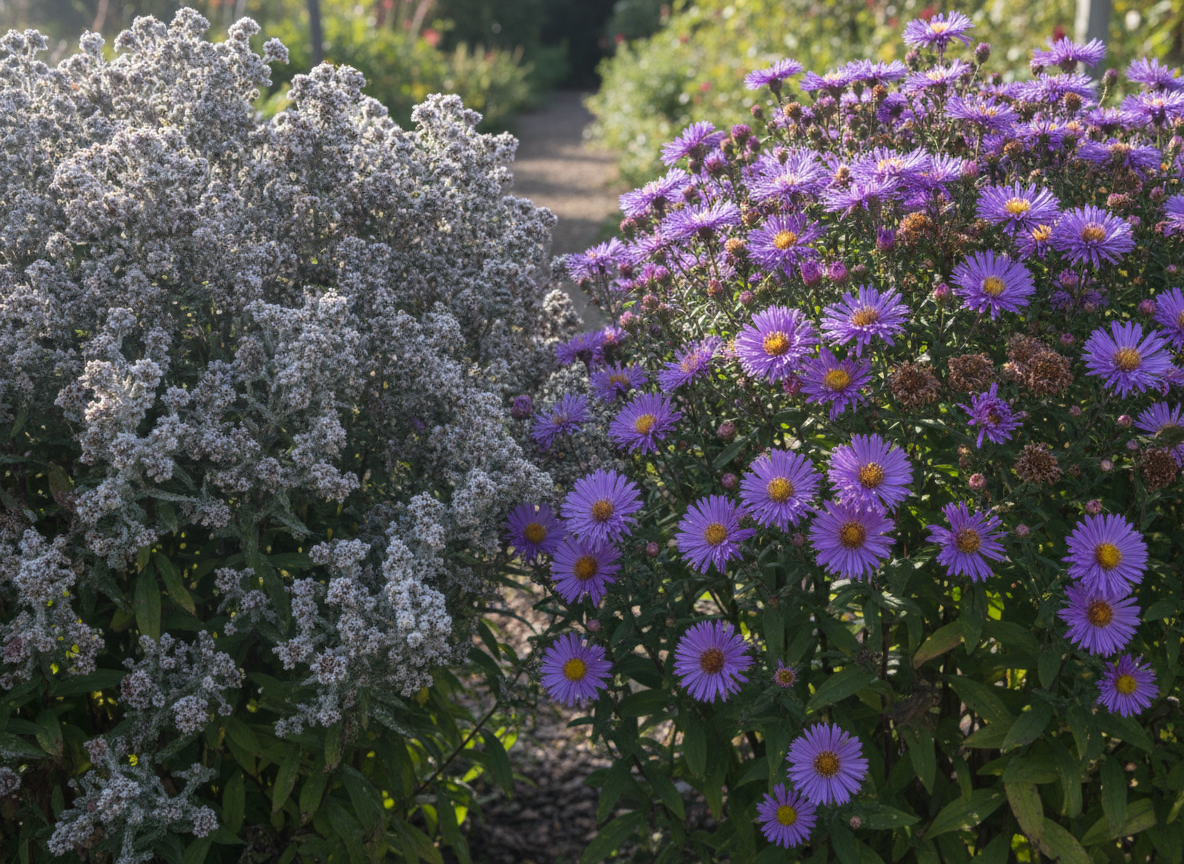
Here’s the part that saves you the annual battle. Not all Michaelmas daisies are equally prone. The smooth, glossy-leaved novi-belgii types are the mildew magnets. The rough, slightly hairy-leaved New England asters (Symphyotrichum novae-angliae — think ‘Andenken an Alma Pötschke’, ‘Harrington’s Pink’) and the airy small-flowered kinds (S. ericoides, S. lateriflorus, the reliable ‘Little Carlow’) shrug it off almost completely. The RHS makes the same point: rough foliage resists powdery mildew far better than smooth.
So if one clump mildews every single year while another three feet away stays clean, that’s not your watering — it’s the variety. The honest long-term fix for a chronic offender isn’t more spray or a harder cut-back; it’s to replace it in spring with a mildew-resistant type and stop fighting the plant.
 Bees on michaelmas daisies in natural light — AI-generated illustration
What actually helps, right now
While it’s flowering, work on the cause, not the leaves:
- Water deeply at the base in any dry spell — a proper soak that reaches the roots, not a daily splash on the foliage. This is the single biggest lever you have on this plant.
- Mulch the crown with compost or leaf mould to hold that moisture in through a dry autumn.
- Leave it standing and staked. If it’s flopping, tie it up rather than cutting it down — open, upright growth lets air move through and keeps the top healthy.
- Pick off the very worst lower leaves by hand if the tattiness bothers you. That’s fine. Shearing the whole plant is not — you’ll lose flower with it.
- Deadhead spent sprays individually to keep fresh buds opening, but ease off as October comes so a few seedheads can form.
Note the spot while you’re at it: asters want full sun and soil that doesn’t bake. If yours is tucked against a fence in dry shade, that’s next spring’s job — move it somewhere open when you divide.
When the flowers finish: leave it, don’t cut it
Once the display is genuinely over — usually well into October, sometimes after the first frost — resist the autumn tidy. Leave the stems standing over winter. The seedheads feed finches, the hollow stalks shelter overwintering insects, and the crown of old growth is a frost blanket over next year’s buds. It’s the same logic behind leaving ornamental grasses uncut until spring and the last coneflower heads for the birds: the winter “tidy” trades structure, wildlife food and frost protection for bare soil nobody looks at in January.
Then cut everything to the base in early spring, as the new shoots appear. And spring is when the real mildew cure happens: lift and split a congested clump every two or three years. An old aster goes woody and bare in the middle, roots competing with themselves for the moisture they can’t spare — which is exactly the stress that brings the mildew on. A freshly divided plant is vigorous, open and far cleaner. The how-to for lifting and splitting a clump is the same either way; just do asters in spring rather than autumn, so the young divisions aren’t sitting cold and wet all winter.
Let Cresco keep the order straight
The confusing part isn’t any single cut — it’s that this plant wants the opposite treatment to its neighbours at every turn: don’t shear it now, water instead, leave it standing all winter, then cut hard and divide in spring. Miss the order and you either lose the autumn flowers or feed the mildew. That’s what Cresco’s pruning planner is built for — tell it what’s in your garden and it schedules each plant’s real job around your local weather, so “water now, cut in spring” lands in your list at the right moment and not a season early. Browse more seasonal pruning guides to get the rest of the autumn border right.