Every prune is a bag of free plants
Most of what comes off a shrub in autumn goes straight on the compost heap or in the brown bin. It’s worth pausing over that pile, because a surprising number of common garden shrubs will grow into whole new plants from those bare stems — with no propagator, no heat, no misting bench, and barely any skill. This is the trick called hardwood cuttings, and it’s the laziest, cheapest propagation there is. Push a pencil-thick length of dormant stem into the ground, walk away, and a year later you have a rooted plant that would cost you the better part of a tenner at the garden centre. It’s exactly how nurseries bulk up hedging, willows and dogwoods by the thousand.
The window opens as the leaves come down and runs right through to late winter, so late September is the moment to start looking at your prunings differently. From now on, before anything woody goes in the bin, ask whether it’s a shrub worth a second copy — a hedge you’d like more of, a dogwood with good winter colour, a rose you love. If it is, that “waste” is next year’s plant.
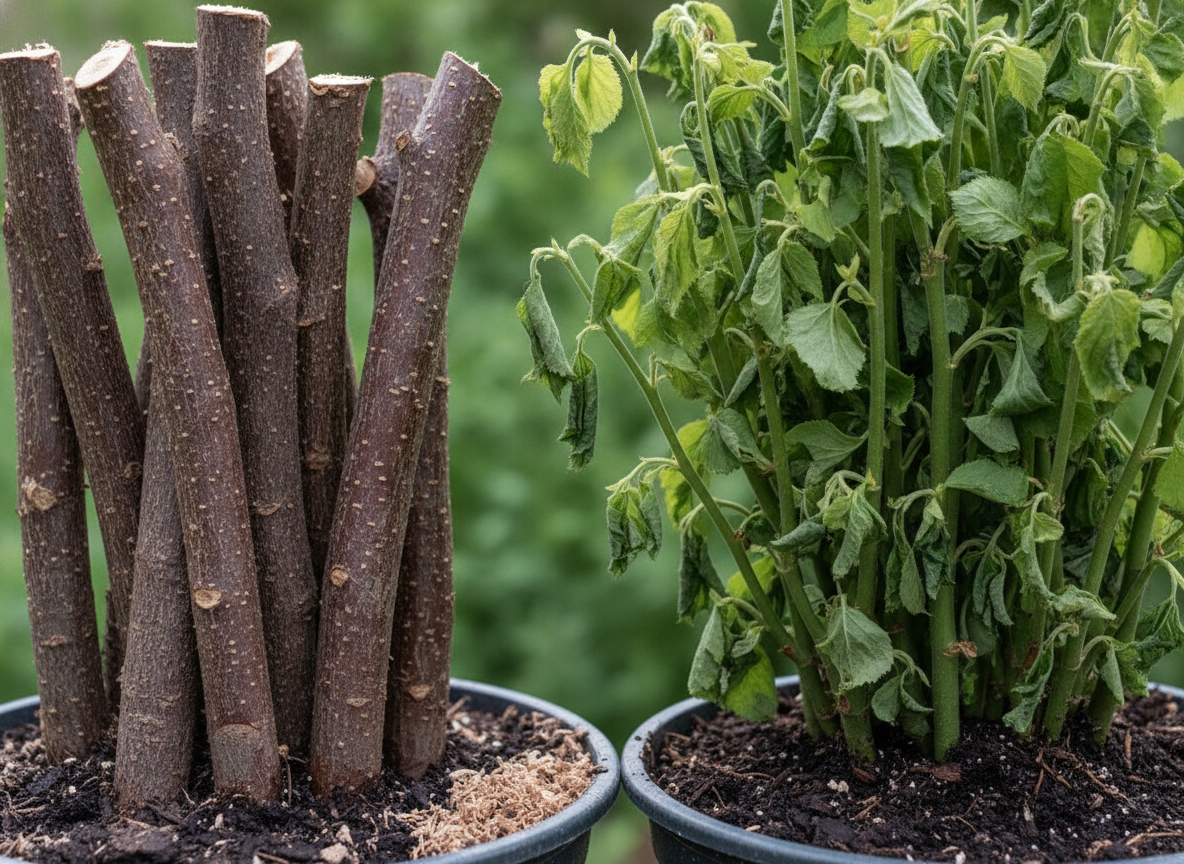 Hardwood cuttings and summer growth in pots — AI-generated illustration
Why dormant wood, and not summer’s soft tips
Cuttings come in three broad types, and the difference is really just the time of year and how firm the wood is. Softwood cuttings are the soft green shoot-tips you take in late spring; they root fast but wilt in a heartbeat, so they need warmth and humidity to survive. Semi-ripe cuttings come off firming shoots in late summer — this is what you’d take from a woody perennial wallflower to keep a young stock coming. Hardwood cuttings are the fully dormant, leafless, woody stems you take from mid-autumn onward, and they’re by far the most forgiving of the three.
The reason they’re so easy is the missing leaves. A dormant stem has nothing to lose water through, so it can sit in cold ground for months without wilting while it slowly, quietly grows roots at its own pace. That’s why you can genuinely stick it in the soil and ignore it until spring. Take them once the plant has dropped its leaves and gone properly dormant — the first light frosts are a fine natural cue. Right now, as the first leaves turn, is the moment to get a corner of the garden ready.
The shrubs that root almost by themselves
If you’re new to this, start with the near-guaranteed ones. Willow (Salix) and dogwood (Cornus) root so willingly that a stem left in a bucket of water will often do it on its own — and the very same stems you’ll coppice hard in spring for next winter’s colour can be lined out now instead of binned. Almost as reliable are the currants: flowering currant (Ribes), plus edible black, red and white currants and gooseberries. Blackcurrant cuttings are a classic — take them with all their buds left on, the same young wood you’re pruning for after picking, and each rooted stem throws up a proper bushy stool.
Worth trying every time: roses (ramblers, rugosas and vigorous shrub roses take best), buddleia, forsythia, mock orange (Philadelphus), weigela, deutzia, spiraea, viburnum, honeysuckle and elder. The rule of thumb is simple — fast-growing deciduous shrubs that flower on young wood are your best bets. Slow, choice things like magnolias, Japanese maples and most evergreens won’t play from a bare winter stem, so don’t waste the trench space on them.
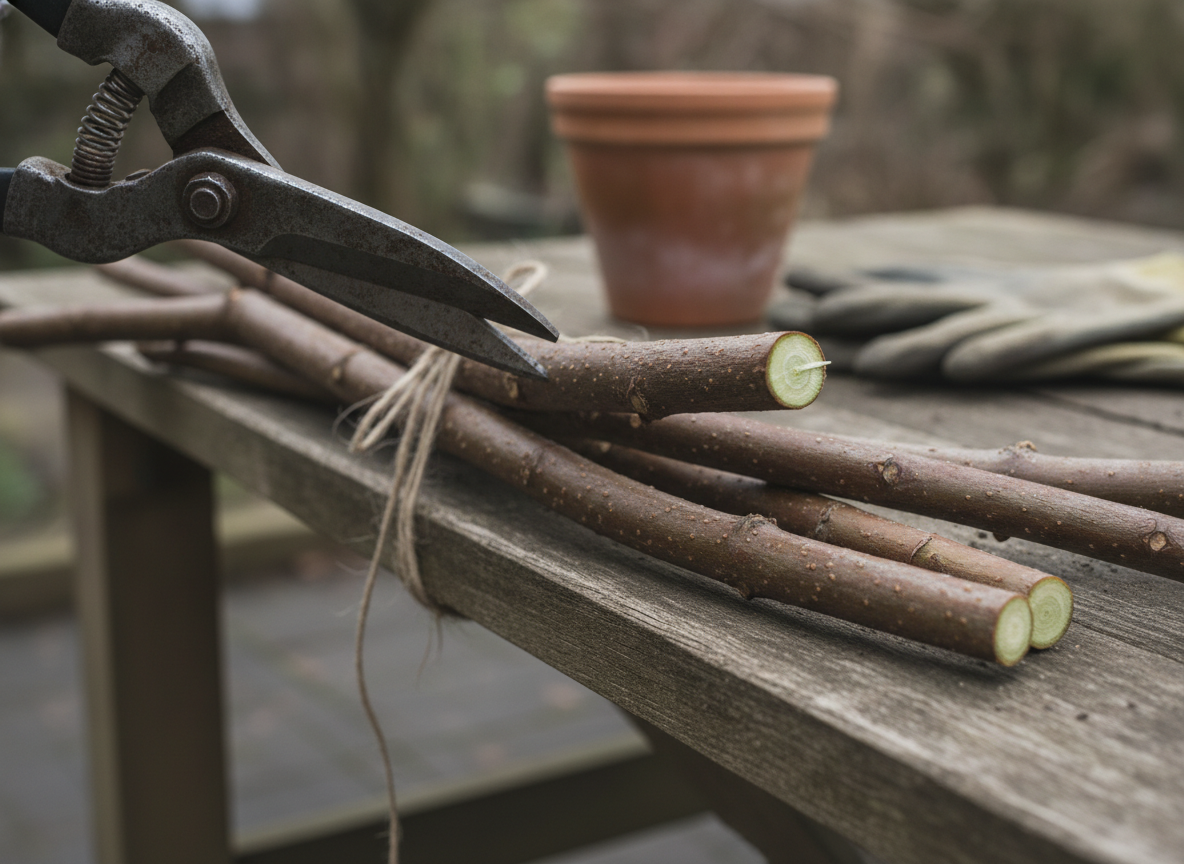 Pruning shears and hardwood cuttings lie on a wooden table — AI-generated illustration
How to cut one
Choose this year’s growth: pencil-thick, well-ripened wood that bends but doesn’t snap, from a healthy plant. Cut a length about 20–25 cm long (go longer, up to 30 cm, for willow and dogwood). Then make two cuts, and let their shape record which way is up — because a cutting put in upside down never roots. At the bottom — the end that goes in the ground — cut straight across, just below a bud or leaf joint, where rooting hormones concentrate. At the top, cut on a slant just above a bud. The slope sheds rain off the wound, and, more usefully, it’s your at-a-glance reminder of which end is which when you’re standing at the trench with a fistful of near-identical sticks.
Leave the buds on. If you want a rose or currant on a clear “leg” you can rub off the lowest few buds, but it’s optional. The easy shrubs need nothing more, though a dip of the base in hormone rooting powder does no harm and can nudge the trickier ones along.
Line them out and leave them alone
Cuttings root best somewhere sheltered and out of the way — a spare strip of border, the back of a bed, or deep pots if your soil is heavy. The traditional method is a slit trench: push a spade straight into the soil and rock it back and forth to open a narrow V, then trickle a little sharp sand or grit into the bottom for drainage. Stand the cuttings in about 15 cm apart with two-thirds of their length buried, so only two or three buds show above the surface, then firm the soil back hard against them and water once. In pots, use a gritty, free-draining mix and bury them to the same depth.
Then comes the only difficult part: doing nothing. They root slowly through winter and into spring, and the single biggest mistake is impatience — tugging one up to “see if it’s working” snaps the fragile new roots and kills it. Leave them undisturbed for a full growing season and lift them the following autumn, by which point the ones that took will have a proper root system and can go to their final home.
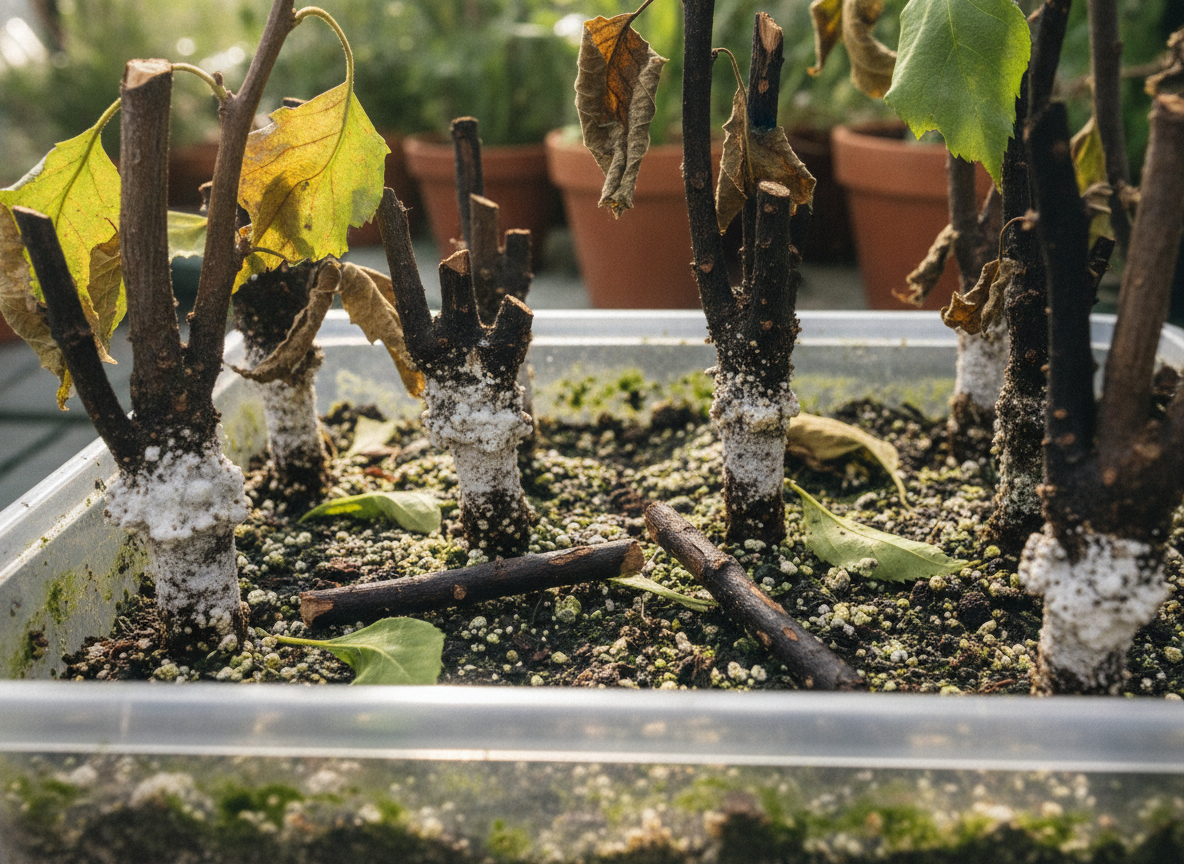 Hardwood cuttings in a clear planter show signs of mold and wilting leaves — AI-generated illustration
Where it goes wrong
Almost every failure comes down to one of a handful of things. Wet, heavy soil rots the base before it can root — add grit, or switch to pots. Soft, unripened wood shrivels; use only firm stems that snap cleanly. Planting upside down gives you nothing, which is exactly why the sloping top cut earns its keep. Frost heave can lift cuttings clear of the soil over a hard winter, so walk the row after a deep freeze and firm any that have popped up back down. And come spring, once the little leaves unfurl, don’t let them bake dry — a rooting cutting in April still needs watering in a dry spell.
The one-line rule
Take pencil-thick, pencil-length lengths of this year’s dormant wood from easy shrubs like dogwood, willow, currants and roses; cut straight across below a bud at the base and on a slant above a bud at the top; sink two-thirds into gritty soil in a sheltered spot, and then leave them well alone for a full year.
The fiddly bit is knowing which of your own shrubs will root this way, and spotting the moment each one has dropped enough leaf to be truly dormant. Cresco identifies what you’re growing from a single photo and tells you the job for this week in your own local weather — so the prunings you’d have binned become next year’s plants, right on cue.