Bergenia is not a perennial you cut down
Every autumn the shears come out and the whole border gets the same treatment — and every autumn a few plants get cut back that should never have been touched. Bergenia is the classic victim. The big leathery leaves start to look tatty by October, a few turn brown at the edges, and the instinct is to shear the clump flat along with the asters and the geraniums. Don’t. Bergenia is evergreen, and cutting it to the ground in autumn throws away the one thing it does better than almost anything else in the garden: it carries solid, glossy foliage — often flushed deep red and burgundy in the cold — straight through winter, right up to the first flowers in March.
Think of it less like a herbaceous perennial and more like a low evergreen groundcover that happens to flower. You don’t shear box or holly to the ground in autumn, and you don’t do it to bergenia either. The job here isn’t a cut at all. It’s a tidy — and it’s done with your fingers, not the secateurs.
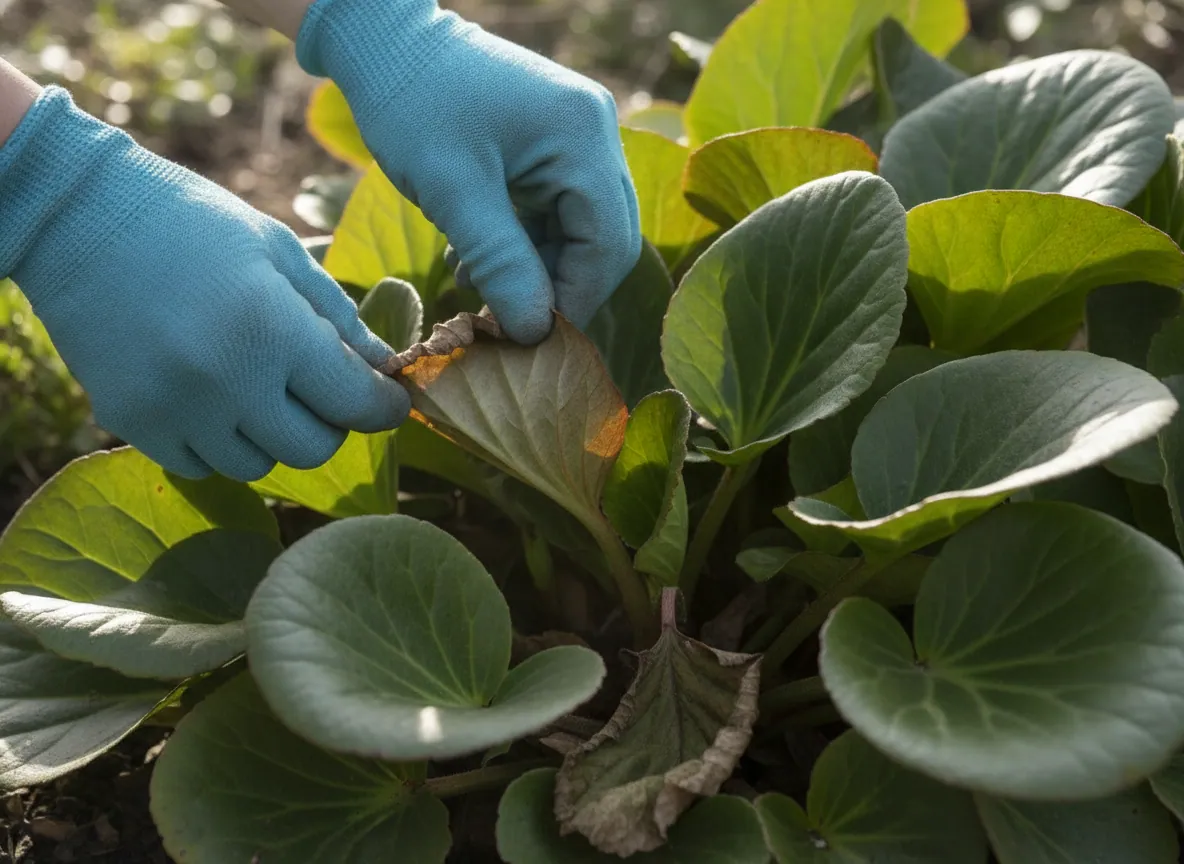 Bergenia leaves being pulled by gloved hands — AI-generated illustration
Pull the dead leaves, don’t cut them
The right autumn job on bergenia is simple: go over the clump and remove the leaves that have given up, leaving every healthy leaf in place. “Given up” means brown, yellowing, collapsed, slug-chewed to lace, or spotted (more on that below). Everything still green, firm and glossy stays — that’s your winter display, and the plant needs it.
And you pull rather than cut. A dead or dying bergenia leaf comes away from the crown with a gentle sideways tug — grasp the leaf stalk low down, pull it to the side and it detaches cleanly at the base. Snipping with secateurs leaves a stub of leaf stalk behind that then rots back into the crown, which is exactly the damp, decaying material you’re trying to clear. Pulling takes the whole stalk with it and leaves a clean crown that sheds water. If a leaf resists, it isn’t ready to come off — leave it.
There’s a second reason to clear the dead leaves rather than let them lie: slugs and snails. A bergenia clump with a skirt of collapsed, rotting leaves around its base is a five-star hotel for them over winter, and they’ll be straight onto the new foliage and flower buds in spring. Clearing the litter now removes the hiding place before they settle in.
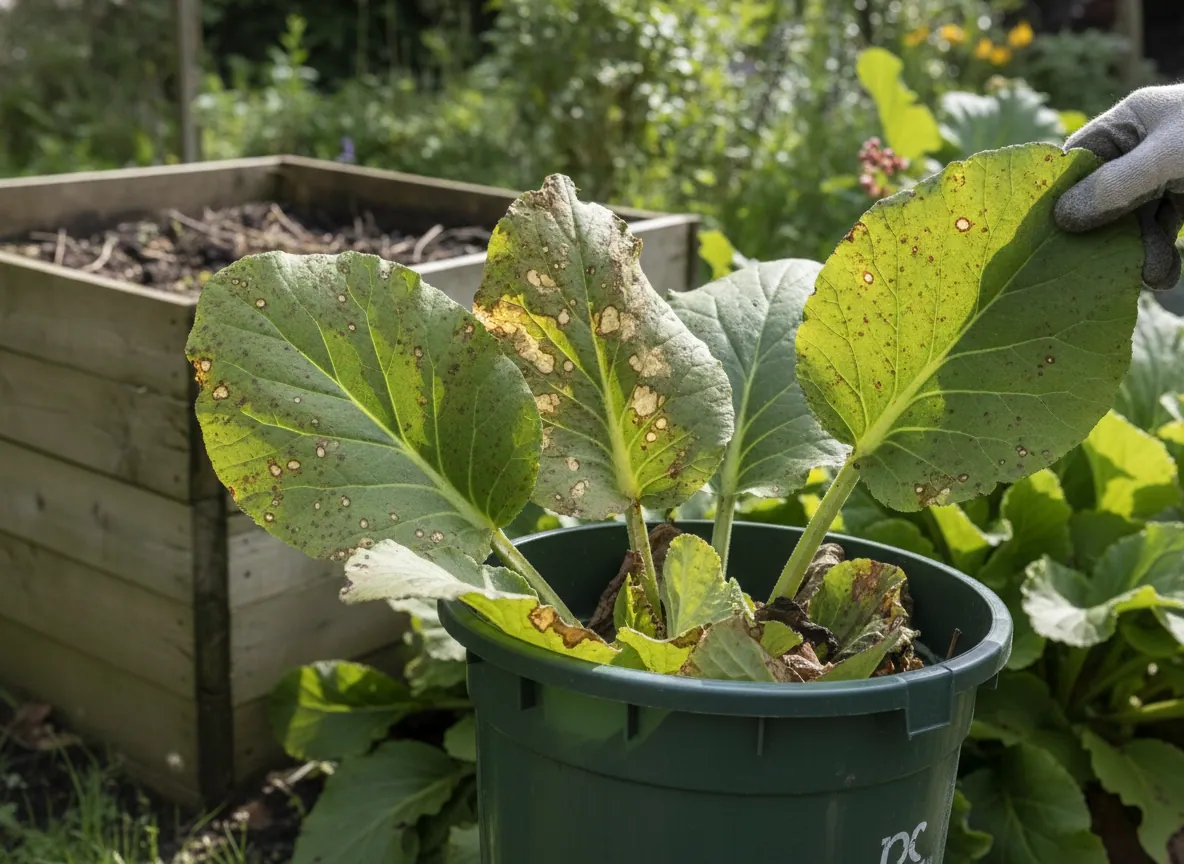 Bergenia plant with brown blotches on its leaves in a green pot — AI-generated illustration
Leaf spot: the brown blotches you should bin, not compost
If the brown you’re seeing isn’t a whole leaf dying but dark spots and papery blotches scattered across otherwise healthy leaves — often with a faint yellow halo around each one, spreading and merging over time — that’s bergenia leaf spot, a fungal problem rather than ordinary autumn wear. It’s cosmetic more than fatal, but it spreads, and a damp, crowded clump going into winter is exactly how it carries over to next year’s growth.
The response is the same pull-and-remove job, done a little more thoroughly. Take off every spotted leaf, not just the worst ones, and don’t leave the removed foliage lying around the plant. Crucially, don’t compost it — the spores survive in the heap and come back on the fork. Bin it or burn it. Then look at why the clump is sitting wet: leaf spot thrives where air can’t move. If the bergenia is hemmed in by taller plants that have now flopped over it, clearing those away improves airflow, and splitting an overcrowded clump (see below) does the same. Water, if you ever water it, goes on the soil and not over the leaves.
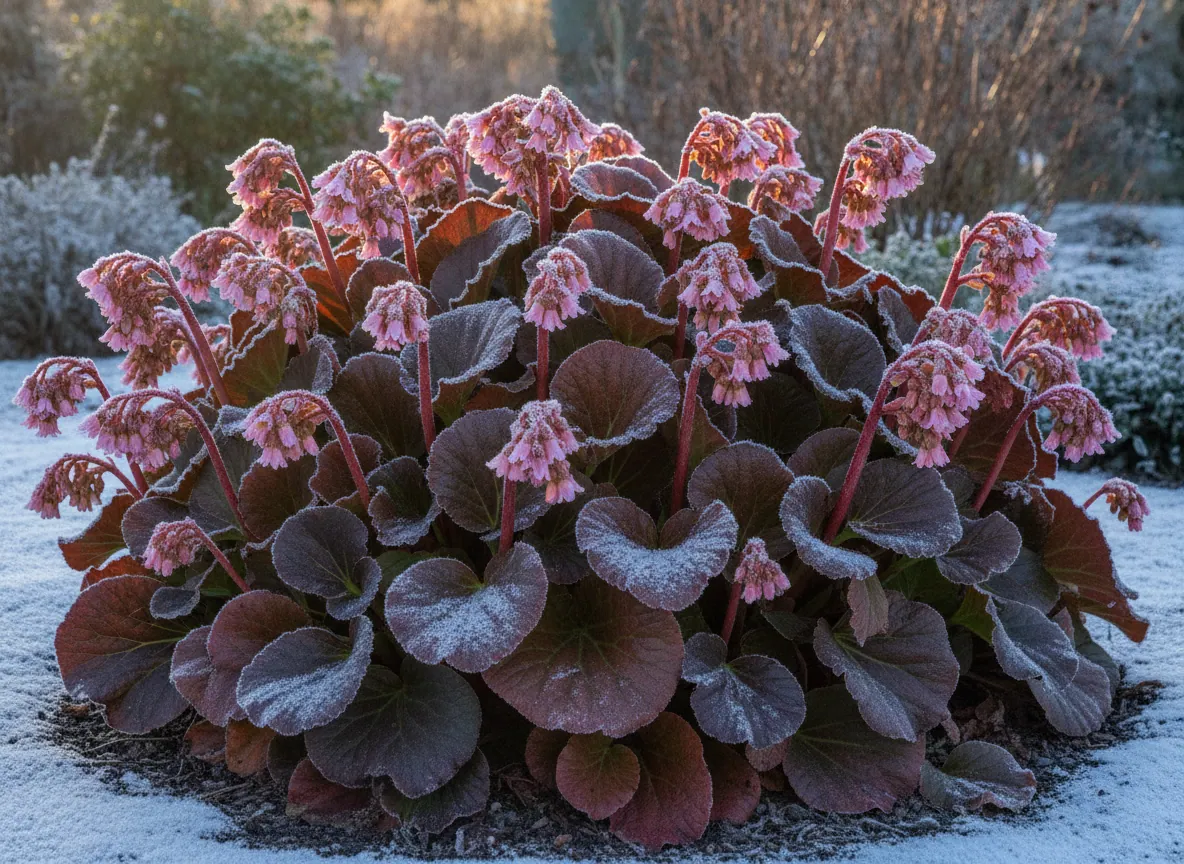 A bergenia plant with pink flowers and frost-dusted leaves in a winter garden — AI-generated illustration
The clump that earns its keep in winter
It’s worth being clear about what you’re protecting, because it’s easy to undervalue bergenia until the rest of the border has gone to brown sticks. Through November, December and January — when there is almost nothing else to look at — a well-kept bergenia clump is a mound of polished, paddle-shaped leaves, and in many varieties the cold turns them beetroot-red, bronze and maroon rather than green. That winter colour is the whole point of leaving the foliage on. Shear it off in October and you spend the darkest months looking at bare crowns and soil.
Then, just as winter loosens its grip, the payoff: thick stems push up sprays of pink, magenta or white flowers in late winter and early spring, often as early as February in a mild year, among the very first things to bloom. Strip the plant bare in autumn and you don’t lose the flowers, but you lose the frame they’re meant to sit in — and you lose the evergreen cover that got you through to them. This is the same “leave it standing over winter” logic that keeps sedum seedheads on the plant and stops you shearing a wilting heuchera to the ground; bergenia just does it with glossy evergreen leaves instead of skeletons and spikes.
Autumn is also the moment to split a tired clump
One job you can do with the secateurs — or better, a spade — is divide an old, congested bergenia. After several years a clump builds up a tangle of woody, creeping rhizomes that march outward and go bare and unproductive in the middle, flowering less each spring. Early autumn, while the soil is still warm and damp, is a good moment to lift it, cut the rhizomes into sections each with a fan of healthy leaves and a few roots, and replant them with the rhizome just at the surface. You get vigorous new plants for free and a clump that flowers properly again. It’s the same impulse behind dividing perennials in autumn for more flowers — bergenia simply does it from rhizome cuttings rather than by pulling the crown apart.
If you’d rather not disturb the plant, leave the division for early spring instead, just after flowering. Either works; what doesn’t work is leaving a congested clump to decline year after year while wondering why the spring show keeps thinning.
Let Cresco tell you what to leave standing
The hardest part of the autumn tidy isn’t the cutting — it’s knowing which plants to cut and which to leave well alone, because the border wants half a dozen different answers at once. Bergenia wants its leaves kept on; the asters next to it want cutting down; the grasses want leaving till spring. Plant & Bloom by Cresco tracks the specific plants in your garden and your local weather, so instead of giving everything the same autumn haircut you get the right job for each one at the right time — a reminder to pull bergenia’s spotted leaves and leave the rest, not to shear it flat. Snap a photo of a tatty clump and it’ll help you tell ordinary autumn wear from leaf spot before you decide what comes off. Your winter border is mostly made in October, by what you don’t cut.