The shrub that saves its flowers for October
Most of the garden is shutting up shop by now. The borders are going over, the last roses are blown, and the bees are working harder for less. And then, just as everything else gives up, Fatsia japonica does something strange: it throws up fat, branching stems topped with creamy-white globes that look more like fireworks — or sea urchins — than flowers.
This is exactly when a lot of people reach for the secateurs. The plant has put on a big flush of glossy growth over summer, it’s leaning into the path, and autumn feels like tidy-up season. So out come the shears, the flower stems get cut off with everything else, and the shrub gets a “neatening” it neither needs nor wants.
It’s the wrong month for all of it. A fatsia wants to be left alone in October, and pruning now costs you three things at once: the flowers, the late nectar they carry, and — more seriously — the plant’s safety over winter.
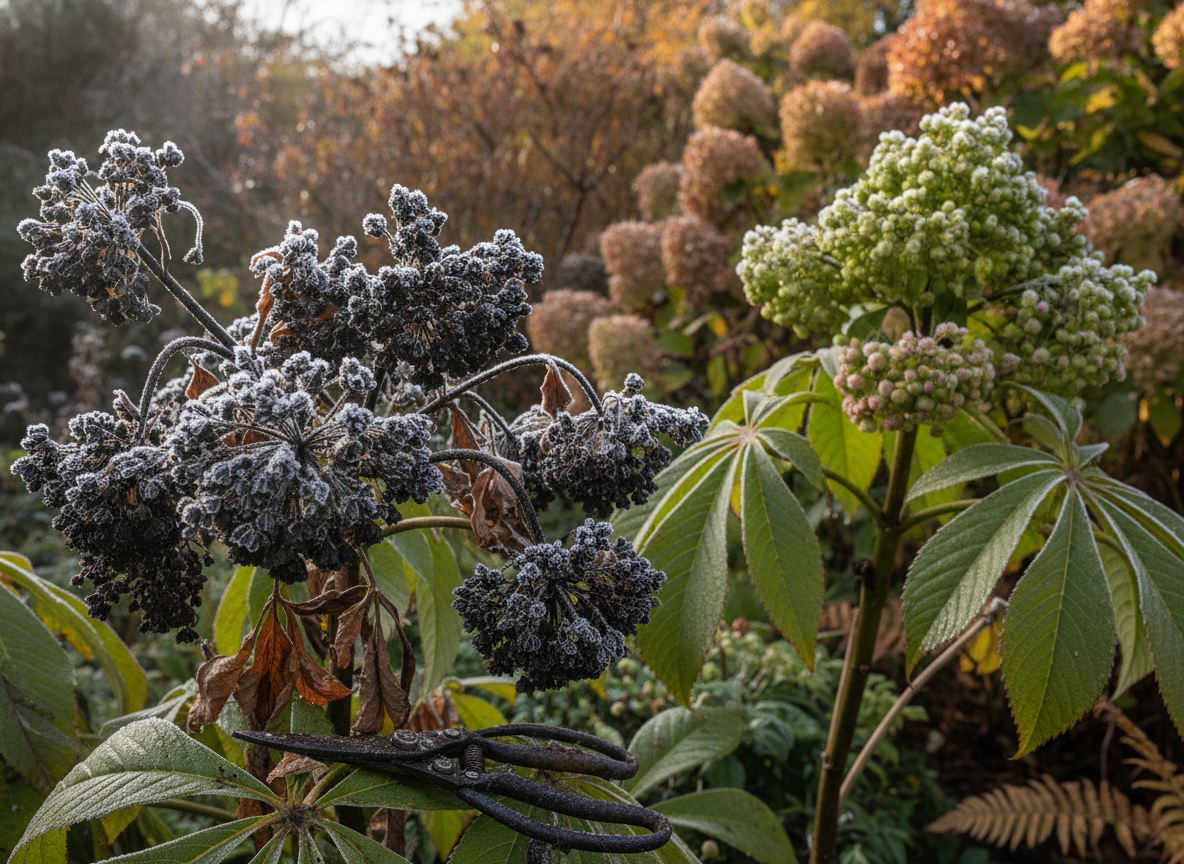 Fatsia flowers with frost and pruning shears in a garden — AI-generated illustration
Why an autumn cut backfires
Pruning is a wake-up call. Cut a shrub and it responds by pushing out fresh shoots from the buds below the cut. In spring that’s exactly what you want. In October it’s the last thing you want, because that soft new growth has no time to harden before the first frosts arrive — and soft growth is the first thing frost kills.
You see the same trap with Photinia ‘Red Robin’: prune it now and the flush of tender red regrowth blackens at the first cold snap. Fatsia is hardier than people assume (it sits at H4 on the RHS scale and shrugs off most UK winters where it’s sheltered), but a plant that’s been stimulated into growth right before winter is a plant working against the season. The safe move is the same one you’d make with Russian sage: leave the top growth standing through winter and save the knife for spring.
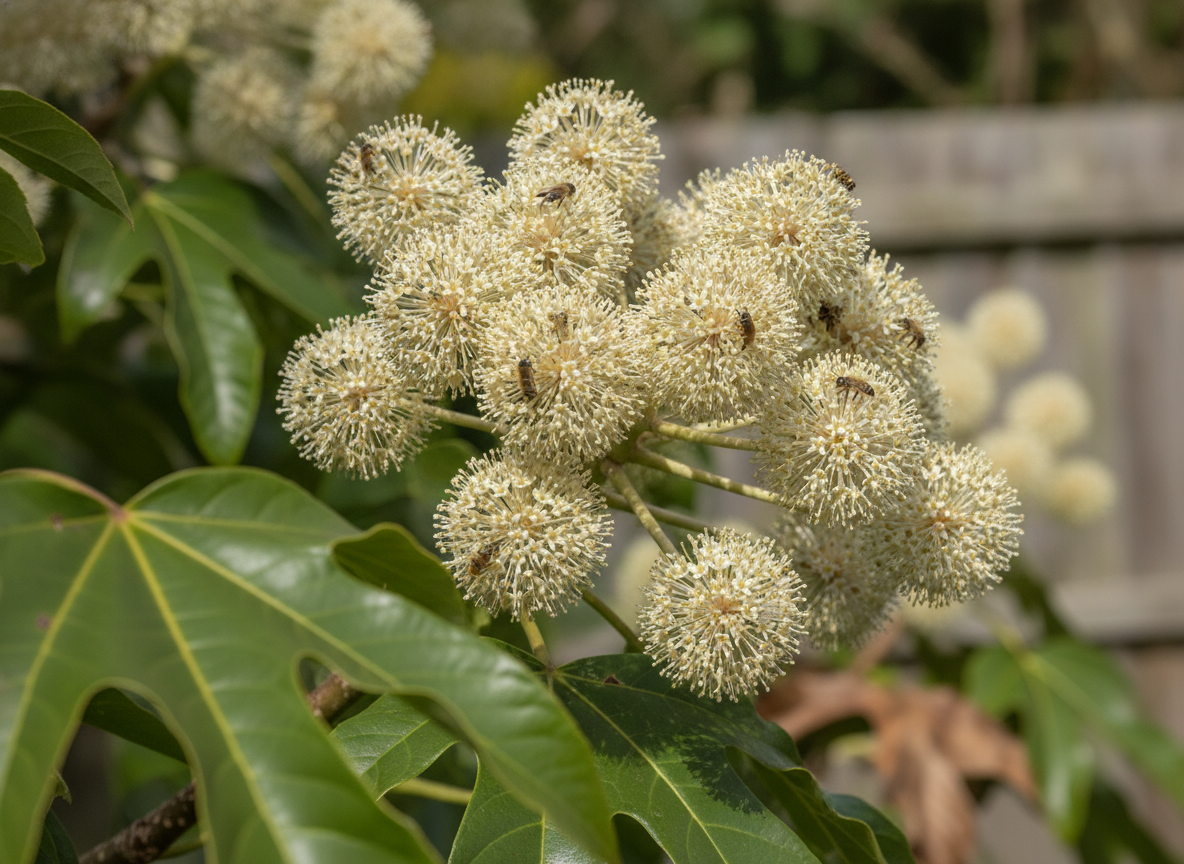 White fatsia flowers with bees, green leaves, and a soft background — AI-generated illustration
Those sea-urchin flowers are doing a job
The flowers aren’t just a curiosity. They open at a point in the year when almost nothing else is offering a meal, and the late-flying bees, hoverflies and wasps find them. On a mild October afternoon a mature fatsia in flower hums — it’s one of the best autumn nectar bars you can plant in shade.
Cut the stems off and you’ve swept the table bare. It’s the same reason we tell people to leave ivy to flower rather than shear it in autumn: these unglamorous, late-season flowers carry a disproportionate share of the food supply once the borders have packed up. Later, the globes ripen into clusters of small black fruit that the birds take through winter — another reason to let the whole sequence run its course rather than stopping it at the flower.
When a fatsia actually needs the secateurs
The honest answer is: rarely, and not now. Fatsia needs no routine pruning at all. It makes its handsome, layered shape on its own, and left to it will become a broad, architectural dome of hand-shaped leaves.
When you do cut, do it in mid- to late spring, once the worst frosts have passed and the plant is about to push into active growth. That timing means any regrowth you trigger is racing into the warm half of the year, not the cold one. In spring you can safely:
- Remove any shoots killed or scorched over winter, cutting back to healthy wood.
- Take out damaged, crossing or awkwardly placed stems to open the shape up.
- Shorten a stem or two that have bolted ahead of the rest, cutting just above a leaf or a side shoot.
Keep it light. A fatsia responds best to a few well-chosen cuts, not an all-over shear. Shearing it like a hedge leaves cut leaf-halves that brown at the edges and look worse than the problem you set out to fix — the same mistake people make hacking at a laurel hedge with the wrong tool.
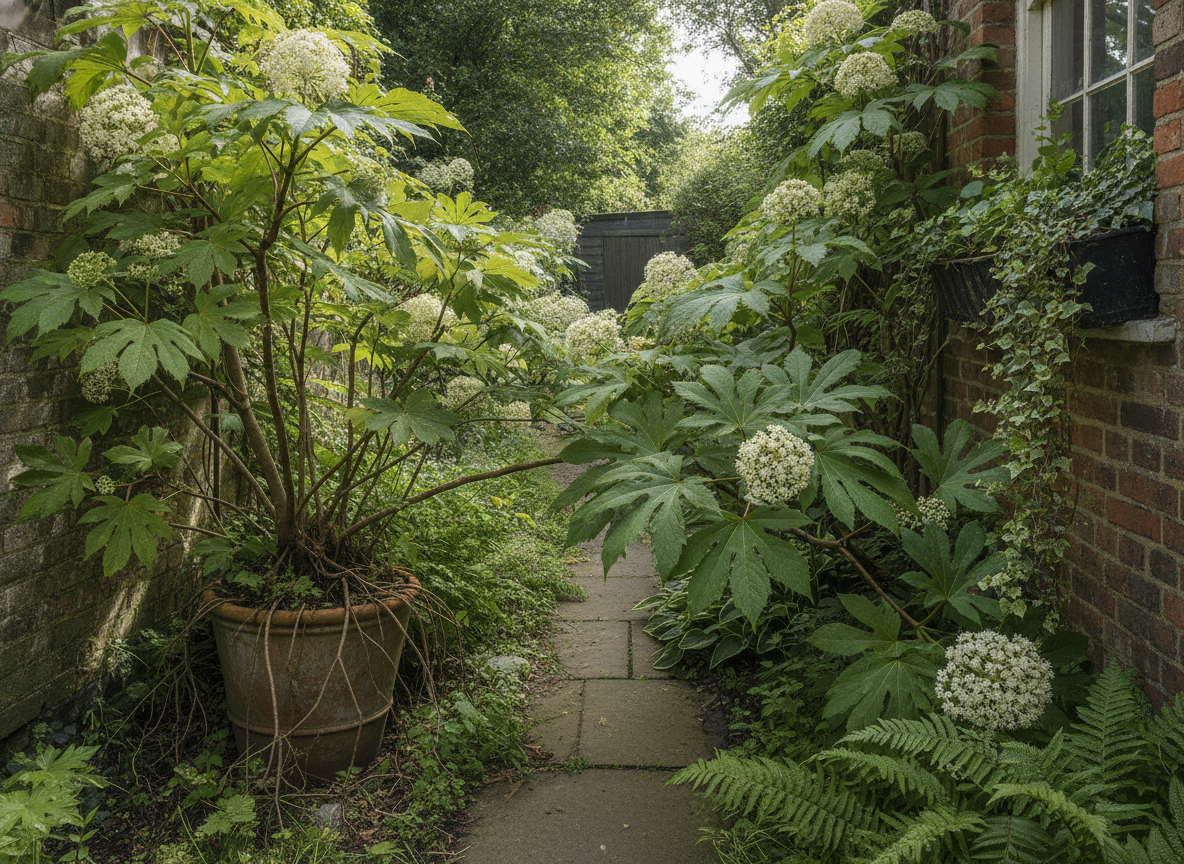 A garden path with fatsia plants, one in a pot, surrounded by greenery — AI-generated illustration
If it has outgrown its spot
Fatsias can get big — head height and as wide — and in a small shady corner that sometimes means a plant that has swallowed the path or the window. The good news is that fatsia takes hard pruning well: it will break from old, bare wood, which plenty of shrubs won’t.
But hard renovation is firmly a spring job, not an autumn one. Wait until the frosts are done, then cut the oldest, tallest stems right down — you can take a leggy plant back to a low framework and it will resprout from the base over the following season. Do that now, in October, and you’ve opened big wounds and triggered a mass of tender shoots with the whole winter ahead of them to be killed. Patience here is the difference between a rejuvenated plant next summer and a dead one by March.
What to do this month instead
If the itch to do something is strong, there’s plenty that genuinely helps a fatsia now — none of it involving cuts into the plant:
- Leave the flowers. No deadheading. Let them feed the pollinators, then set fruit for the birds.
- Clear fallen leaves from around the base so slugs and damp don’t sit against the stems.
- Mulch the roots of a plant in a cold or exposed spot with a thick collar of bark or leafmould to buffer the winter.
- Ease off the watering — a fatsia wants far less in the cooler months, though a plant in a pot shouldn’t be left to dry out completely.
- Move pots to a sheltered wall or corner; it’s the wind and wet, more than the cold itself, that catch fatsia out in a hard winter.
The one-line version: a fatsia in October is a plant at the top of its game, feeding the garden when little else can. Admire the flowers, leave the secateurs in the shed, and put a reminder in for spring. If you want that reminder tied to your own plants and your own weather rather than a generic calendar, that’s exactly what Cresco is built to do — it tracks each plant you grow and tells you the right week to act, wherever you garden.