The red is new growth — that’s the whole point
The reason anyone plants a Photinia × fraseri ‘Red Robin’ is the flame-coloured flush that runs over the top of the shrub in spring — glossy scarlet leaves standing out against the older deep green. It’s the signature of the plant, and it’s the whole reason it earns a place in so many front gardens and hedges.
Here’s what’s easy to miss: that red is young growth. The leaves emerge red and mature to green over a few weeks. So the way you get more of it is to make the plant produce more new shoots — and the tool that does that is the secateurs. A well-timed cut triggers a fresh flush of red where the plant would otherwise have sat still.
That single fact explains the whole pruning calendar for this shrub, and it’s also exactly why a cut at the wrong time backfires. If pruning forces a burst of soft new leaves, then the question that decides everything is simple: is there enough warm weather left for that new growth to harden before winter? In late September, the answer is no.
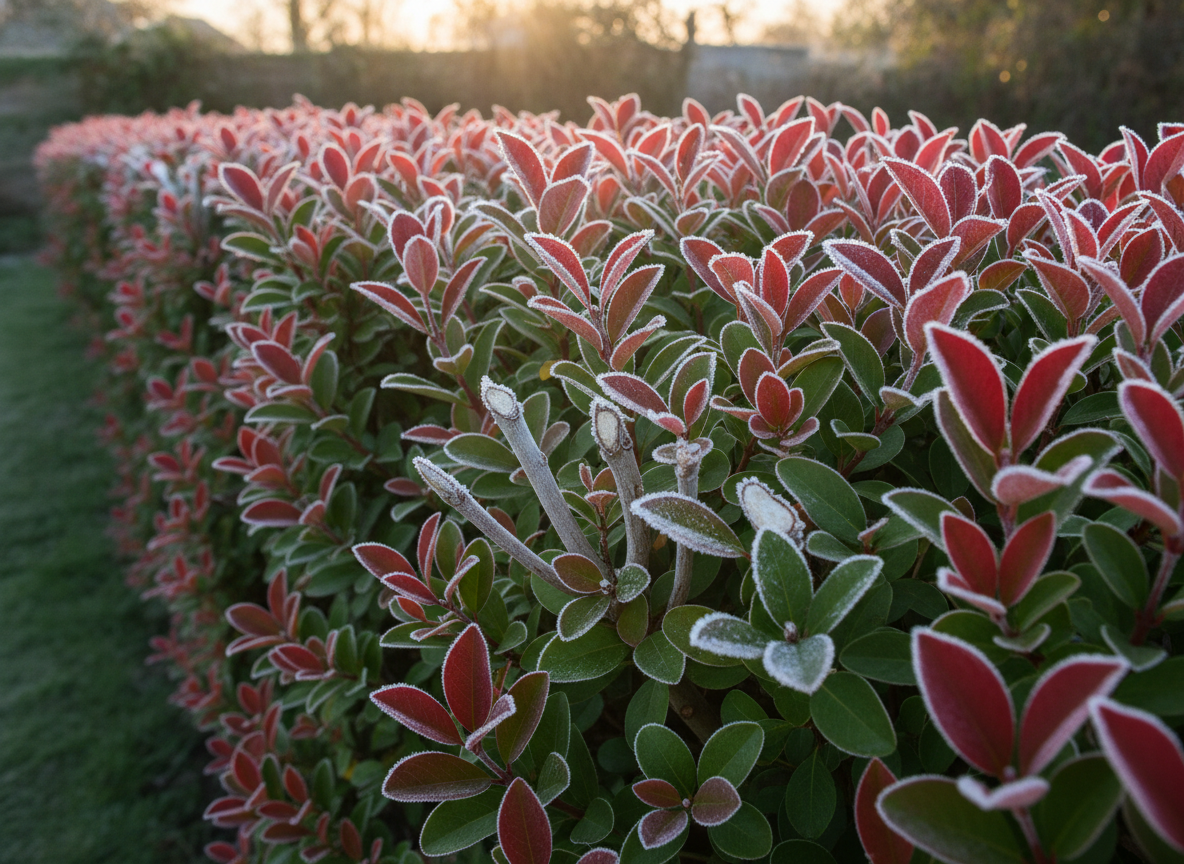 . A hedge of red robin plants with frosted leaves and a cut branch — AI-generated illustration
Cut it now and you’re painting a target for frost
Reach for the shears at the end of September and you set off precisely the growth the plant can’t protect. The shrub responds to the cut the only way it knows — by pushing new red shoots — but those shoots emerge soft, thin-skinned and full of water, with no time to ripen into tough winter-hardy wood before the first frosts arrive.
Then the cold does what cold does to unripened growth. The new red tips blacken, the leaf margins crisp, and whole shoots die back from the ends. You’re left looking at scorched, blackened growth — and because there’s no fresh flush coming until spring, that damage is the view for the entire winter. Nothing grows over it, nothing hides it. An autumn cut doesn’t tidy the plant; it disfigures it for six months.
It’s the same trap that catches half-hardy shrubs like caryopteris: the urge to neaten a plant before winter is, with these subjects, the urge to hurt it. The scruffy late-season plant is a survivable plant. The freshly barbered one is the one that suffers.
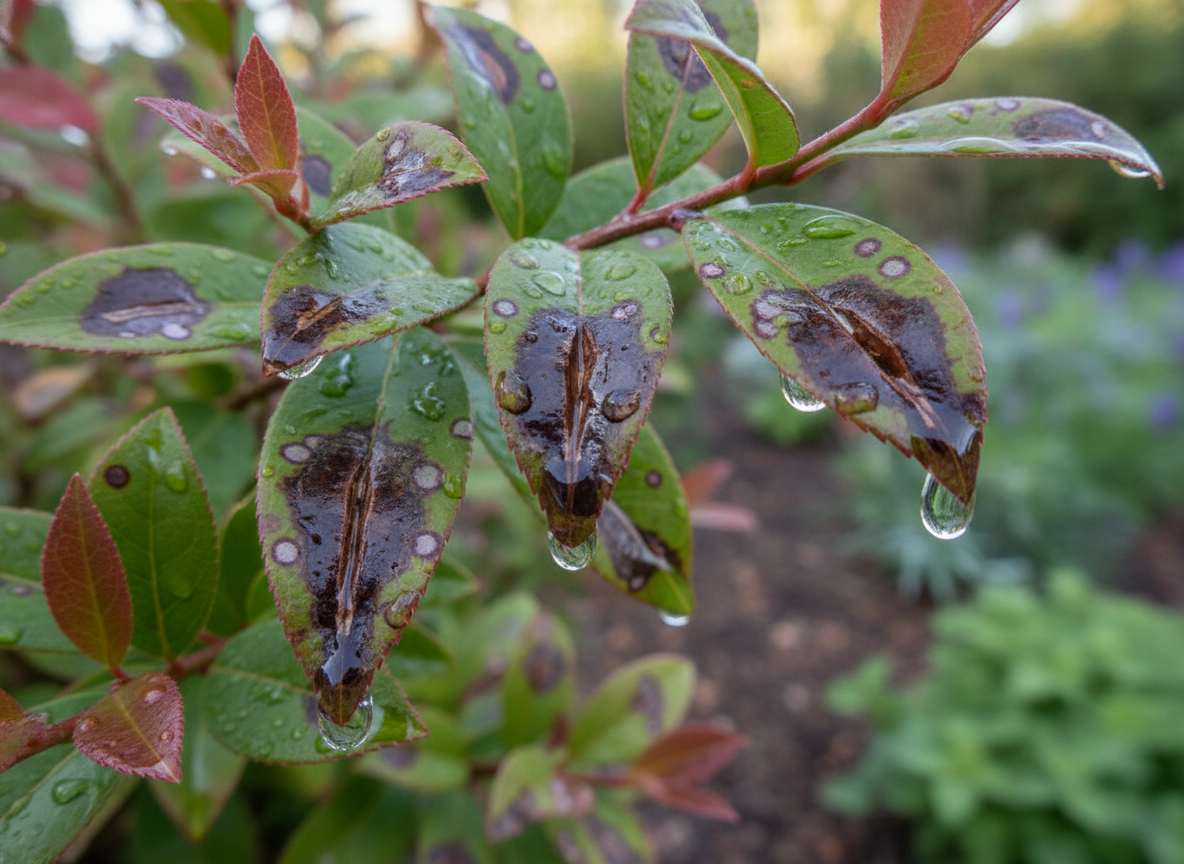 Red robin leaves with dark spots and water droplets — AI-generated illustration
Wet wounds are how leaf spot gets in
There’s a second reason to keep the blades away in autumn, and it’s the problem Red Robin is most notorious for: leaf spot. Those purple-brown blotches that spread across the foliage — and eventually strip a hedge half-bare — come from a fungal disease (Entomosporium) that thrives in exactly the conditions a Northern European autumn serves up: cold, damp and still.
A plant going into that season stressed and wounded is a plant with the door propped open. Every cut is an entry point, and a shrub already knocked back by frost damage has less in reserve to resist infection. Prune in autumn and you’re combining a susceptible plant, fresh wounds and the wettest fungal weather of the year — three things you want to keep apart, not stack together.
While we’re on the leaves: however you prune this shrub, use secateurs, not a hedge trimmer. Red Robin’s leaves are large and glossy, and shearing slices straight through the middle of them. Each halved leaf browns along the cut and sits there looking burnt — the same reason a cherry laurel goes brown after the hedge trimmer. Cutting stem by stem with secateurs takes longer, but it leaves whole leaves and a clean finish.
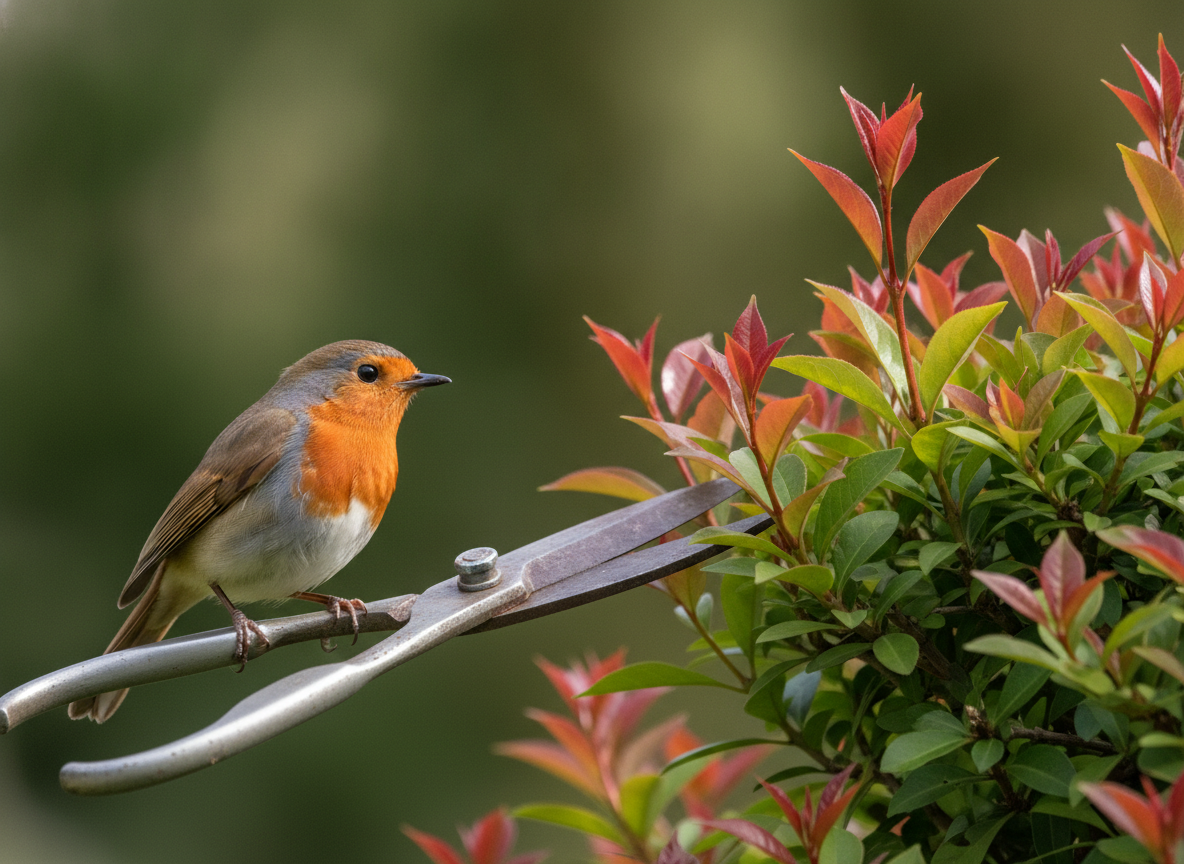 A red robin sits on pruning shears next to a plant — AI-generated illustration
When Red Robin actually wants the shears
Photinia doesn’t need much pruning, but where you do cut, timing is everything:
- As growth starts in spring (late March–April): the main prune. Shorten the previous year’s growth and shape the plant, and it answers with the big, uniform red flush that makes the shrub. This is the cut that does the most work.
- Early to mid summer (June–July): a second, lighter trim tidies the shape and draws out a fresh burst of red for the back half of the season.
- A final light cut by mid-August at the very latest: anything after this and the new growth won’t have time to harden before the cold. Mid-August is the line. Cross it and you’re gambling with frost.
Get into that rhythm and Red Robin stays dense, glossy and colourful. The whole calendar hangs on one rule: cut when there’s warmth ahead to ripen the regrowth, never when there’s only frost coming.
What to do at the end of September instead
The honest answer for right now is: leave the shears in the shed. There’s no autumn prune on this plant’s calendar, and skipping it isn’t neglect — it’s the correct call.
If you can’t walk past without doing something, there are two jobs that genuinely help. Pick off any leaves already showing purple-brown leaf spot and rake up the fallen ones around the base, rather than leaving them to overwinter and re-infect next year’s foliage. And if a tall specimen is being rocked by autumn wind, firm it back in or stake it — root movement in wet soil does its own damage. Both help the plant through winter. Neither involves shaping it.
If the hedge is genuinely blocking a path or a window and something has to give, take off the least you can and accept you’ll see brown tips where you cut — then plan the real shaping for spring. But for the vast majority of gardens, the September job on Red Robin is to admire it and wait.
Let Cresco hold the date
The trouble with a plant that has one narrow pruning window and a long list of ways to get it wrong is remembering the window at all — the spring flush cut slips past while you’re busy, and the autumn tidy-up happens because it’s the weekend and the shears are out. That’s exactly the gap Cresco fills: it holds the right pruning week for every plant in your garden, Red Robin included, and tells you when to act and when to leave well alone — so the cut lands in March, not in the teeth of the first frost.