Wait for the frost — this isn’t a gladiolus
There’s a trap in autumn tuber care, and it catches people who’ve just learned the gladiolus rule. Gladioli you lift before a hard frost, because the corm sits shallow and a deep freeze can burst it. So it’s tempting to grab the fork the moment the nights turn and give your begonias the same treatment. Don’t.
Tuberous begonias (Begonia × tuberhybrida) are the opposite case. Like dahlias, they want the first light frost to do a job first: knock back the soft top growth and signal the tuber to go dormant. Lift a begonia while it’s still in full leaf and you interrupt that process mid-stride — the tuber hasn’t finished pulling energy down out of the stems, and it goes into storage half-charged and prone to rot.
So the order is: let a light frost blacken the foliage, wait a few days, then lift. The one thing to avoid at either end is a hard, ground-freezing freeze — a light frost on the leaves is a helpful nudge, but you don’t want the ground to set solid around a tuber sitting a few centimetres down. In most of the UK and the Low Countries that gives you a comfortable window through October into early November: watch the forecast, not the calendar.
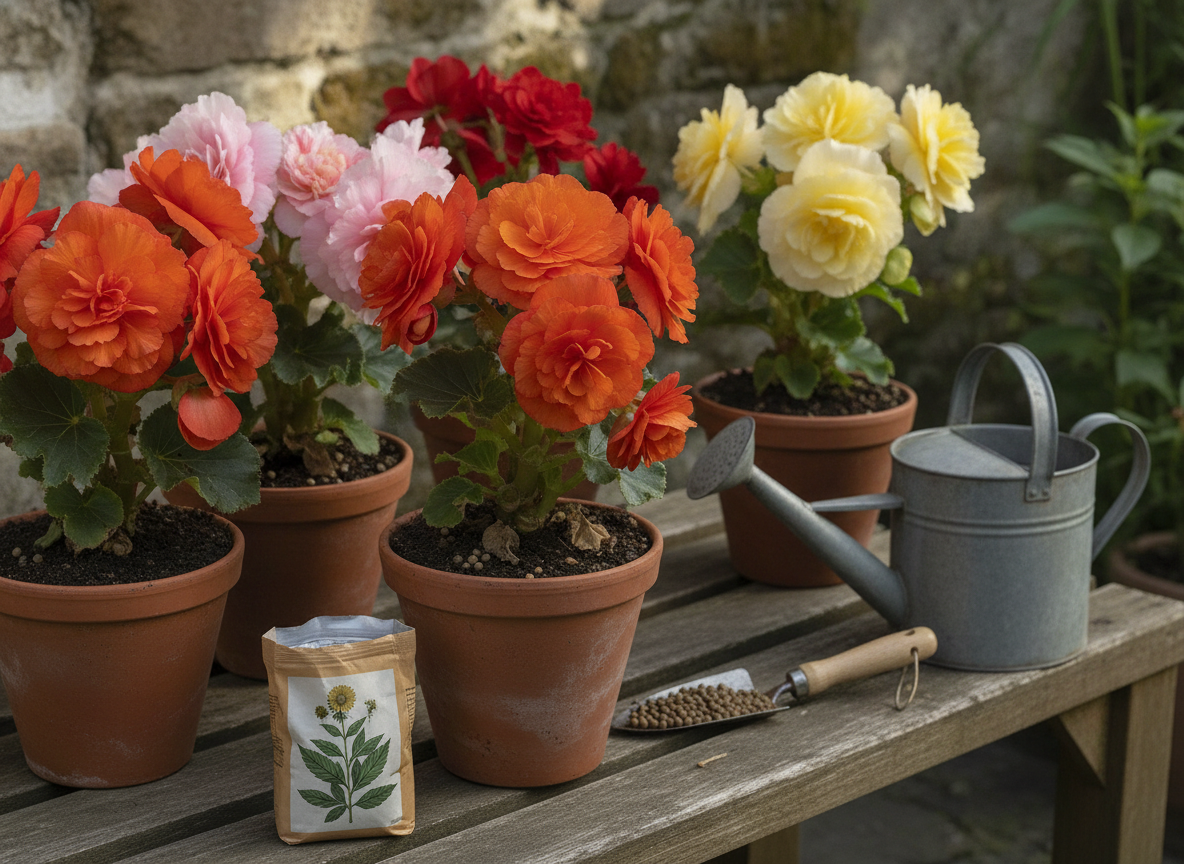 Potted begonias, a watering can, garden trowel, and plant food on a wooden bench — AI-generated illustration
Ease off the water and feed now, before you lift
The preparation starts weeks before the fork comes out, and late September is exactly when to begin. Stop feeding — a tuber you’re about to store doesn’t need to be pushed into more soft growth it can’t ripen. Then cut back on watering, letting the compost run drier than you would in summer.
This does two things. It tells the plant the season is ending, so the leaves start to yellow and hand their sugars back down to the tuber. And it firms the tuber up, so it lifts drier and stores better. If your begonias are in pots or baskets, this is easy — just move the can along. Move them under cover — a porch, an open shed, against a house wall — once frost is genuinely forecast, and you can even skip the lift-and-store faff entirely by bringing the whole pot in dry.
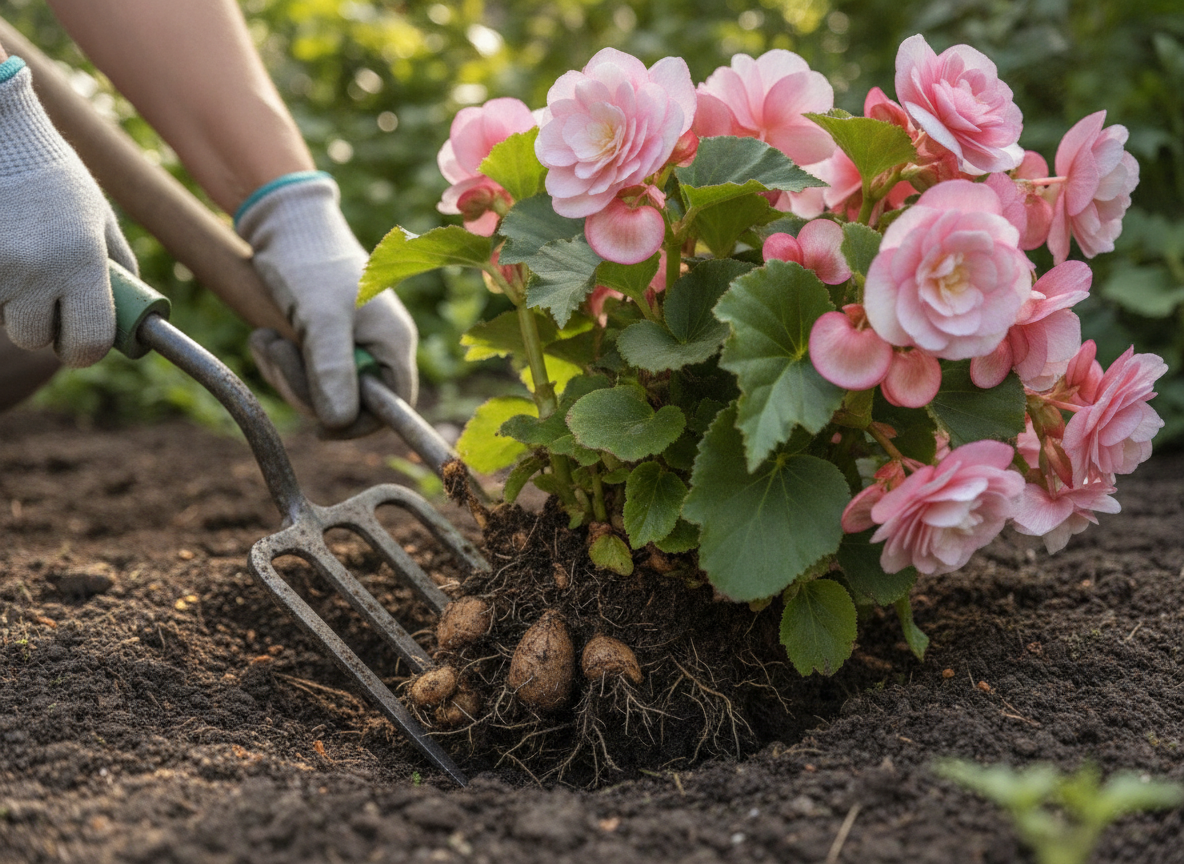 A person carefully lifts a begonia plant with a garden fork — AI-generated illustration
Lifting: fork wide, and never pull on the stem
When the foliage has been frosted and gone soft, choose a dry day and lift. Push a fork in well outside the crown — 15 cm or more — and lever the whole rootball up from underneath. The mistake to avoid is hauling on the collapsed stems: a begonia tuber is a flattish, saucer-shaped disc with a hollow, cupped top, and the stems snap off it easily. Pull, and you’ll leave the tuber in the ground or tear the crown where next year’s buds sit.
Shake off the loose soil, but don’t wash the tubers. Water at this stage is the enemy — it soaks into that cupped top and invites the storage rots that turn a boxful to mush by midwinter. The last of the dirt brushes off cleanly once everything has dried. Cut the stems back to a stub of 2–3 cm; leave a little rather than cutting flush, because a wound right on the crown is an open door for rot.
Cure them dry before they go into store
Don’t pack tubers away the day you lift them. Spread them out in a single layer somewhere frost-free and airy — a shed bench, a greenhouse staging, a windowsill in a cool room — and leave them a week or two to cure. Curing dries the skin, lets the remaining soil crumble away, and dries back the stub so it comes off cleanly instead of rotting inward. Turn them once so the cupped top dries too; a little water can pool there and that’s precisely where trouble starts.
Once cured, snap or twist off the dried stub and rub away the last of the soil. What you’re left with should be a firm, dry, corky disc. Any that are soft, mushy, or smell off go on the compost now — one rotting tuber will spread to its neighbours in a closed box.
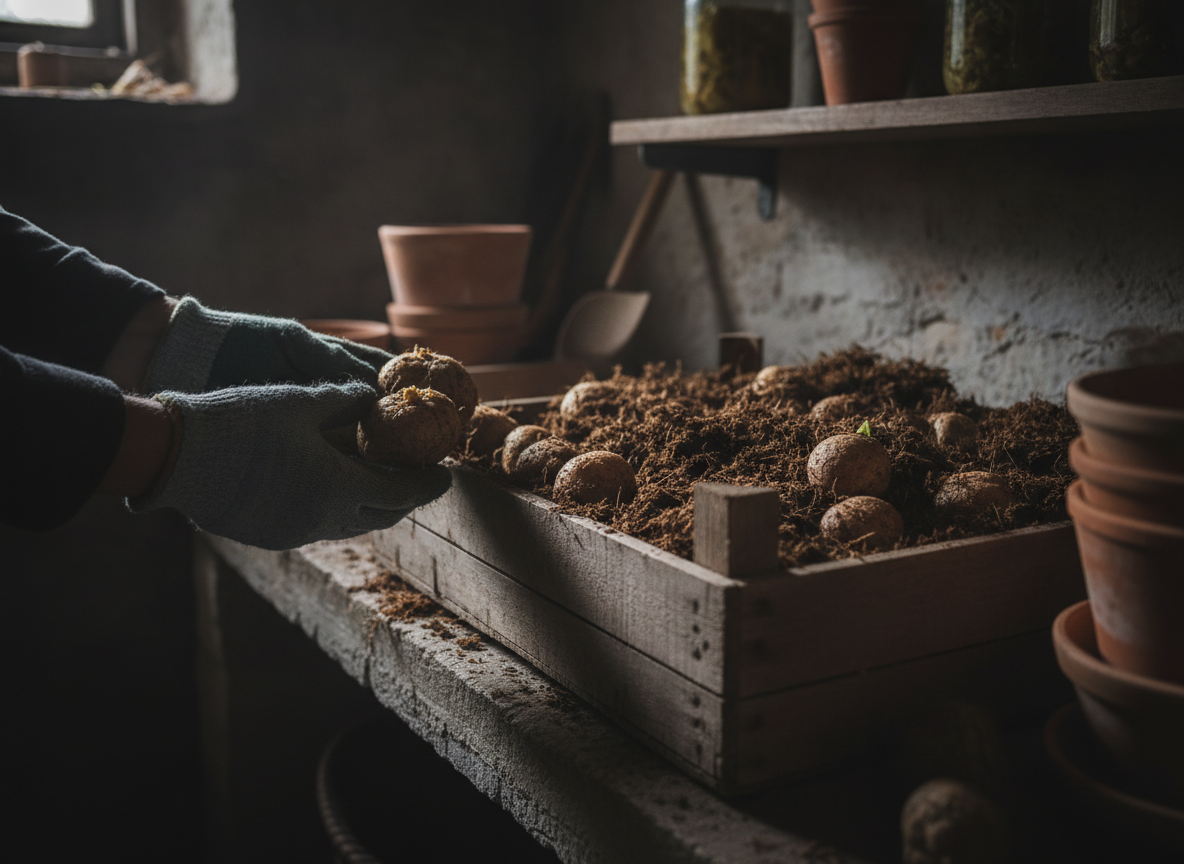 A person wearing gloves holds begonia bulbs above a wooden tray of soil — AI-generated illustration
Store cool, dry and dark — then check them
Nest the cleaned tubers in a box of dry material — spent potting compost, coir, vermiculite, or even scrunched newspaper — so they’re not touching each other. Keep them somewhere frost-free but cold, ideally 5–10°C: a garage, a cellar, an unheated spare room. Too warm and they’ll try to sprout early and shrivel; a frost, and they’re finished.
Check the box once a month through winter. Pull out anything that’s gone soft before it takes the others with it. Come March or April, start them back into growth in trays of fresh compost on a warm windowsill, hollow side up, and they’ll be well ahead of any fresh tuber you’d have bought in spring — which is the whole point of saving your own.
The same autumn job across the tender tubers
Begonias sit in a little group of not-quite-hardy plants that all need lifting or protecting before winter really bites — and the rules aren’t identical, which is exactly why they trip people up. Dahlias, like begonias, wait for the frost to knock them back before you lift or decide to leave them. Gladioli go the other way — lift them before a hard frost, six weeks after flowering. And cannas can often stay in the ground under a deep mulch in milder gardens. Learn which plant follows which rule and you stop losing tubers to a well-meant lift at the wrong moment.
Not sure when the frost is due in your own garden, or which of your plants need lifting this week? Cresco builds the timing around your plants and your local weather, so the right job lands on the right weekend.