The tidy-up instinct that strips the best part
Late September is when the border starts to look tired, and the shears come out. Astilbe (Astilbe × arendsii and its cousins) is an easy target: the summer plumes that were pink, red or white have faded to a dry, papery brown, and every instinct says cut the dead stuff down and move on. Resist it. Those brown plumes aren’t dead growth to clear away — on astilbe they’re the plant’s second season, and they last right through to spring.
Astilbe flowers in early summer, and once the colour goes the plumes don’t collapse or rot like a soft perennial’s spent heads. They dry standing, stiffening into narrow spires of buff, russet and bronze that hold their shape for months. Cut them off now and you swap five months of structure for a bare crown and a patch of soil. Leave them, and the plant keeps earning its space long after everything around it has gone over.
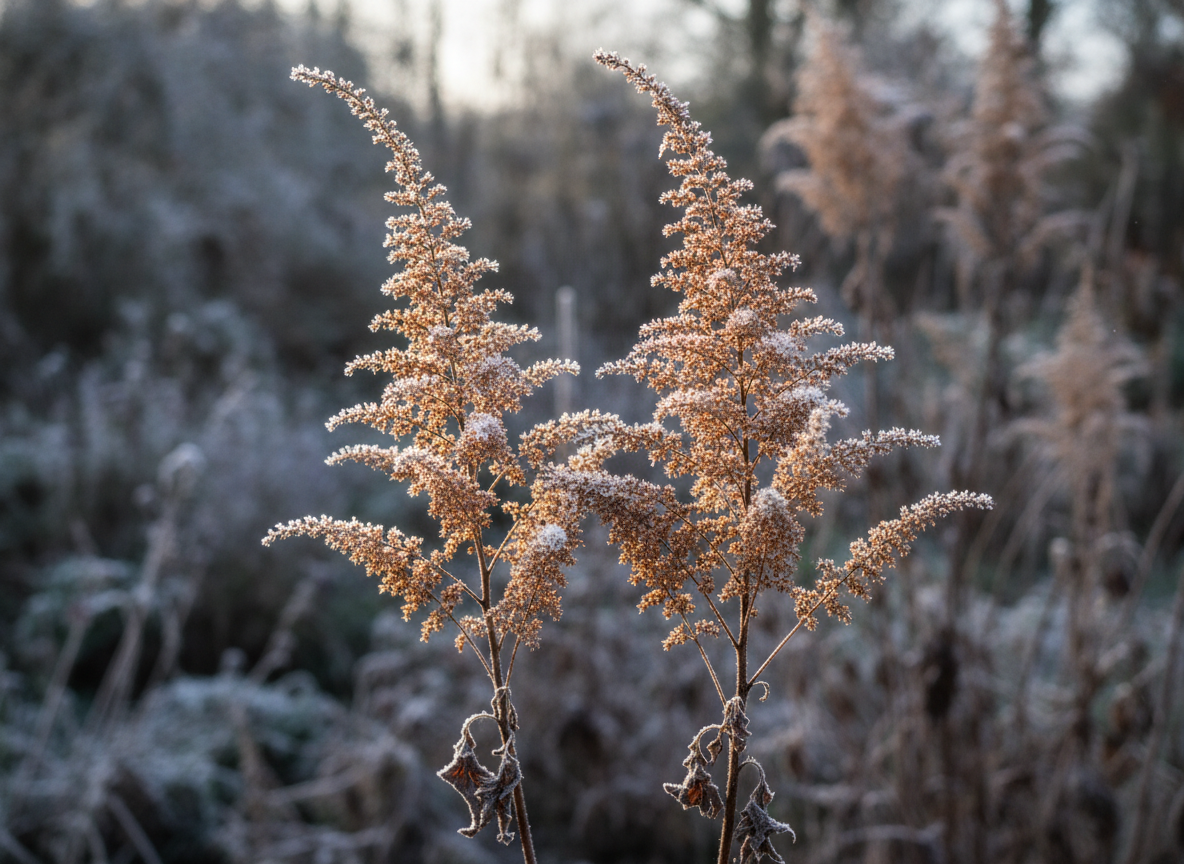 Astilbe plumes in winter with frost — AI-generated illustration
The plumes are the winter show
Walk past a border on a frosty November morning and it’s the dried astilbe plumes that stop you. Each spire holds a rim of white frost along its edges, and after a snowfall the whole plant carries a light dusting like a row of feathers. They catch low winter sun the same way ornamental grasses do — which is exactly why the two are so often planted together.
This is the same principle behind leaving sedum seedheads standing till spring and not cutting ornamental grasses back until spring: the faded structure of a perennial is a feature, not a failure. A border cut flat in September is a bare rectangle by November. A border where the astilbe, sedum and grasses are left to stand has shape, movement and frost-catching detail all through the coldest, greyest months — the time a garden most needs something to look at.
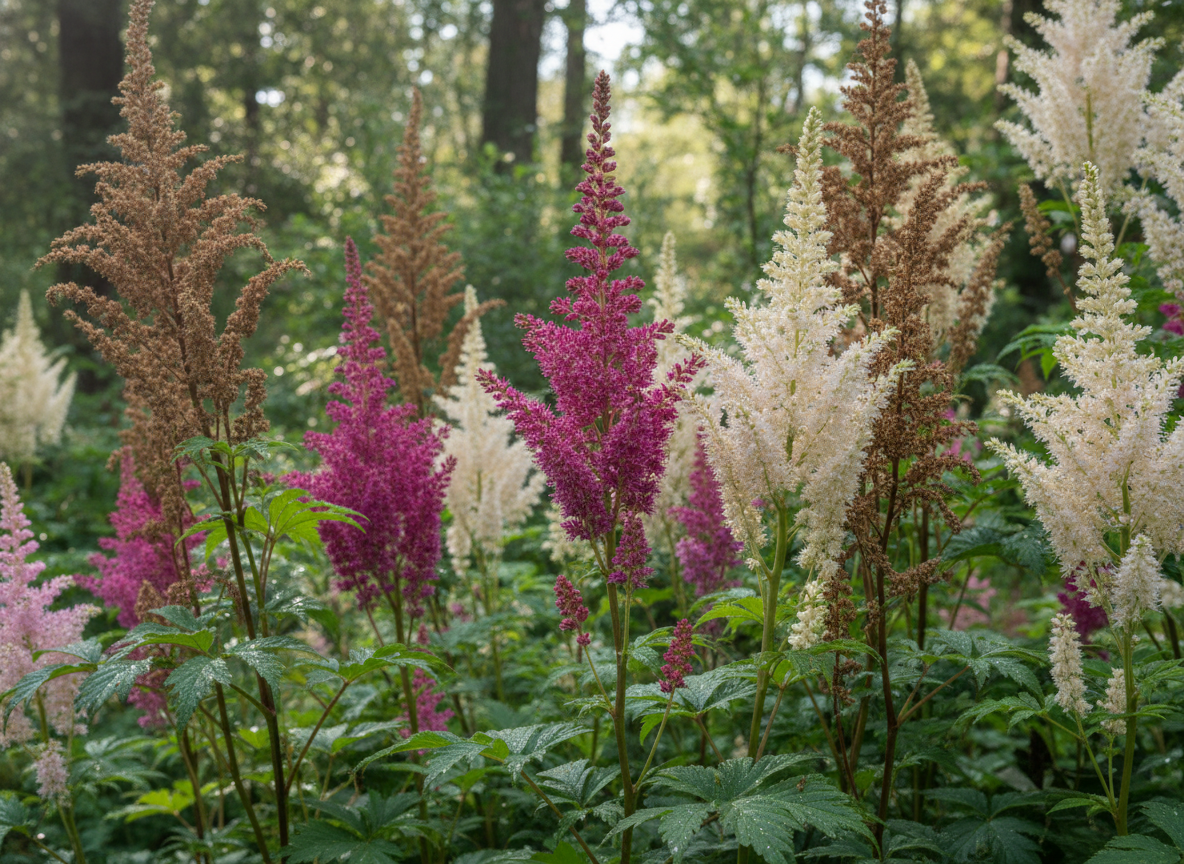 Astilbe plants with green foliage and feathery plumes — AI-generated illustration
There’s a living reason to wait, too
Winter looks aren’t the only argument for leaving the plumes. Those hollow, seed-filled stems are working accommodation. The dried heads hold tiny seeds that finches and other small birds pick over on hard mornings, and the standing stems give overwintering insects — ladybirds, lacewings, solitary bees — somewhere dry to shelter until spring. Cut everything to the ground in autumn and you clear the larder and the lodgings in one pass, at the exact moment the garden’s wildlife has least to fall back on.
There’s a bonus for the gardener, too. Left in place, astilbe plumes ripen their seed and can self-sow gently around the parent, giving you free young plants to lift and move in spring. It’s never a thug about it — you won’t be weeding out seedlings by the barrowload — but a clump left to stand often quietly replaces itself and spreads down a damp border over a few years.
When to actually cut it back
So the plumes stay — but not forever. The right moment to cut astilbe down is late winter, any time from about December through February, once the display has finally collapsed and gone tatty and before the new shoots push up from the crown. Miss that window and you’ll find yourself trying to shear around soft pink new growth in March, nicking the shoots that carry this year’s plumes.
The cut itself is simple. Take every stem and old leaf down to just above the crown — 5 cm or so — with secateurs or shears. The old growth is dry and brittle by then, so it comes away cleanly and goes straight on the compost. You’re left with a tight, woody crown at soil level, ready to break into fresh ferny foliage as the soil warms.
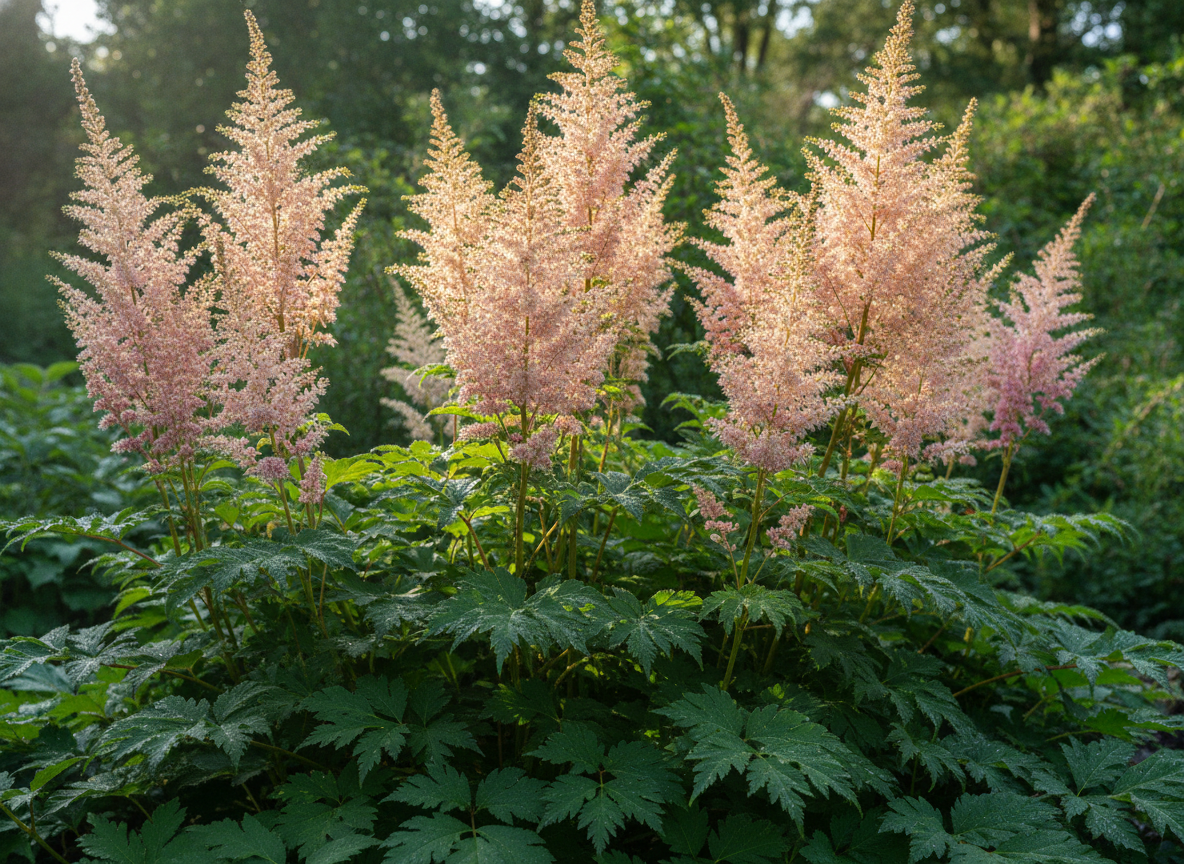 A close-up of astilbe plants with pink plumes and green leaves — AI-generated illustration
While the plumes stand, look after the crown
Leaving the top growth alone doesn’t mean walking away for the winter. Astilbe has one non-negotiable: it hates to dry out. The roots are shallow and fibrous, and over a few seasons the woody crown has a habit of rising up out of the soil until it sits proud of the surface — where it bakes dry in summer and gets frost-lifted in winter, and the plant slowly weakens.
Autumn is the moment to fix that. Spread a generous mulch of garden compost or leaf mould over the crown and around the clump — 5 cm or more — while the plumes stand guard above it. The mulch buries any exposed crown, locks in the moisture astilbe lives on, and feeds the soil for next year’s growth. It’s the single most useful thing you can do for an astilbe, and it costs you nothing but a barrowload of compost.
If a clump has grown congested and flowered less than it used to, that’s a sign it wants dividing — but that’s a job for spring or early autumn when you can see what you’re doing, not a wet midwinter one. It’s the same fix as for any tired perennial: lift and split the clump to bring the flowers back.
The damp-shade crowd, all on the same clock
Astilbe rarely grows alone. It belongs to the moist, part-shade planting that also suits hostas and ferns — and, conveniently, all three follow roughly the same autumn rule. Hostas you cut once they’ve collapsed to mush; ferns and astilbe you leave standing for winter and tidy in late winter or spring. Learn the group and you stop treating every plant as a separate puzzle.
The catch is that “leave it” and “cut it now” plants sit side by side in the same border, and the calendar date that’s right for one is wrong for its neighbour. That’s exactly what Cresco is built to untangle: it tracks each plant you grow against your own local weather and tells you which ones to cut this weekend and which to leave standing — so the astilbe keeps its winter plumes and the plants that genuinely need cutting don’t get missed.