The autumn tidy-up that quietly kills them
Red hot pokers (Kniphofia) look scruffy by mid-October. The flower spikes are long gone, the strappy leaves flop and yellow at the tips, and the whole clump sprawls over whatever’s next to it. So the shears come out, the foliage gets sheared to a neat few inches, and the bed looks tidy going into winter.
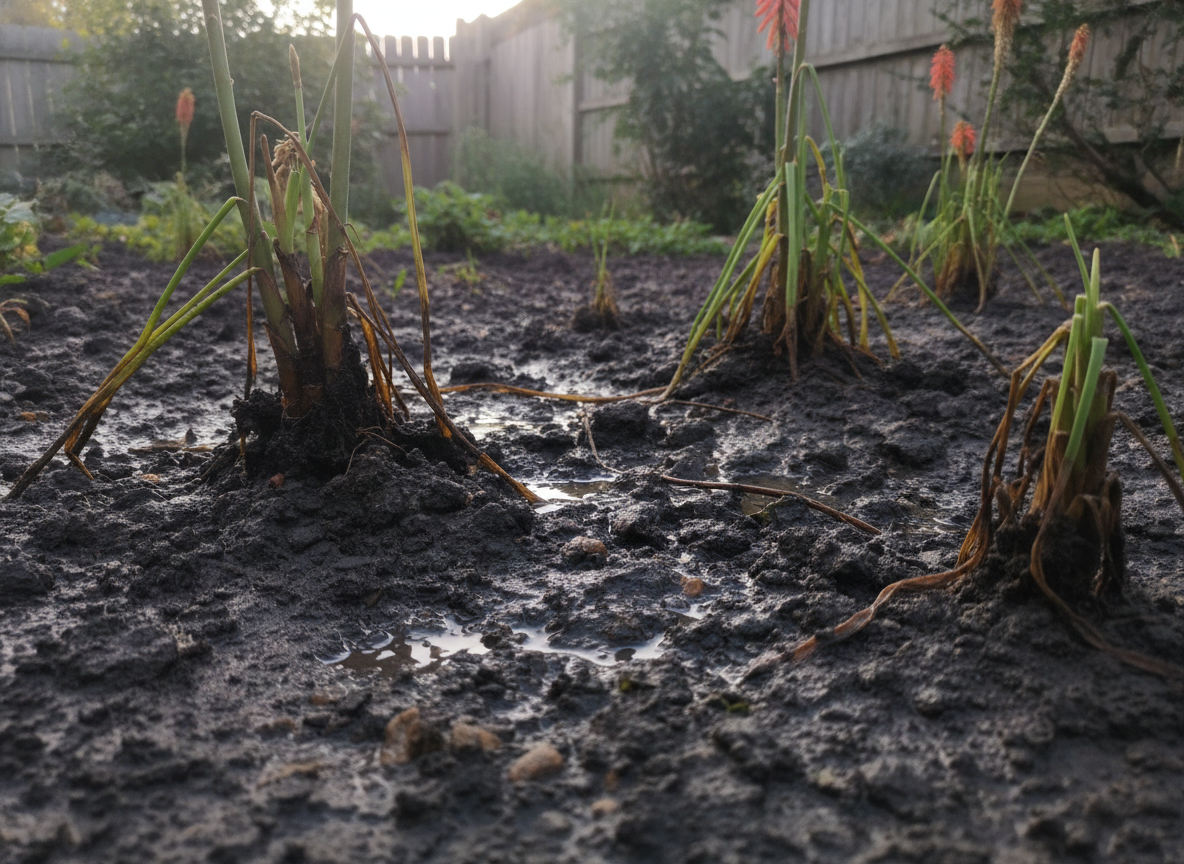
Then, come April, half the crown is a soft brown mush and the clump comes back thin — or not at all.
It isn’t the cold that did it. Kniphofia are tougher than they look; most of the common garden types shrug off hard frost. What kills them over winter is water sitting in the crown — the tight cluster of growing points at the centre of the plant — and then freezing there. Cut the leaves off and you hand the rain a funnel straight into that crown. Leave the leaves on, and tie them the right way, and you do the opposite: you turn the plant into its own umbrella.
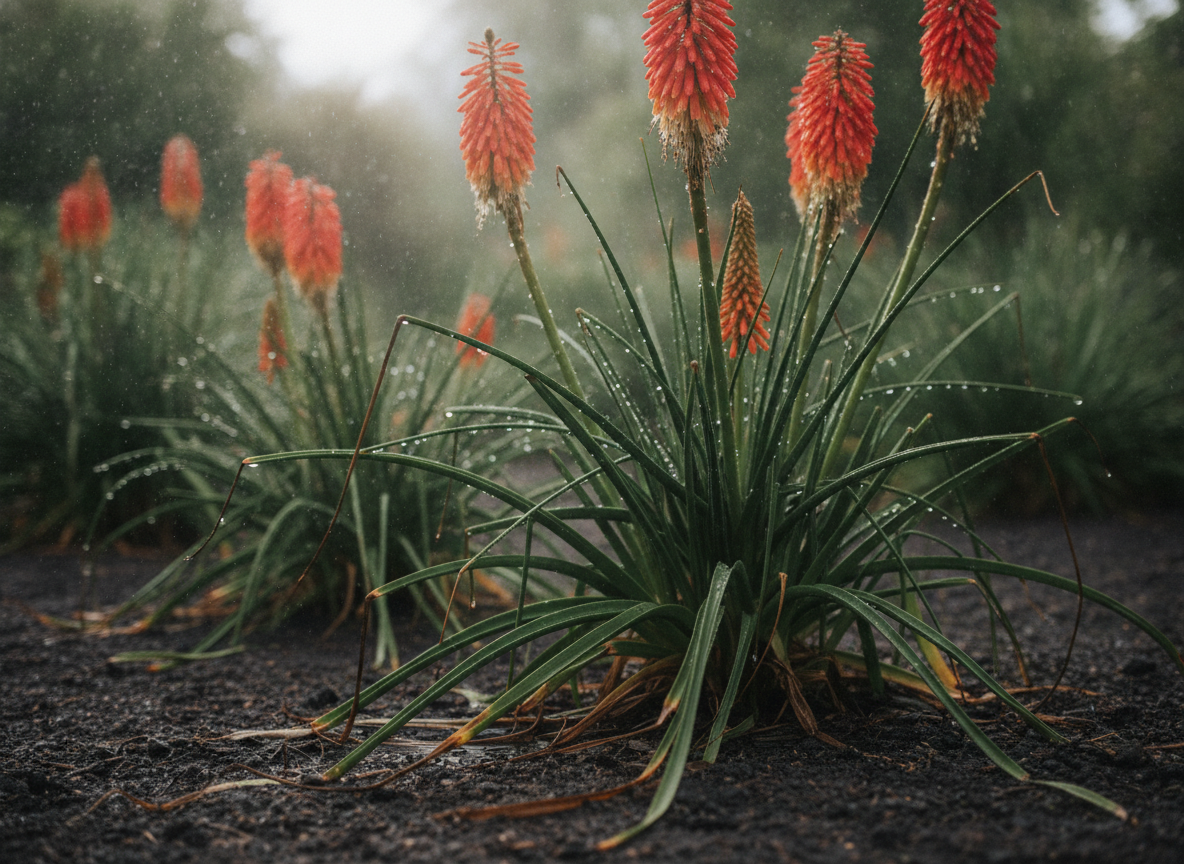 Red hot poker plants in the rain — AI-generated illustration
Wet, not cold, is the killer
Everything about overwintering a red hot poker comes back to one fact: the crown must not stay wet. These are plants of dry, sunny, free-draining ground. They can take a surprising amount of frost, but they cannot take a soggy, waterlogged crown through a British or Dutch winter — that’s when the rot sets in.
That single fact explains all the advice that follows. Standing leaves shed rain outward, away from the centre. A sheared-off clump collects it. Heavy, wet soil holds it. So your winter job isn’t to cut — it’s to keep the water moving away from the crown.
Leave the foliage — it’s free insulation
Before you tie anything, resist the urge to trim. The old leaves aren’t just decoration you’re tolerating; they’re doing a job:
- They shed rain. Arching outward, the foliage throws most of the winter’s rain clear of the centre.
- They insulate the crown. A loose thatch of leaves traps a pocket of still air over the growing points, buffering them against the sharpest frosts — the same reason we leave ornamental grasses standing until spring rather than cutting them down in autumn.
- They mark the spot. A tied-up clump is obvious in a bare winter bed, so you won’t accidentally fork through the crown when you’re planting bulbs nearby.
Yellowing tips and a few fully dead outer leaves are fine — pull the loose dead ones away by hand if you like, but don’t take the shears to the living foliage.
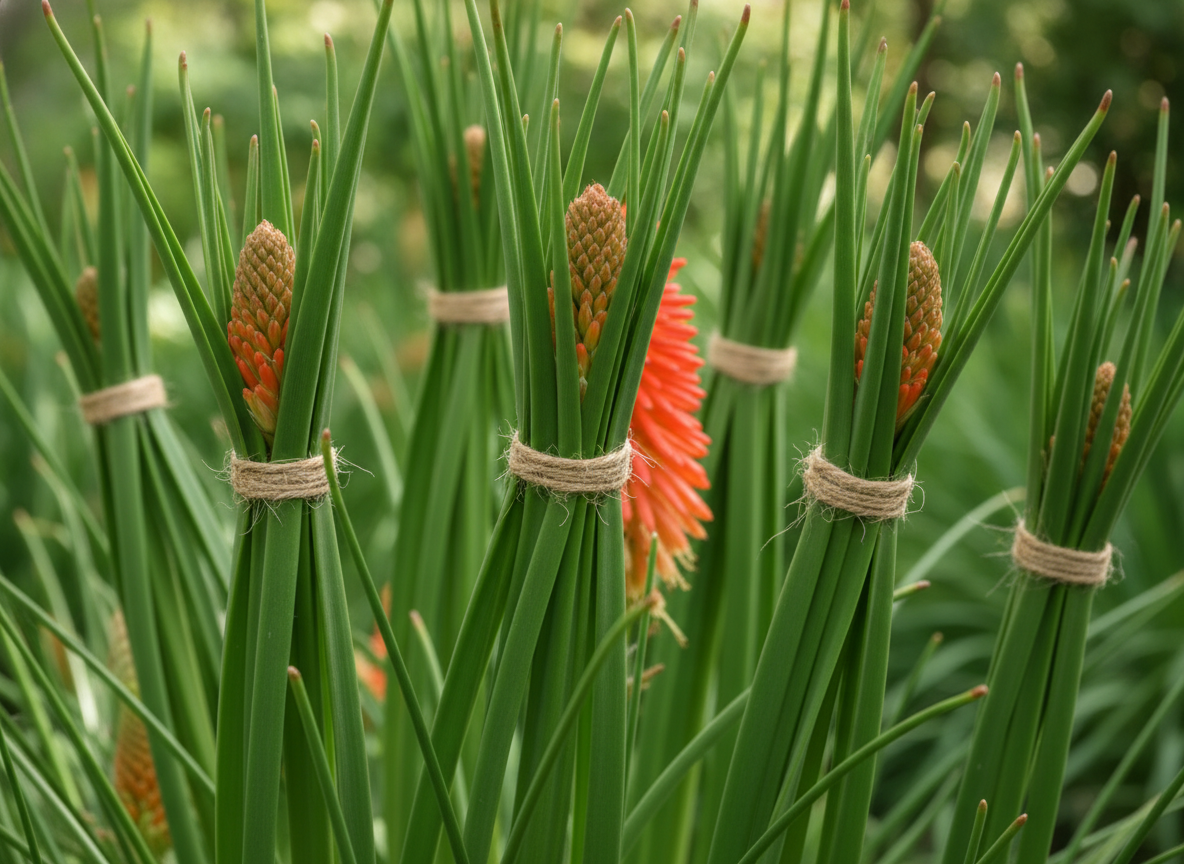 Bundles of red hot poker plant leaves tied together with twine in a garden — AI-generated illustration
Tie the leaves over the crown — the actual job
This is the part most people have never been told. Instead of cutting, you gather the leaves up and tie them into a loose topknot over the centre of the plant, so the whole clump becomes a shedding, thatched cone.
Do it once the plant has clearly stopped growing and before the wettest part of winter — late autumn, roughly late October into November, before the first hard, prolonged frosts. Then:
- Gather the leaves gently into an upright bundle with both hands, like tying back long hair. Don’t force stiff or brittle leaves — just draw in what comes willingly.
- Tie once, loosely, near the top with soft twine or a strip of cloth. One tie is enough. You want a wigwam, not a tight column — air still needs to move through it.
- Check the centre is covered. The point is that the gathered leaves lean over the crown and throw water outward, off the shoulders of the bundle, away from the growing points.
- Leave a little air at the base. Don’t cinch the leaves so tight against the soil that you trap damp at ground level.
On a mature clump you can tie it as one bundle; on a big, multi-crowned plant, tie two or three smaller wigwams rather than dragging everything into one strained knot.
When to actually cut back
The cut you skipped in autumn happens in early spring instead. Once the worst of the frost has passed and you can see fresh green pushing up from the centre, untie the bundle and pull or cut away the old, tired outer leaves down to a hand’s width above the crown. Comb through with gloved fingers to lift out the dead thatch, and the new growth comes away clean.
Tidy then, not now, and you get the best of both: a sheltered crown all winter and a neat, vigorous clump in spring. It’s the same logic that stops people hacking sedums down in autumn — the standing top growth earns its keep right up until the new season starts.
 AI-generated illustration
If your soil is heavy or wet
Tying the leaves handles the rain from above. On clay or in a low, damp spot you also want to deal with the water below:
- Add grit, not just mulch, at the crown. A generous handful of coarse grit worked in around the neck of the plant keeps standing water off the crown. Mulch is fine spread over the roots, but keep loose, moisture-holding mulch off the crown itself.
- Don’t feed or water now. Soft, late growth is exactly what rots. Let the plant harden off and go dry into winter.
- Fix the siting next year. A red hot poker that rots every winter is usually planted too low or too wet. Lift and split it in late spring and replant on a slight mound in the sunniest, sharpest-draining spot you have. It’s the same “don’t bury a crown that wants to breathe” rule that catches people out when they’re moving other fleshy-crowned perennials.
The one-line version
Don’t cut red hot pokers back for winter. Leave the foliage, tie it into a loose wigwam over the crown in late autumn, keep the centre free-draining, and do your cutting back in spring when the new growth shows. The plant that flopped and looked finished in October will be the one throwing up fat flower spikes next summer.
Not sure whether your poker — or the dozen other things flopping in the border right now — wants cutting, tying, or leaving well alone? That’s exactly what Cresco is built for: tell it what you’re growing and it gives you the right job at the right time, tuned to your own local weather, so you’re never guessing at the shears again.