The shrub the first big storm finds first
Lavatera — tree mallow — is one of the fastest things in the whole border. Pot a knee-high plant out in spring and by October it’s a shrub taller than you are, still throwing out pink or white mallow flowers while everything around it is winding down. That speed is exactly the problem.
All of that growth is soft, pithy, top-heavy wood, and it’s sitting on a root system that has had barely a season to anchor it. When the first proper autumn gale arrives, it doesn’t snap a stem here and there. It rocks the whole plant, levering the roots loose in the wet soil until the base sits in a widening funnel of water. Freeze that, and the crown rots. Come spring the plant is either flat on the ground, half-dead, or simply gone.
The fix takes five minutes and one pass with the secateurs: take the top half off now.
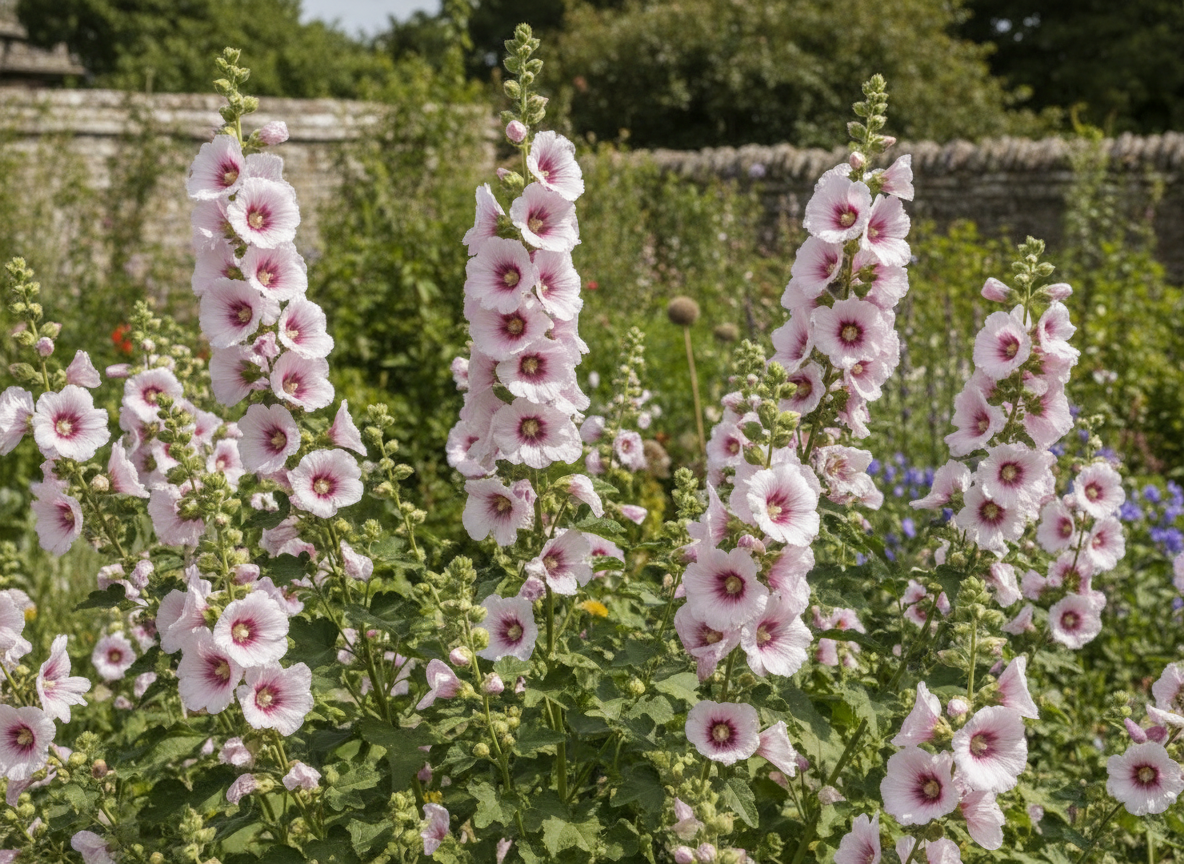 Pink lavatera flowers bloom in a lush garden setting — AI-generated illustration
Why lavatera, of all shrubs
Plenty of shrubs ride out winter untouched, so it’s worth knowing why this one can’t — then you won’t over- or under-do it.
- It’s fast and soft. Like buddleia, lavatera does most of its growing in a single season, and that current-year wood stays brittle and pithy rather than hardening into proper timber. Tall, leafy, soft stems catch the wind like a sail.
- It’s top-heavy. The flowers and the bulk of the leaf sit right at the tips, so all the weight — and all the wind load — is up high, working against the roots below.
- It’s shallow-rooted and short-lived. Most tree mallows are good for only three to five years and never root deeply. There’s not much holding them down when the wind leans on them.
It’s the same reasoning behind shortening tall roses against autumn wind rock and cutting buddleia down in autumn: reduce the sail, save the roots.
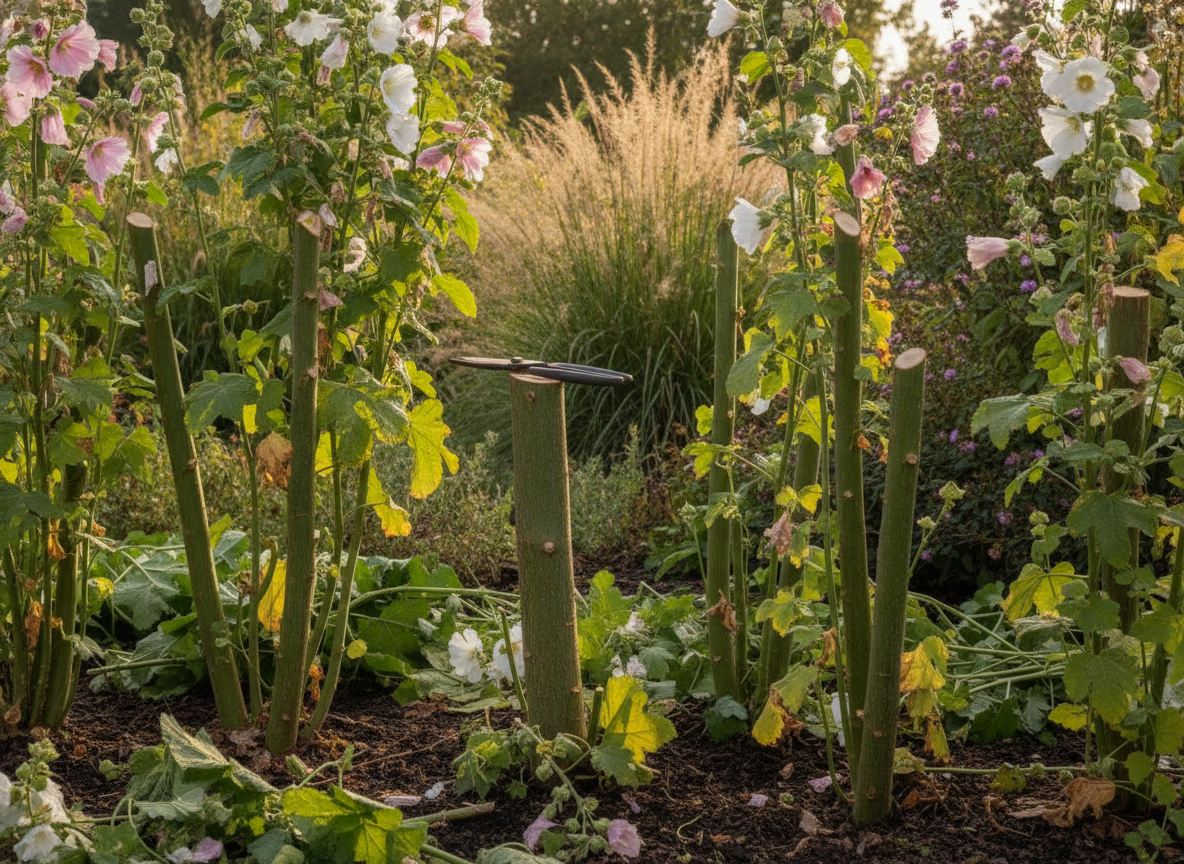 Half-cut lavatera plants in a garden with a knife resting on a cut stalk — AI-generated illustration
The autumn cut: take it down by half
This is the quick, do-it-now job, and precision doesn’t matter. Pick a still, dry day sometime through October — before the big storms really set in — and simply shorten the whole plant by roughly half. You’re not shaping it; you’re lowering its centre of gravity and shrinking the surface the wind can push on.
A few pointers that keep it tidy:
- Cut to this year’s growth. Snip just above a leaf, a bud, or a side-shoot on the soft, green-brown current-season stems. Leave the thick, grey old wood at the base well alone for now.
- Don’t agonise over placement. Unlike a fruit tree, lavatera won’t punish a rough cut. Half the height, roughly even, is all you’re after.
- Clear the base. Pull away any fallen leaves and spent flower litter sitting against the crown so water can drain instead of pooling.
That’s it. The plant will sit lower and steadier through every gale that follows, and the roots stay where you planted them.
Save the real prune for spring
It’s tempting to “finish the job” and cut lavatera hard now. Don’t. It flowers on growth it makes in the coming year, so a hard autumn prune gains you nothing — and it leaves a stub of cut stems exposed to frost all winter, which is exactly when dieback creeps down into the plant.
The proper, hard prune is a spring job. In mid-to-late spring, once the hard frosts have passed and you can see new shoots pushing from low down, cut the whole plant back hard — down to those fresh shoots near the base, often to just 30–45 cm. Lavatera responds to that hard spring cut with a flush of vigorous new growth and far more flower than a plant left to sprawl. Autumn steadies it; spring renews it.
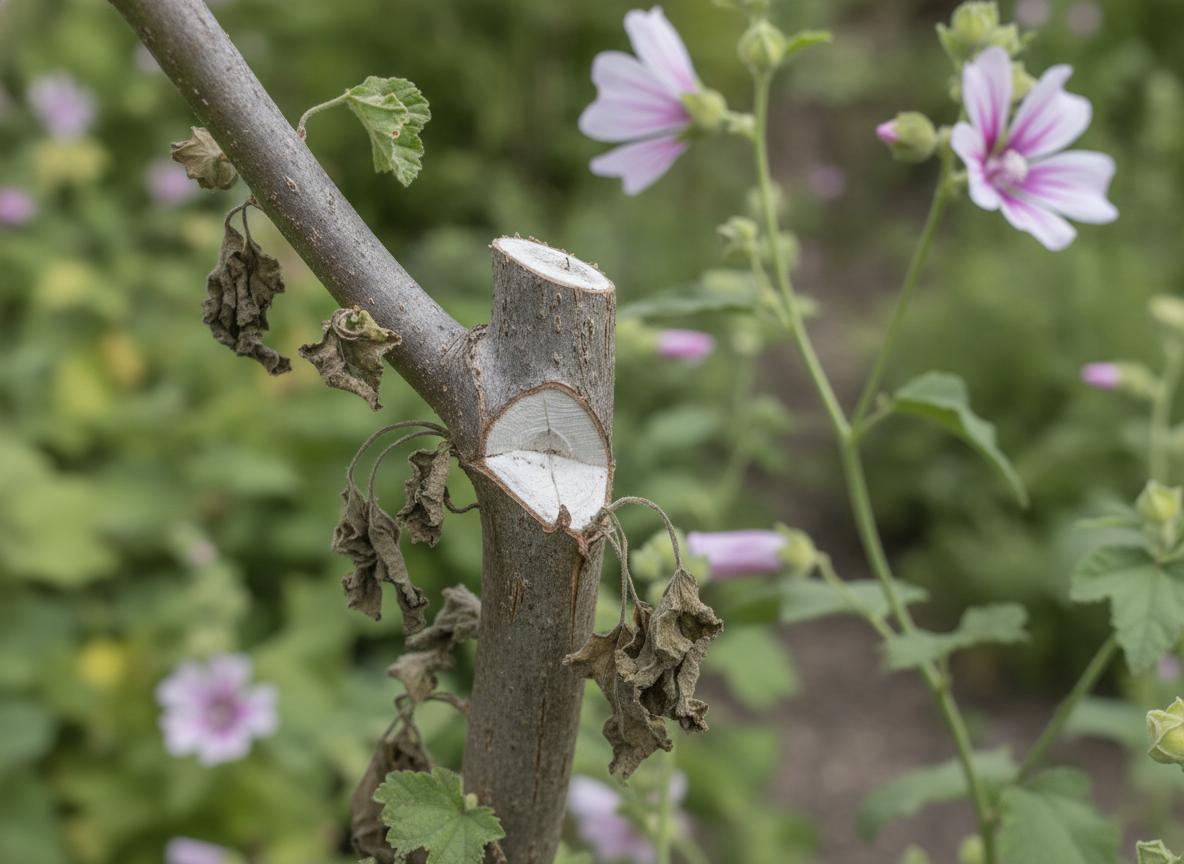 A lavatera branch has been cut into bare old wood — AI-generated illustration
The one cut that kills it: into bare old wood
Here’s the mistake that turns a tidy-up into a funeral. Lavatera, like ceanothus, cistus and broom, is a soft-wooded shrub that often will not reshoot from thick, bare old wood. Cut down into the gnarled brown base hoping for fresh growth and the whole branch — sometimes the whole plant — just dies back instead.
So in both cuts, autumn and spring alike, always stop at a point where you can see live buds or leaves on reasonably young wood. If there’s nothing green below your intended cut, you’ve gone too far.
And because tree mallow is short-lived anyway, the smart insurance is to take a few cuttings while you’re pruning. Soft, non-flowering shoots root easily in late summer and early autumn — pot a couple up and you’ve got replacements ready long before the parent gives out.
In short
- Now: cut the whole plant back by about half to stop autumn gales rocking the roots loose.
- Spring: after the frosts, hard-prune to the new shoots low on the plant for a compact, flower-heavy season.
- Never: cut into bare, thick old wood — soft-wooded shrubs like lavatera rarely break from it.
Not sure which of your shrubs want the same autumn treatment and which should be left well alone until spring? That’s exactly the kind of plant-by-plant timing Cresco works out for your own garden and weather.