A heuchera doesn’t collapse from the cold
Heuchera — coral bells, alumroot, whatever you call it — is one of the toughest things in the border. It’s evergreen or near enough, it shrugs off frost, and the ruffled copper, lime and burgundy mounds are often the best-looking thing in the garden right through winter. So when a plant that was fine in September suddenly goes limp in October — the whole mound flat and sulking even though the soil is damp — the cold is the first thing people blame, and it’s almost always the wrong thing.
A healthy heuchera does not wilt in autumn. Frost doesn’t make it flop; it’s built for frost. A clump that goes soft and lifeless while everything around it is coasting into dormancy is a plant telling you something has gone wrong underground. And with heuchera, nine times out of ten, the thing that’s gone wrong has a name: vine weevil.
 AI-generated illustration
The test: tug the plant, and watch it come away
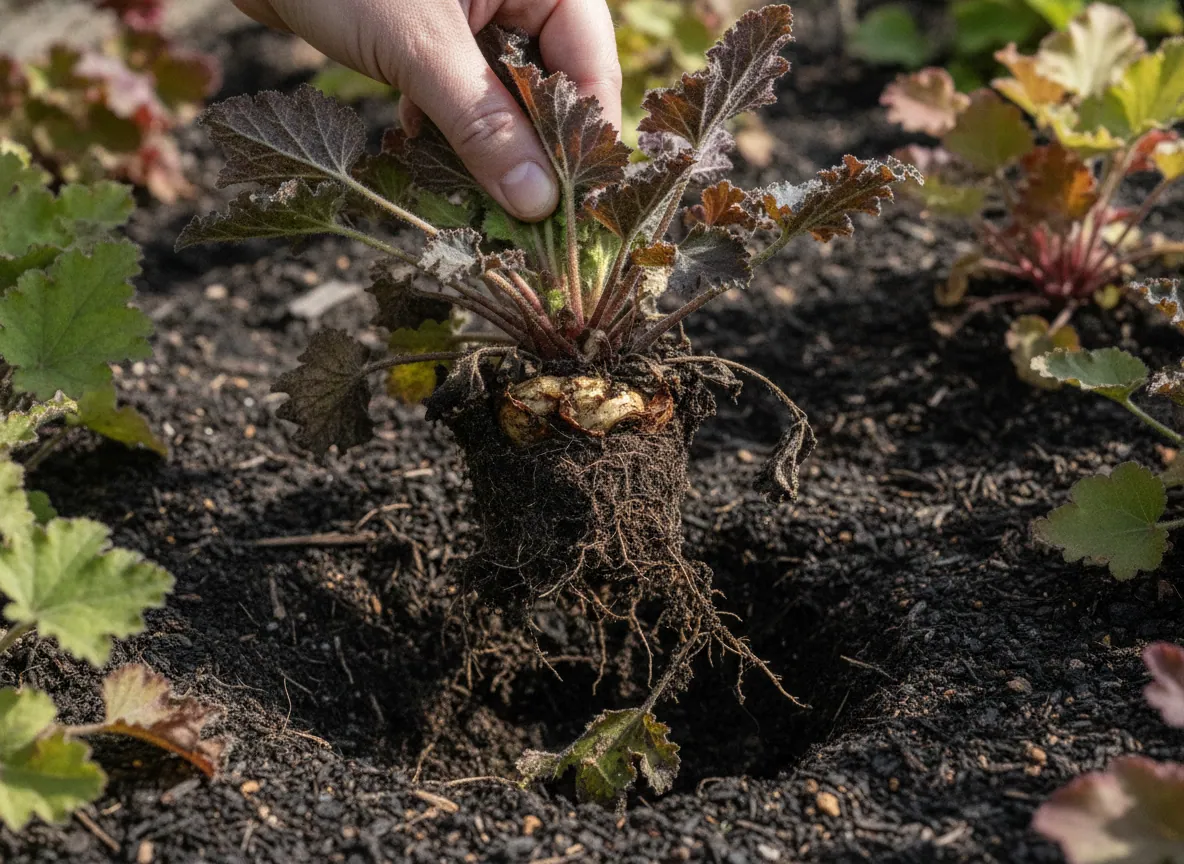
There’s a single, slightly alarming test that tells you almost instantly. Take hold of the wilting plant at the base and give it a gentle tug. If it’s healthy, it stays put — the roots hold. If vine weevil is the problem, the whole crown lifts straight out of the ground with barely any resistance, because there are no roots left to hold it. You’re holding a tuft of leaves attached to a bare, chewed-off stump.
Tip the plant over and you’ll usually find the culprits in the rootball or the soil beneath it: fat, creamy-white, legless grubs about a centimetre long, curled into a C-shape, with a distinct tan-brown head. Those are vine weevil larvae, and over the summer and into autumn they’ve worked their way through the entire root system, eating from the fine feeding roots up to the fleshy crown. The wilting isn’t the plant dying of cold — it’s a plant that has quietly had its roots eaten out from under it and can no longer take up water, which is exactly why it flops when the soil is still wet.
Heucheras are the vine weevil’s favourite host. If a pest is going to show up anywhere in your garden, it’s in the coral bells — and, close behind, in sedum, primulas, and anything growing in a container. So if one heuchera has gone over, check the rest, and check your pots.
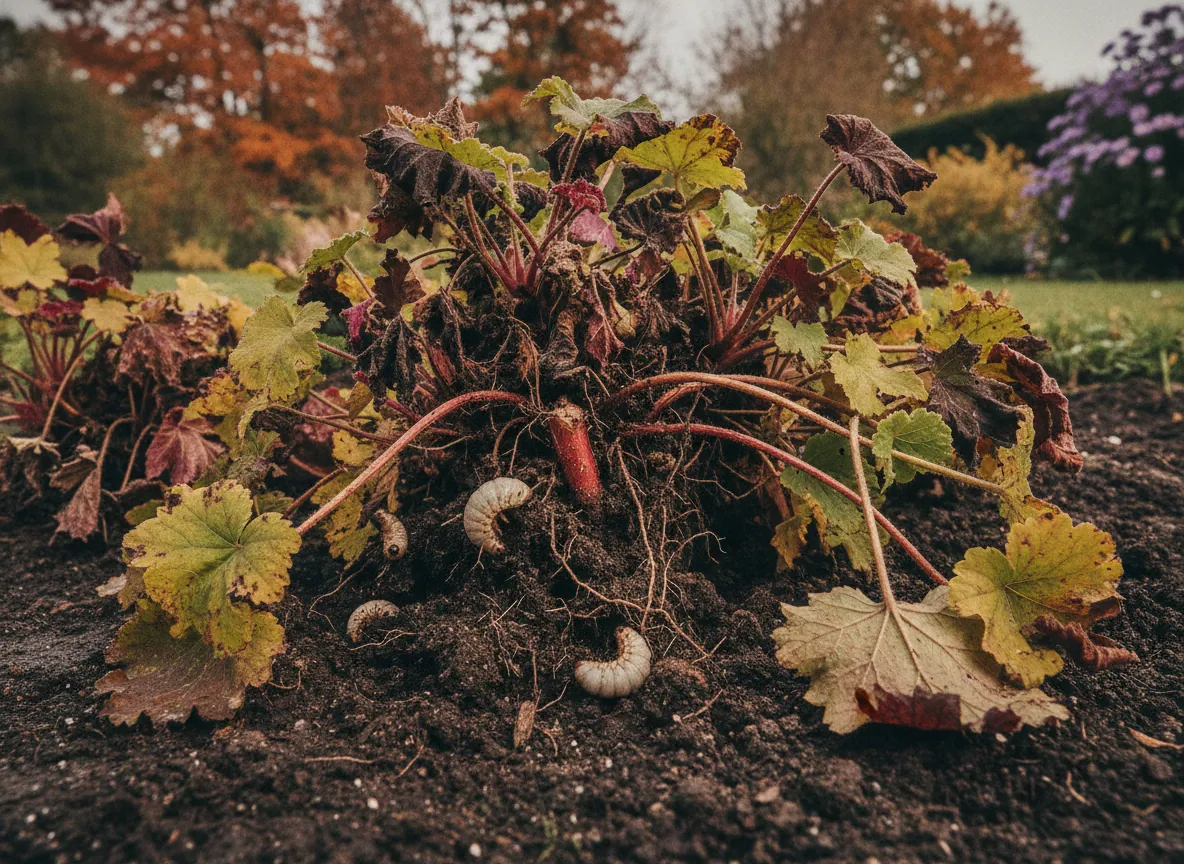 Heuchera plants collapsing in autumn with grubs visible in the soil — AI-generated illustration
Why autumn is the grubs’ season
Vine weevil runs on an annual cycle, and autumn is the dangerous end of it. The adults — dull-black, slow-moving beetles about 9 mm long with a short snout — do their damage in summer, notching neat, scalloped bites out of leaf margins by night. Unsightly, but rarely fatal. The real harm is done by their offspring, out of sight.
Through late summer each female lays hundreds of eggs in the soil around host plants. Those hatch into the grubs, and from autumn right through winter the larvae feed on roots — starting on the fine root hairs and working up to thicker roots and the crown as they grow. That’s why a plant that looked fine in August caves in through October and November: the grubs have been eating the whole time, and the plant only shows it once enough root is gone. It’s also why potted heucheras suffer worst — a container is a closed larder with nowhere else for the roots to run.
Because the larvae are the destructive stage and they’re active now, autumn is both when you see the damage and the best window to do something about it.
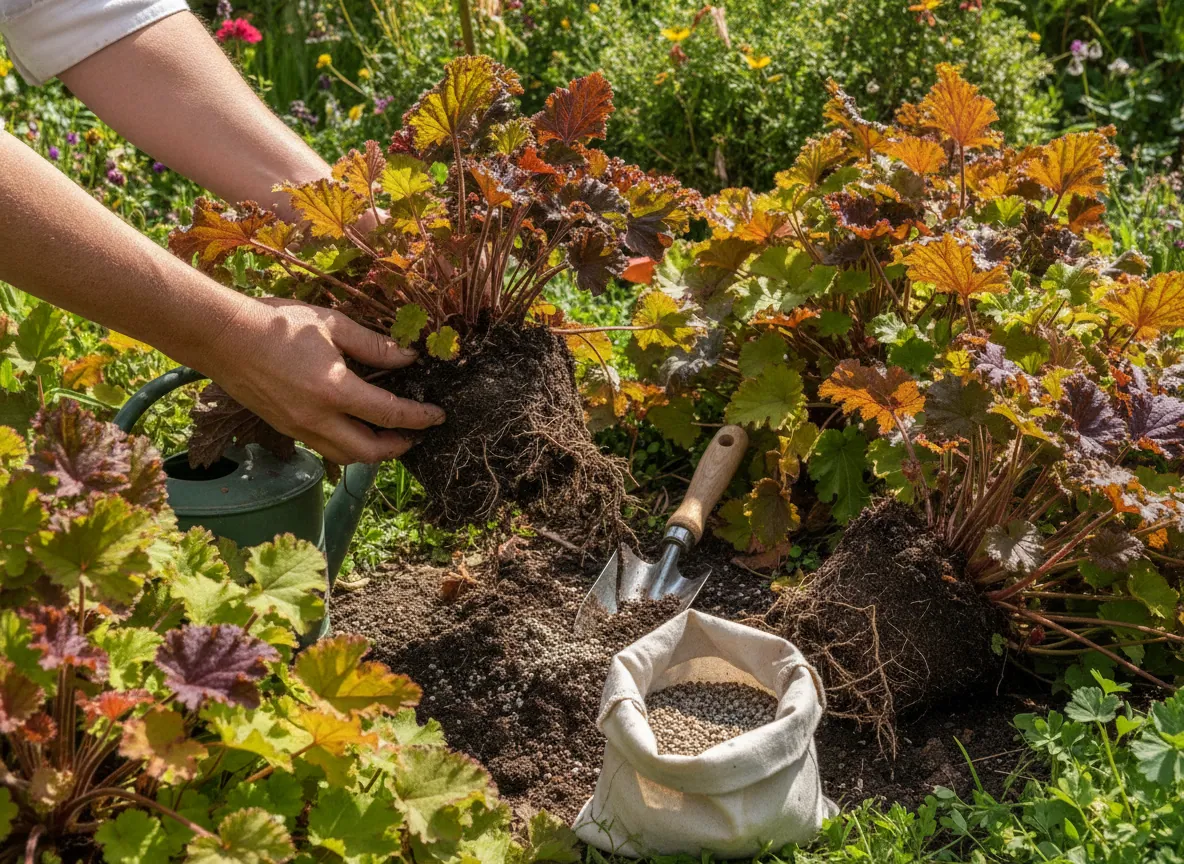 A person is tending to heuchera plants, examining roots and adding soil amendment — AI-generated illustration
What to do now: check the roots, treat the soil — and don’t cut back
Three jobs, in order of urgency.
1. Apply nematodes while the soil is still warm. The cleanest control for the larvae is a biological one: microscopic nematodes (Steinernema kraussei or Heterorhabditis bacteriophora) watered into moist soil and pots, where they seek out the grubs and kill them. Timing matters — they need soil that’s still above roughly 5°C, so the autumn application window is late August through October. Leave it much past now and the soil cools below the point where the nematodes work, and you’ve missed the year’s best shot. Water the ground thoroughly first, apply, and keep it damp. There’s a second application window in spring, but autumn is the one that catches this year’s grubs before they do the winter’s damage.
2. Rescue a collapsed plant as a cutting. A heuchera that lifts clean out with no roots looks like a goner, but it usually isn’t. Knock off all the old compost, cut away any remaining chewed root and the grubs with it, and you’re left with a bare crown and a length of woody stem. Dust the base with hormone rooting powder, pot it into fresh compost with the crown just at the surface, and treat it exactly like a cutting. Kept somewhere sheltered and lightly watered, it will almost always root again. You lose a season of size, not the plant.
3. Whatever you do, don’t cut it back. This is where people compound the problem. Faced with a floppy, tatty heuchera in autumn, the instinct is to shear it to the ground with everything else. Don’t. Heuchera needs no autumn pruning at all — the correct job is simply to pick off dead or tatty leaves and spent flower stems, and even that is better left until early spring. The evergreen foliage shelters the crown through the cold months; strip it now and you expose the one part of the plant that has to survive the winter. Save the tidy-up for March, when you can cut away the winter-worn leaves just as fresh growth begins.
The other reason a heuchera lifts — and it isn’t a pest
One honest caveat, because it saves a needless panic. Heucheras also rise out of the ground on their own, with no weevil involved. They’re shallow-rooted and build a woody, trunk-like crown that slowly pushes upward each year, and a hard frost heave or heavy rain on light soil can lift that crown proud of the surface. The giveaway is that the plant still has roots — it hasn’t wilted, it’s just sitting too high, often with bare woody stem showing and a loose, leggy look.
That’s not a pest, it’s just heuchera being heuchera, and the fix is a spring job: lift the plant, divide the crown if it’s gone leggy, and replant deeper so the crown sits right at soil level again. Do it as you divide other perennials — it’s the same impulse that drives the autumn clump-splitting that gives you more flowers, just timed for spring on heuchera. So before you blame the weevil, do the tug test: roots holding means replant; roots gone means grubs.
Let Cresco keep an eye on the coral bells
Vine weevil is a problem of timing as much as anything — the nematode window closes as the soil cools, and a wilting plant spotted in October can still be rescued where the same plant found in December can’t. Plant & Bloom by Cresco tracks your local conditions and the specific plants in your garden, so you get a nudge to treat for grubs while the soil’s still warm enough for it to work, and a reminder to leave the heuchera foliage standing rather than shearing it with the autumn tidy. Snap a photo of a collapsing plant and it’ll help you tell weevil damage from a crown that’s simply lifted — before you reach for the shears or write the plant off. The same “leave it standing over winter” logic runs through a lot of the autumn border, from sedum seedheads to hostas — heuchera just needs its leaves kept on for a different reason.