Chrysanthemums are the last big colour of the year — copper, bronze, rust and deep red carrying a border from late September until the frosts finally shut it down. And then, right on cue, the tidying instinct kicks in. The flowers brown off, the plant looks spent, and out come the shears to cut the whole thing flat as part of the autumn clear-up. On a genuinely hardy garden chrysanthemum, that flat autumn cut is the single most reliable way to lose the plant over winter. The job that keeps it coming back is one you don’t finish until spring.
Why the autumn cut is the risk
The problem isn’t the blade — it’s the timing. A hardy garden mum sits on a shallow, fibrous crown just at soil level, and that crown is the part that has to survive winter. Cut the plant down to the ground in October and you strip away everything that was protecting it. The bare crown now sits exposed to months of cold, and — the bigger killer in a mild, wet climate — months of rain sitting directly on the soft base. Cold rarely kills a hardy chrysanthemum outright; a waterlogged, rotting crown does, and an autumn cut is what leaves it open to the wet.
There’s a second trap in the name. A lot of the “mums” sold in full flower in autumn — the tight, dome-shaped pot plants stacked outside every supermarket — are florist or cushion types bred for a single season of display, not for hardiness. People plant them, cut them back like a border perennial, and are then surprised when nothing comes up in spring. Knowing which of the two you have changes everything you do next, so it’s worth sorting that out before you reach for the secateurs at all.
 A person’s hands gather cut flowers from an autumn garden with pruning shears nearby — AI-generated illustration
First, keep them flowering
Before you think about cutting anything, get the most out of the display you’ve got. Through the flowering weeks, keep deadheading — snip each faded bloom back to the first healthy leaf or side-bud, and the plant pushes energy into opening the next flush rather than setting seed. On a well-fed clump that steady deadheading can hold the show right through October and into November, which is exactly the stretch when the rest of the border has gone quiet. It’s the same trick that keeps rudbeckia flowering from August into October: remove the spent heads and you delay the plant’s switch into shutdown.
The switch to leave-it-alone comes at the same moment for chrysanthemums as it does for the rest of the late border — the first hard frost. Once frost blackens the foliage and finishes the flowers for good, deadheading is over and the plant is heading into dormancy. That’s your cue to change jobs.
Leave the top growth as a frost blanket
Here’s the part that feels wrong and is right: once the frost has taken the foliage, leave the dead stems standing. Don’t cut a green, still-growing plant back either — that only pushes soft new shoots that the next frost will kill and waste the crown’s reserves.
Those spent stems and the collar of dead leaves around the base are the plant’s own insulation. They trap air and dead litter over the crown, buffer the daily freeze-and-thaw that heaves shallow roots out of the ground, and — crucially in a wet winter — help keep the worst of the rain off the base. A crown under a tangle of its own old growth comes through far more reliably than one cut flat and left naked to the weather. It’s the same logic that keeps verbena bonariensis standing until spring: the dead structure is doing a job right up until the day you finally cut it.
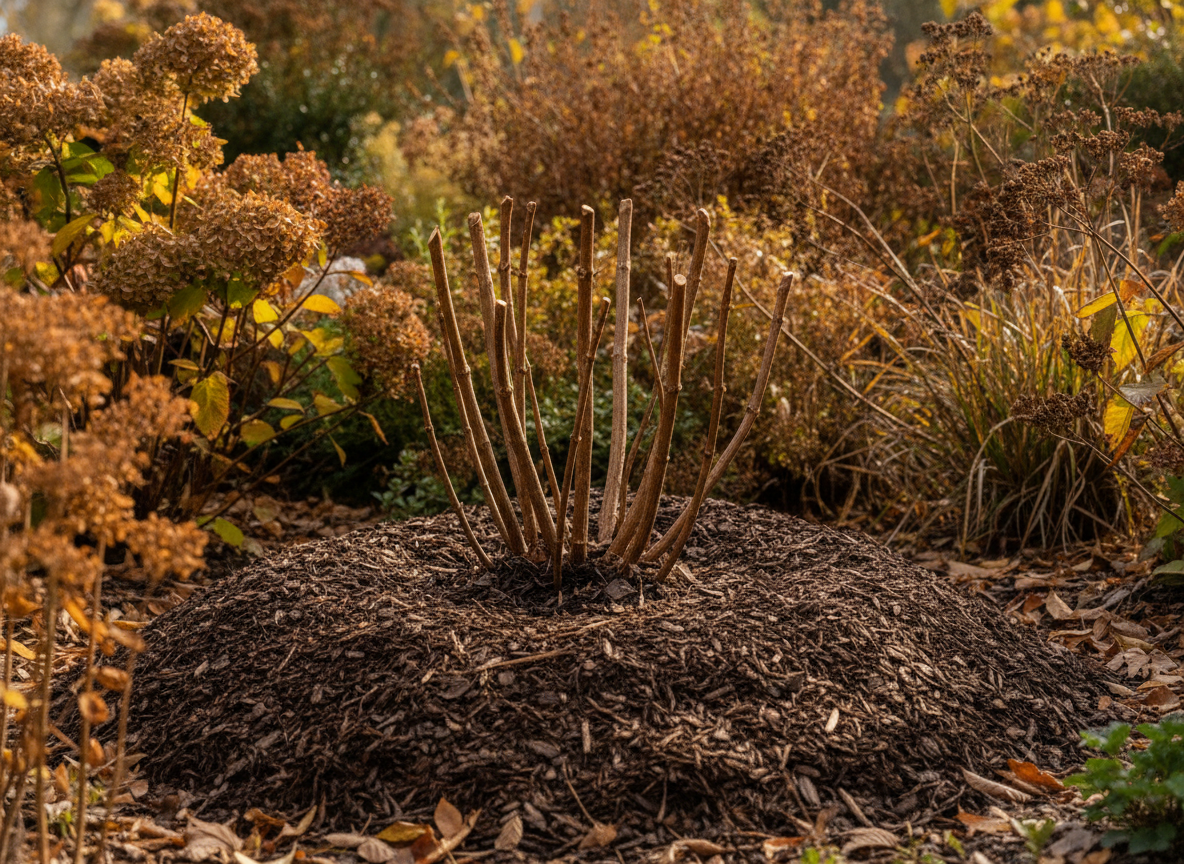 A mounded pile of dark mulch surrounds a cluster of cut plant stems — AI-generated illustration
Mulch the crown, not the stems
Standing stems do a lot, but in a cold or exposed garden the belt-and-braces move is to add a mulch once the ground has cooled and the plant is dormant. Pile a loose, airy layer — 8–10 cm (3–4 in) of leaf mould, composted bark, straw or bracken — over and around the crown. The point is insulation and drainage: you want something that breaks the freeze without packing down into a cold, wet mat. Avoid heavy, sodden material sitting straight on the crown, which does the very rotting you’re trying to prevent. In the coldest gardens, a few evergreen prunings or fern fronds pushed in over the top hold everything in place and add another layer of air.
If your soil is heavy clay that sits wet all winter, mulch alone may not be enough — the single best thing you can do for a chrysanthemum’s winter survival is get it into free-draining soil in the first place, because it’s the wet, not the cold, that does most of the killing.
Tender ‘florist’ mums are a different story
If yours are the supermarket pot mums, no amount of standing stems or mulch is a guarantee — many simply aren’t bred to take a hard winter outdoors. You’ve got two honest options. Treat them as a one-season splash, enjoy them and let them go. Or, if you want to keep them, lift the plant after the first frost has knocked it back, cut the top growth down to about 15 cm, pot it into just-damp compost, and store it somewhere frost-free but cool and light — an unheated porch, a cold greenhouse, a shed windowsill. Keep it barely moist over winter, and pot it back out once the frosts are done. It’s the same “lift or leave, let the frost decide” call you make with dahlias: in a mild, well-drained garden you can often risk leaving them; in a cold, wet one, lifting is the safe bet.
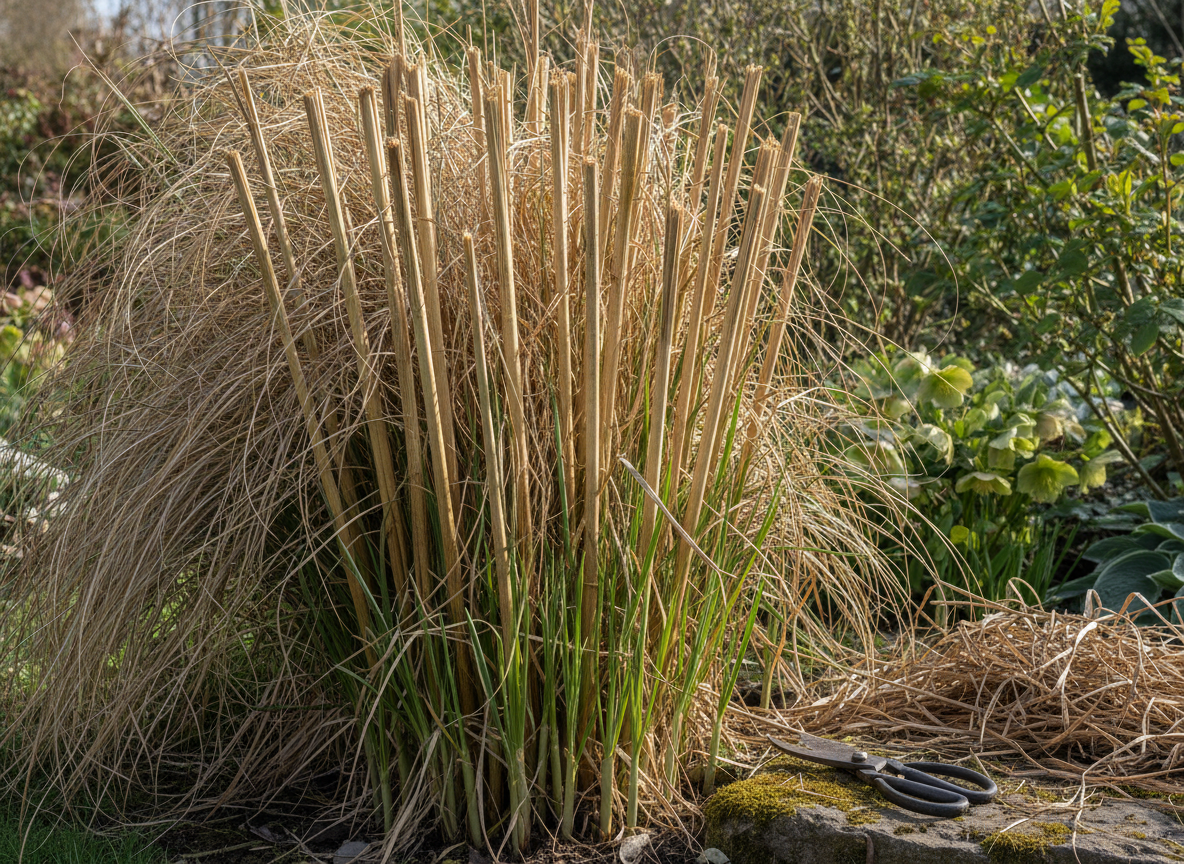 A cut back ornamental grass stands next to pruning shears in a garden — AI-generated illustration
When and how to cut back in spring
Spring is when the plant tells you what survived. As the weather warms — roughly March into April — watch the base of the clump for fresh green shoots pushing up from the crown. That new growth is your signal to finally clear the old top. Cut the dead, brittle stems right down to just above the new shoots, a few centimetres from the ground, and pull away the winter mulch so light and air can reach the emerging growth. Give the clump a feed as it wakes up.
This is also the moment for the one bit of pruning that makes chrysanthemums bushy instead of leggy: once the new shoots reach around 20 cm in late spring, pinch out the growing tips. That forces the plant to branch, and more branches means more flowering stems come autumn — the difference between a sparse plant with a few big blooms and a dense, generous one. But that’s a spring job. Right now, the whole task is restraint: enjoy the colour, deadhead while it lasts, and then leave well alone.
The short version
- Don’t cut hardy chrysanthemums to the ground in autumn. A bare crown left to a cold, wet winter is the classic way to lose the plant to rot.
- Deadhead through the display to keep the flowers coming into November, then stop once the first frost blackens the foliage.
- Leave the dead top growth standing as a frost blanket over the crown, and add a loose, airy mulch in cold or exposed gardens.
- Know your mums. Tender florist and cushion types often won’t overwinter outside — lift and store them, or treat them as a single season.
- Cut back in spring, not now — down to the new shoots once they appear, then pinch out the tips in late spring for a bushier plant.
Not sure whether the chrysanthemums in your border are the hardy kind or the throwaway kind — or when anything else needs cutting? Cresco builds a pruning and care schedule around your actual plants and your local weather, so the reminder to leave a crown alone, or to lift it before the frost, lands at the right moment instead of a guess against a generic calendar.