The flop you’re seeing now was decided in June
Michaelmas daisies — the autumn asters, mostly Symphyotrichum novi-belgii (New York aster) and S. novae-angliae (New England aster) — take their name from Michaelmas, 29 September, the week they hit full colour. And every year, right on cue, they do the same disappointing thing: the top half is a haze of lilac and pink while the bottom half is bare, brown and dusted grey-white, the whole clump splaying outward from a hollow middle.
It looks like a September failure. It isn’t. The flop and the bare legs were set months ago — a thin-stemmed variety that was never pinched back, a clump left undivided one year too long, and a dry spell in July the roots never really recovered from. What you do in the next fortnight can’t undo any of that. But it does decide whether the plant sails through winter and comes back stronger, or rots off at the crown before spring.
So the September job with asters is mostly about knowing what not to reach for.
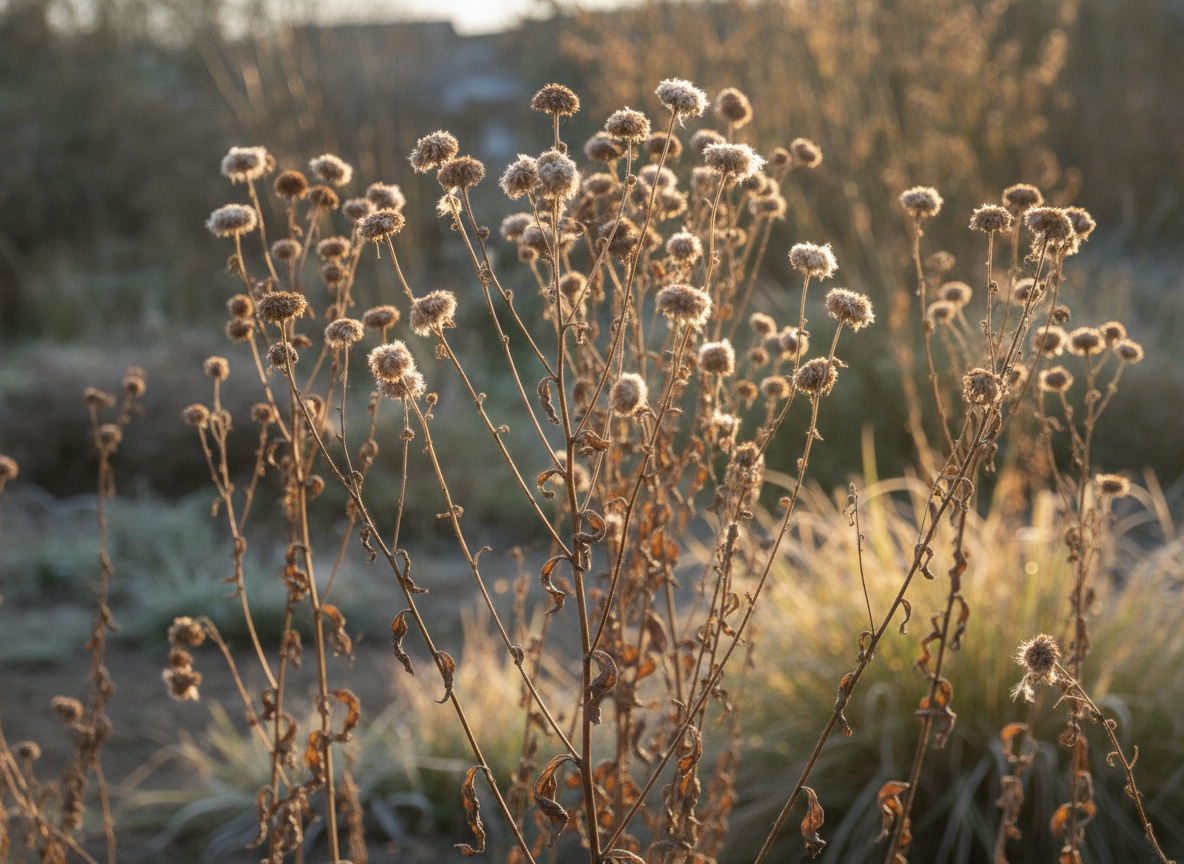 Dried michaelmas daisy stems stand tall in a sunlit garden — AI-generated illustration
Don’t cut them back — leave the stems standing
Faced with a collapsing, browning clump, the instinct is to cut the whole thing down and tidy the border for winter. Resist it.
Leave the stems and seedheads standing until spring. Three reasons, and they all matter:
- The faded flowerheads set seed that goldfinches and other small birds work through on cold mornings — one of the last natural feeds of the year.
- The top-growth catches leaves and frost and insulates the crown through the worst of the cold. Cut it flush now and you expose the base to every hard frost and every winter downpour.
- Frosted aster stems are one of the quiet pleasures of a January border — structure where everything else is flat.
Cut them right down to the ground in early spring instead — February or March, once you can see the new basal shoots pushing at the base. Like ornamental grasses, an aster earns its keep far more standing through winter than cut flat in September.
One honest caveat. New York asters self-seed freely, and the seedlings rarely come true — you get muddy mauve strangers, not the named variety you paid for. If that bothers you, snip off the very worst seedheads before they shed and leave the rest. For most borders, the birds win that trade.
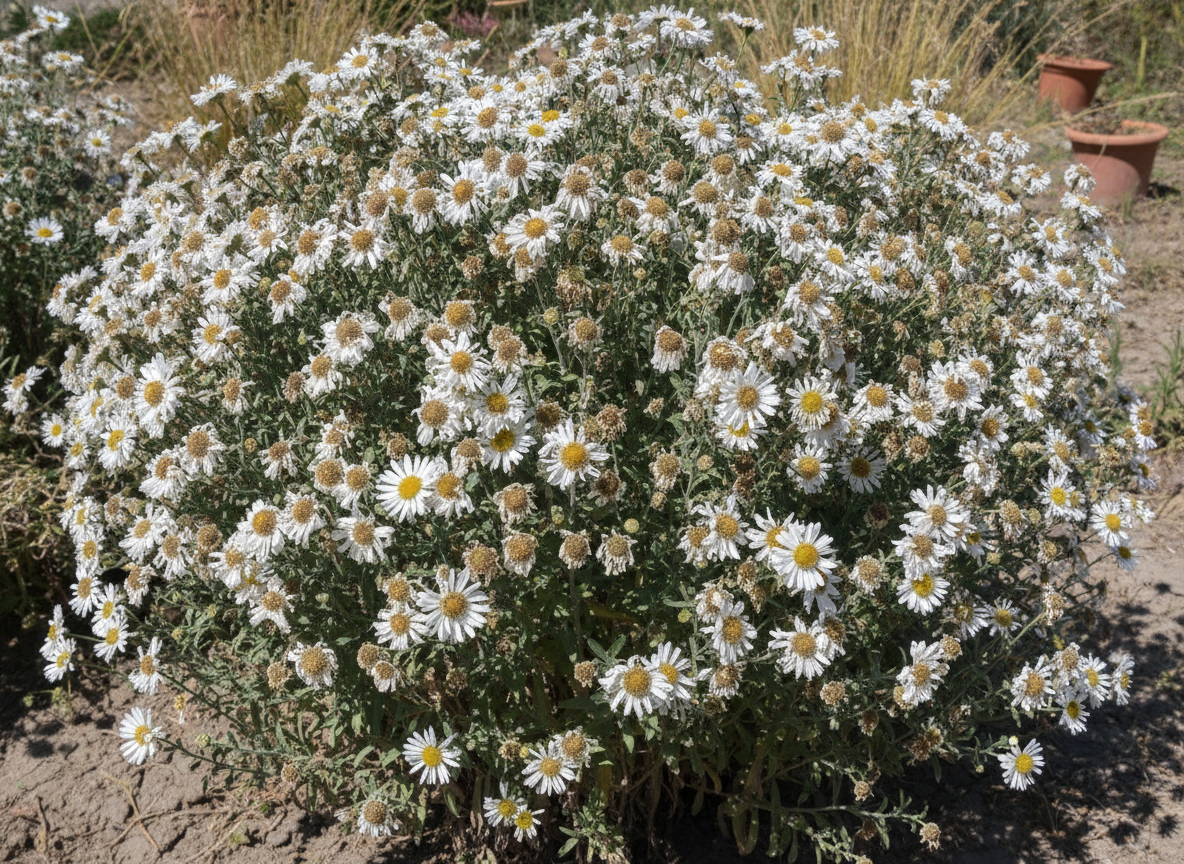 A large bush of white michaelmas daisies grows in a garden — AI-generated illustration
The white bloom is thirst, not damp
That grey-white dusting up the lower leaves is powdery mildew, and asters get it worse than almost anything. The counterintuitive part: it’s a sign of dry roots, not wet leaves. Mildew takes hold when the plant is stressed for water and the clump is so congested that no air moves through the base — which is exactly the state a big, undivided New York aster is in by late summer. It’s the same drought-and-crowding story that strips the lower leaves off bee balm in July.
You can’t cure this year’s mildew, but you can stop feeding it. Water at the base — never over the top — through any dry spell, and keep a mulch on to hold moisture in the soil. Don’t strip off healthy green leaves in a panic; you’ll only stress the plant further and lose the foliage that’s still feeding the crown.
The lasting fix is at the nursery, not on the plant. When you replace or add, choose the types that shrug mildew off: New England asters (S. novae-angliae), Aster × frikartii ‘Mönch’ and Symphyotrichum ‘Little Carlow’ stay clean and upright where the old novi-belgii cultivars sulk.
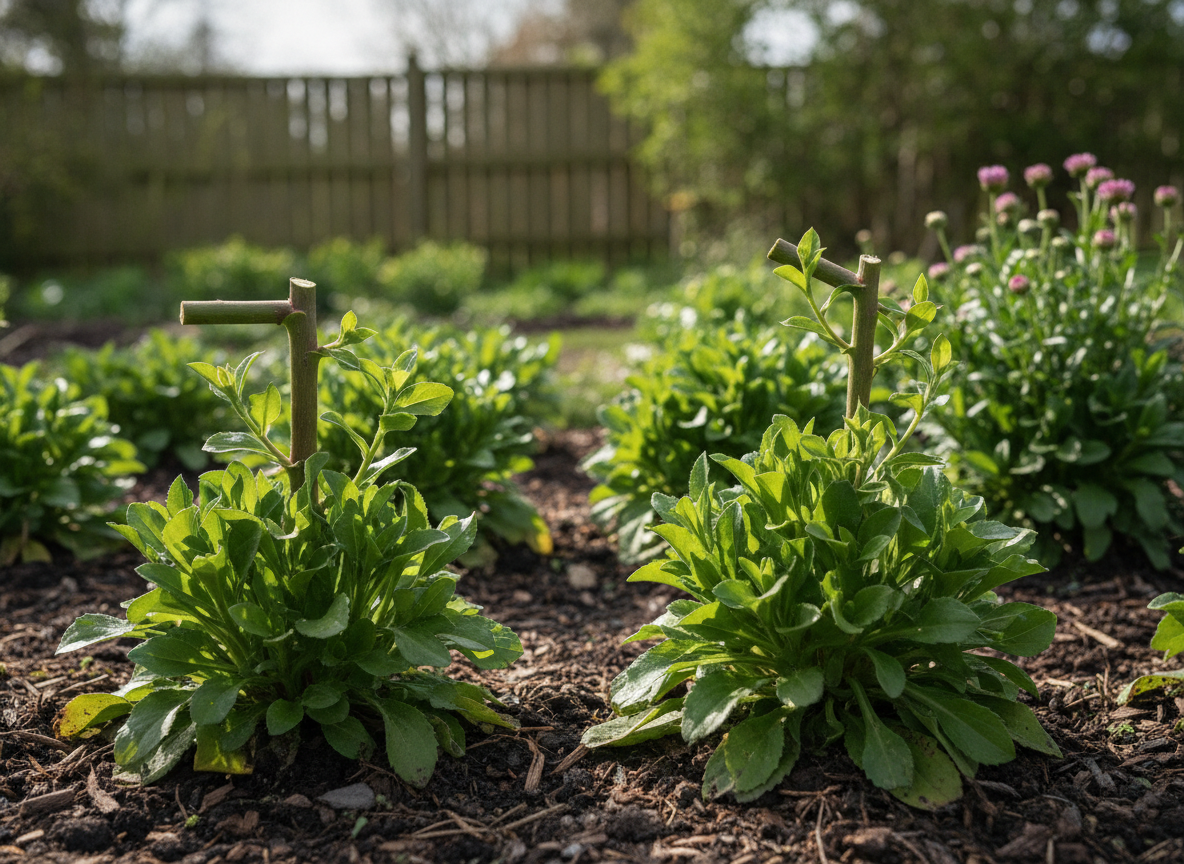 Michaelmas daisies with two spring cuts in a garden setting — AI-generated illustration
The two spring cuts that stop next year’s flop
Everything that made this September a mess is fixed in spring and early summer — not now.
Divide the clump, in spring. A congested aster is a flopping, mildew-prone aster, and lifting and splitting it every two or three years gives you vigorous young growth with room to breathe. Asters are autumn-flowerers, though, so you don’t touch them now while they’re still working — you divide them in spring, unlike the summer perennials you split this month.
Give them the Chelsea chop in late May. Cut the whole clump back by a third to a half in the last week of May and you trade height for sturdiness: shorter, bushier plants that hold themselves up, flower a little later and longer, and let air move through the base to keep the mildew down. It’s the single best thing you can do for a floppy aster, and it works the same magic on catmint, phlox and heleniums.
For this year, all you can do is prop the worst stems with pea-sticks or a support ring and let the plant finish its show. Then leave it standing, and put the split and the chop in the calendar for next spring.
Cresco keeps the dividing, chopping and pruning window for every plant in your garden, so the aster you’re propping up today gets its chop the right week in May — and never flops like this again.