By mid-September the flowers on your sea holly have long since faded, and the whole plant has dried to a strange metallic silver-blue — cones, ruffs of spiky bracts and all. It looks, frankly, a bit dead, and that’s usually enough to earn it a place on the autumn cut-back list. Leave it exactly where it is. Eryngium is one of the few border plants that is arguably better in December than it was in July, and cutting it down now throws away its best three months and puts the plant itself at risk.
Why you shouldn’t cut it back now
Sea holly comes from dry, sunny, sharply drained ground — sea cliffs, gravel, poor stony soil. It is built to shrug off drought, but the one thing it will not forgive is a wet crown in winter. Sitting cold and damp is what kills Eryngium, far more often than cold alone, and the plant rots from the base up.
The standing stems are part of how it avoids that. Left up, the old growth keeps the worst of the rain off the crown and lets the base dry between downpours. Cut everything to the ground in September and you leave a soft, exposed crown sitting on bare, wet soil through the whole of the dark half of the year — the exact conditions that turn a healthy plant into a mushy gap by March. A fresh cut going into a cold, wet autumn is also an open door for rot to creep down into the crown. There is simply no upside to cutting now, and a real risk to it.
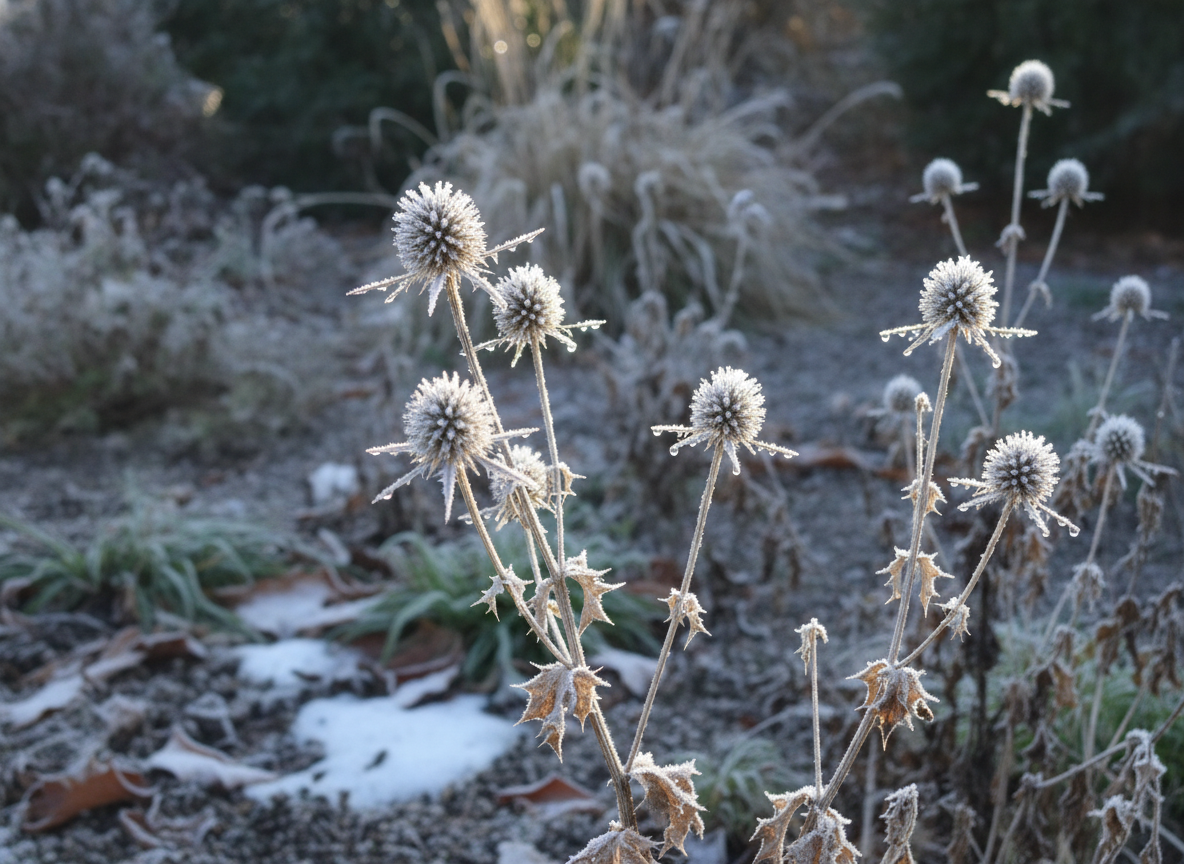 AI-generated illustration
The best winter skeleton in the border
Here is the real reason to leave it, though: nothing else in the garden does winter quite like sea holly. Those stiff, branching stems and the ring of spiky bracts around each cone don’t flop or collapse the way most perennials do once the frost comes. They hold their shape rigidly right through, and because the whole plant has cured to a hard steel-blue, it catches low winter light and a morning’s frost better than almost anything you can grow. A row of Eryngium silhouettes stitched with hoarfrost is one of the quiet highlights of a January garden.
It earns its keep for wildlife, too. The seed in those cones is worked over by goldfinches through autumn and winter, and the mass of dry, hollow stems shelters overwintering insects down at the base. An autumn-cut border is a bare border; one where the structural seedheads are left standing is still doing something in the depths of winter.
If you already leave your sedum seedheads standing through winter, or let the ornamental grasses stand until spring, sea holly belongs in exactly that group — and it holds its form longer and stiffer than most of them. It’s the same logic as leaving echinacea cones for the birds: the plant looks finished, but its winter job is only just beginning.
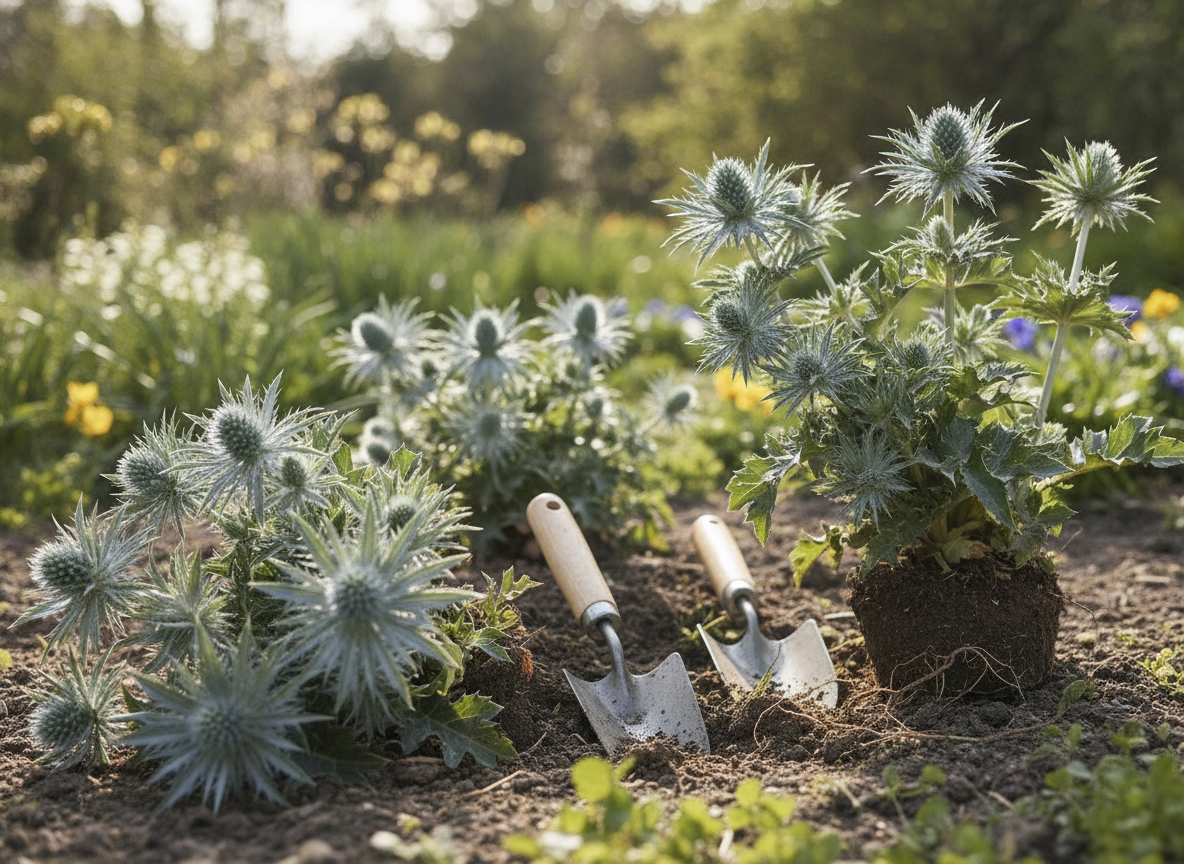 Several sea holly plants and garden trowels sit in a garden — AI-generated illustration
The spring mistake: don’t dig it up
The bigger danger to sea holly isn’t the autumn secateurs — it’s the spring spade. Eryngium is one of the last things in the border to wake up. While everything around it is greening up in April, a sea holly can still be a bare patch of soil with nothing showing at all, often not breaking ground properly until May or even June.
Every spring, gardeners look at that empty gap, decide the plant died over winter, and dig it out — or worse, plant something else straight on top of it. Then the sea holly surfaces a month later, straight through the newcomer, or not at all because the spade went through its crown. So the rule is simple: do not write off a sea holly, and do not dig its spot, until well into early summer. If you leave the old stems standing over winter (see above), they double as a marker showing exactly where the plant is, so you don’t hoe or fork over the crown by mistake.
That deep taproot is also why sea holly hates being moved or divided. It resents root disturbance, and a lifted, split plant often sulks or dies. Plant it where it can stay, and if you want more, take root cuttings in early winter or let it self-seed gently around the base rather than trying to dig and divide the clump.
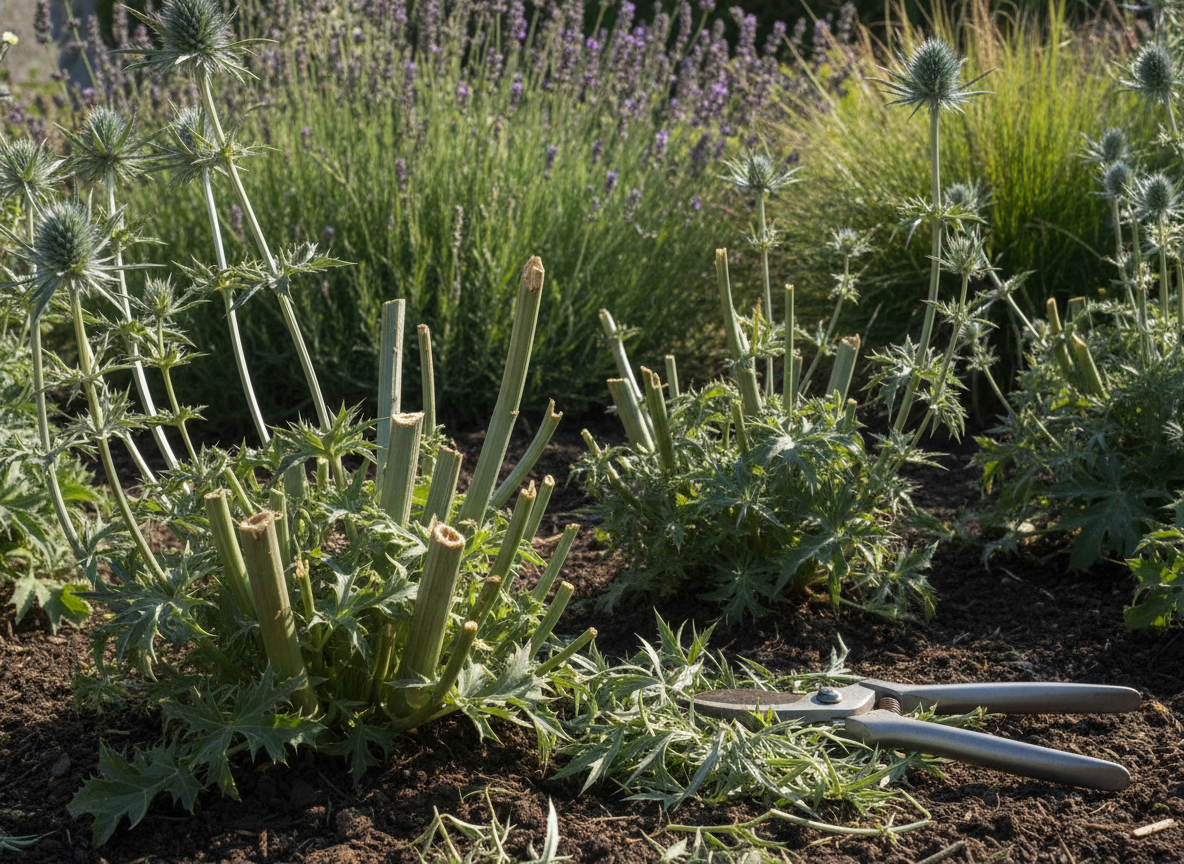 A sea holly plant cut back with garden shears in a garden — AI-generated illustration
When and how to cut it back
The right time is late winter into early spring — roughly February into March — and, as with the autumn decision, you take your cue from the plant, not the calendar. Wait until the worst of the winter wet is behind you and you can see the first fresh basal growth beginning at the crown. That’s the signal the old top growth has finished its job and can come off.
Then cut the dried flower stems down close to the base with clean secateurs. They snap away easily by then. Clear away any soggy, collapsed foliage at the same time — tidying the base in spring is exactly what stops rot getting a hold on the emerging crown. Don’t be tempted to “improve” the clump by lifting and splitting it while you’re there; remember the taproot, and leave it be.
That’s the whole yearly rhythm: enjoy the flowers and the bees in summer, leave everything standing through autumn and winter, and cut back to the base once spring growth shows.
The short version
- Don’t cut sea holly back in autumn. The standing stems keep winter wet off the crown, and a wet crown — not cold — is what rots and kills Eryngium.
- Leave the seedheads up for winter. They hold their steel-blue shape stiffly through frost, feed goldfinches, and shelter insects — the best structural skeleton in the winter border.
- Don’t dig its spot in spring. Sea holly wakes late (May–June); the standing stems mark where it is so you don’t lose it to the spade.
- Cut to the base in late winter, once new basal growth shows — and don’t lift or divide it, the taproot resents disturbance.
Not sure when your own sea holly — or anything else in the border — actually needs cutting? Cresco builds a pruning schedule around your specific plants and your local weather, so you get a reminder at the right moment instead of guessing against a generic calendar.