By mid-September the tall wands of Verbena bonariensis are going over — the little purple button-flowers fading to a dry, brownish grey, the airy stems starting to look untidy against everything else winding down. The instinct is to grab the secateurs and cut the whole thing to the ground as part of the autumn tidy. Resist it. On this plant, the autumn cut is the one that costs you the most, and it does nothing the plant can’t do better itself over winter.
Why the autumn cut is the mistake
Verbena bonariensis is a short-lived perennial that behaves as though it were tougher than it is. In a mild garden it sails through winter; in a cold, wet one it can be killed outright — and cutting it back in autumn tips the odds firmly towards killed.
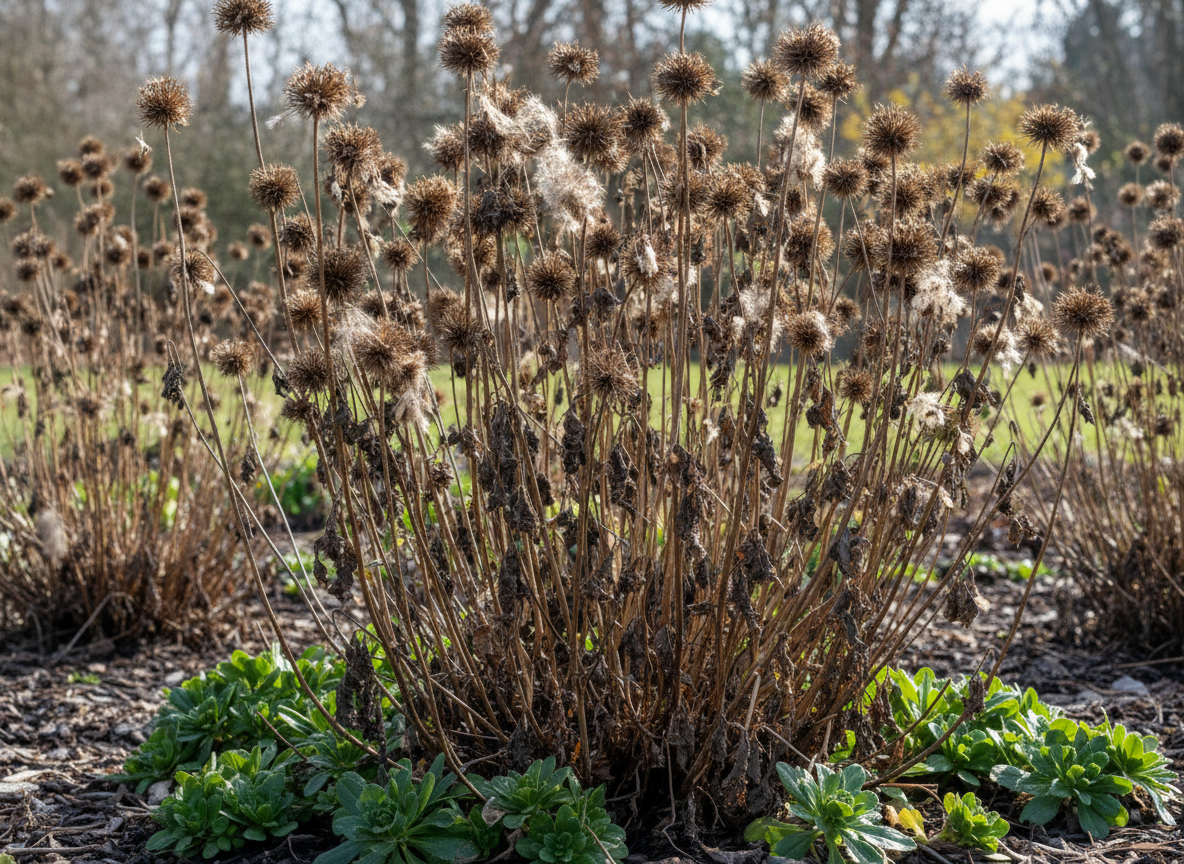
Two things go wrong when you cut now. First, those hollow stems and the tangle of old growth are the plant’s own frost blanket: they trap air and dead leaves around the crown, buffering it from the worst of the cold and, just as importantly, keeping the wet off the base. Strip that away in September and you expose a soft crown to months of rain sitting on bare soil — the classic recipe for winter rot. Second, a fresh cut is an open wound going into the coldest, wettest part of the year, and cold, damp conditions are exactly when dieback creeps down a cut stem into the crown.
Leave it standing and none of that happens. The plant hardens off on its own schedule, the old growth shields the base, and you keep every option open for spring.
 AI-generated illustration
The seedheads are next year’s plants
Here is the part most autumn-tidiers don’t realise they’re throwing away. Verbena bonariensis is not a plant you rely on to live forever — you rely on it to seed around. Left alone, those spent flowerheads ripen thousands of seeds and scatter them at the base of the parent, and next spring you get a scatter of free seedlings, often in better spots than you’d have chosen yourself. A three-year-old clump that finally gives up over a hard winter is quietly replaced by its own offspring, and the drift keeps going.
Cut the seedheads off in autumn and you cut off that succession. You’re left depending on the original crown surviving the winter — the very thing that’s least reliable — with no backups coming up behind it. Leaving the heads standing is how this plant is supposed to persist. If you already leave your sedum seedheads standing through winter, this is the same logic with an extra payoff: not just winter structure, but next year’s plants for free.
 A frosty garden with birds on cut back plants — AI-generated illustration
Frost, birds and a garden that still has something to look at
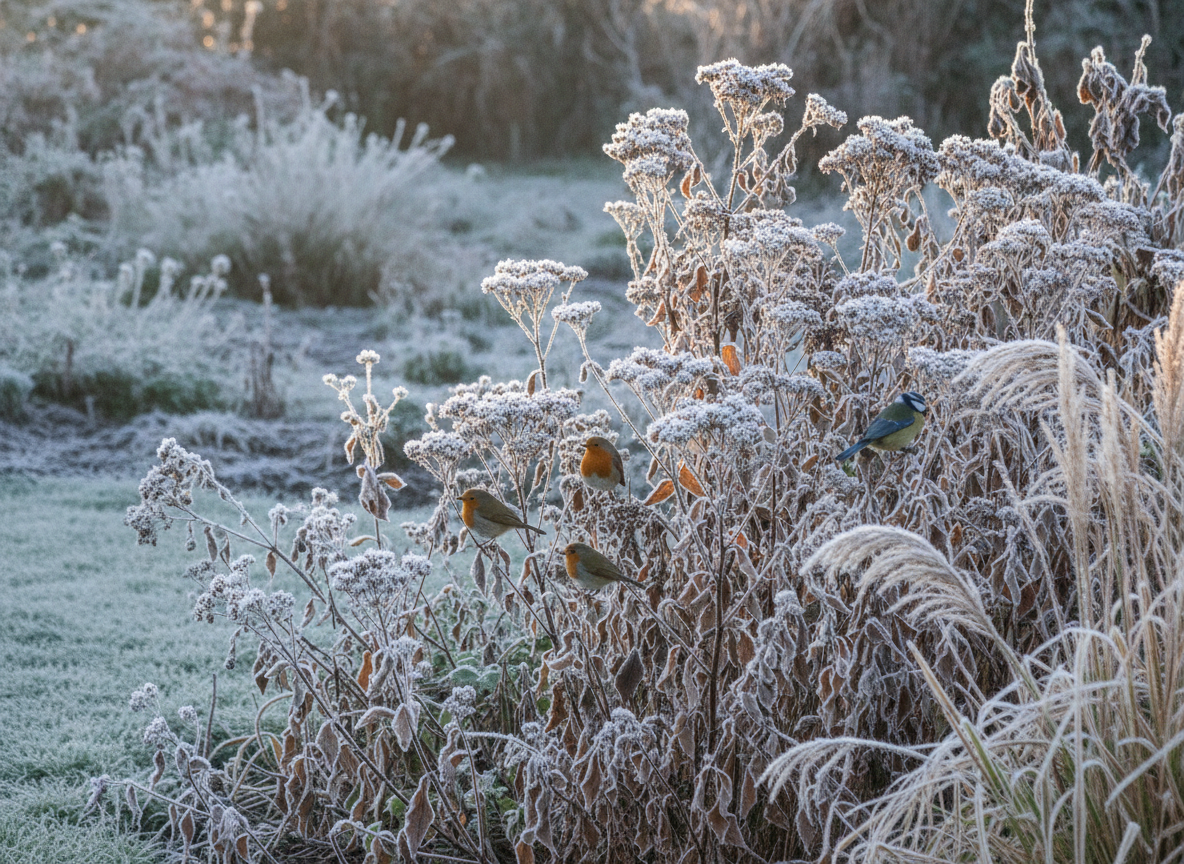
The wildlife case is the easy one. Standing verbena is a slim, see-through winter silhouette — the thin stems hold frost beautifully on a still cold morning, and the seedheads are worked over by goldfinches and other small birds well into the new year. The hollow stems and the litter of dead foliage at the base shelter overwintering insects, which in turn feed the birds. An autumn-cut border is a bare border; a border with verbena, grasses and seedheads left up is still doing something in January.
That’s not just sentiment — it’s the same principle behind leaving ornamental grasses standing until spring and echinacea cones for the birds. Verbena slots straight into that group: cut it and you’ve taken a piece out of the whole winter picture, not just one plant.
When and how to actually cut it back
The right time is early spring — roughly March into April, depending on how your season runs — and the signal to watch for is not the calendar but the plant. Wait until you can see fresh green shoots pushing up from the base of the crown, or a rosette of new leaves forming at ground level. That’s the plant telling you it survived and is ready to go again.
Then cut the old, dead stems down to about 15 cm (6 in) above those new shoots. Don’t cut flush to the ground — leaving a short stub protects the emerging growth and marks where the plant is so you don’t hoe it off by accident. The old stems will be brittle and hollow by spring and snap away easily; a clean pair of secateurs is all you need. Cutting hard back like this in spring is also what encourages several strong stems to break from the base, giving you a fuller, better-branched plant than one straggly survivor.
If a hard winter has killed the crown outright, spring is also when you’ll find out — and this is exactly why you left the seedheads: check around the base for self-sown seedlings before you write the plant off.
 The gardener deadheads flowers in a summer garden — AI-generated illustration
Deadheading in summer is a different job
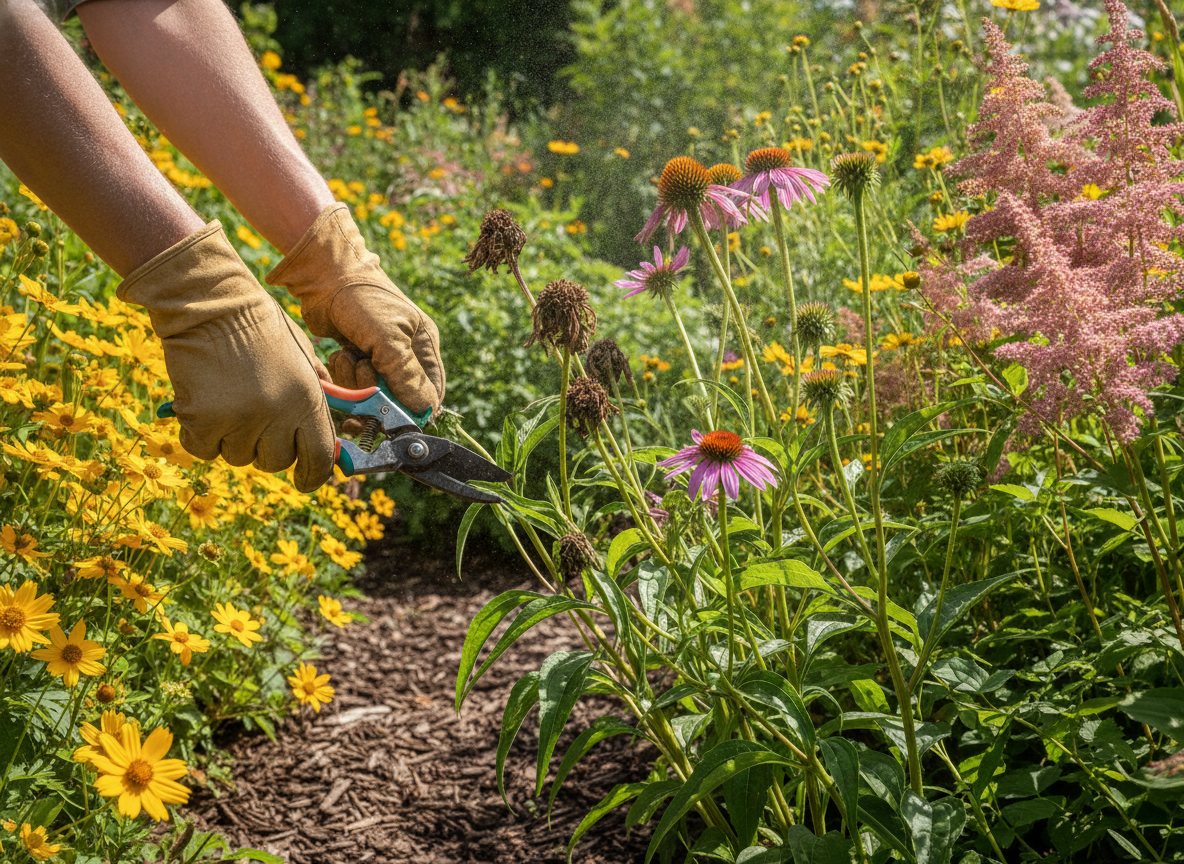
None of this means you never touch verbena. Through summer, snipping off individual spent flowerheads down to a leaf joint keeps the plant flowering longer and tidier — that’s ordinary deadheading, and it’s worth doing right up until late summer. The switch happens around now: once you’re into September, stop deadheading and let the last flush of heads set seed. That’s the handover from “keep it flowering” to “let it seed and shelter itself for winter.”
The short version
- Don’t cut back verbena bonariensis in autumn — the old stems shelter the crown from cold and wet, and cutting now invites rot and dieback.
- Leave the seedheads standing. They’re this short-lived plant’s insurance policy: free self-sown seedlings for next year, plus food for the birds.
- Cut back in early spring, once new shoots show at the base — down to about 15 cm, not flush to the ground.
- Stop deadheading in September so the final heads can set seed.
Not sure when your own verbena — or anything else in the border — actually needs cutting? Cresco builds a pruning schedule around your specific plants and your local weather, so you get a reminder at the right moment instead of guessing against a generic calendar.