Mid-October is when the secateurs come out for everything that looks gaunt, and a mature mahonia looks very gaunt indeed — bare stems, a tuft of holly-like leaves stranded at the top, nothing happening lower down. It is the obvious candidate for an autumn shorten. Leave it alone. The spikes forming at those bare tips right now are about to open into the one shrub in the garden that flowers through the dead of winter, and a cut today throws the whole show on the compost heap.
Why October is the worst time to cut it
On the winter-flowering mahonias — the tall Mahonia × media hybrids like ‘Charity’, ‘Winter Sun’ and ‘Lionel Fortescue’ — the flower buds sit right at the ends of the shoots. They swell through autumn and open into long, arching yellow racemes any time from November to March, scented like lily-of-the-valley and often the only nectar in the garden when the first bumblebees are out on a mild day.
Cut the tips now and you remove every one of those spikes before they open. You lose the flowers, the scent, the winter structure, and the early forage in a single pass. It is the same mistake that costs people their fatsia flowers — another architectural evergreen that chooses autumn and winter to do its thing, exactly when the tidy-up instinct is strongest.
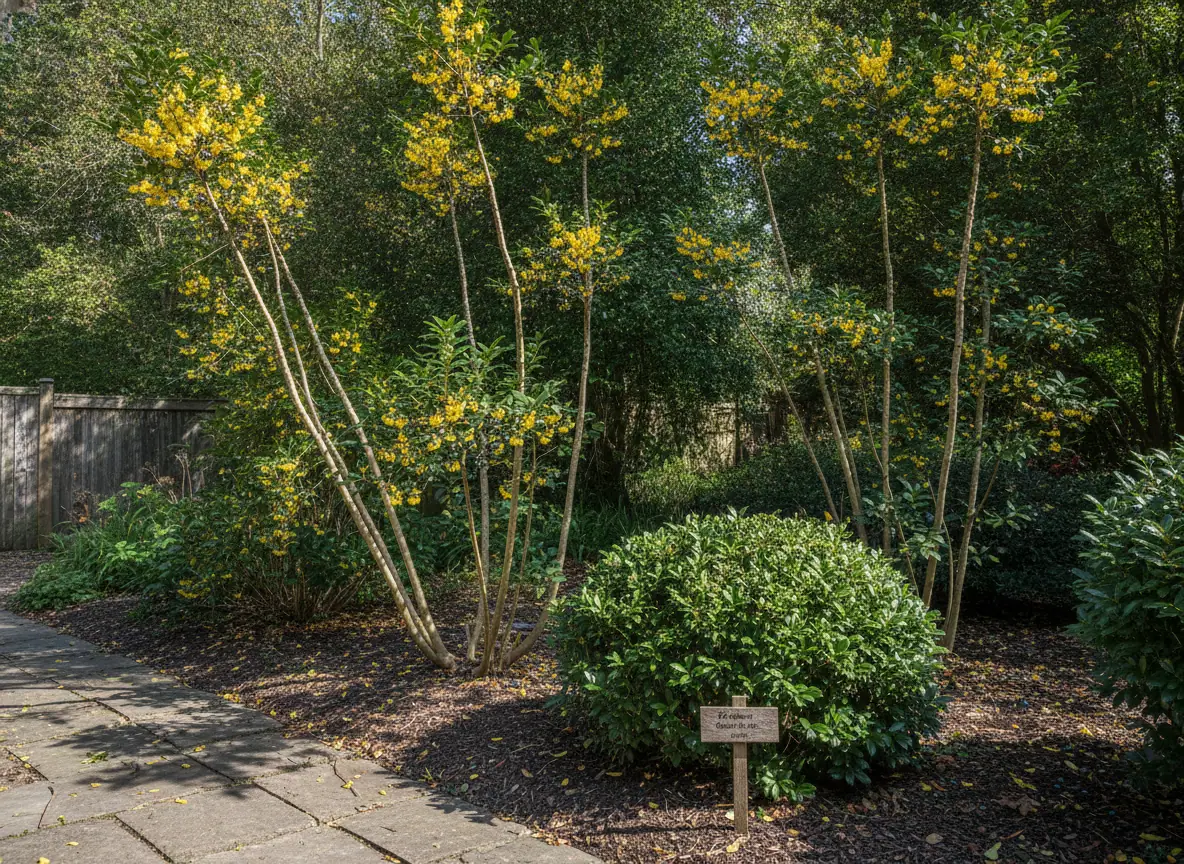 A tall mahonia with yellow racemes on bare stems beside a low, mounded Oregon grape — AI-generated illustration
Know which mahonia you have
Timing turns on the species, because not every mahonia flowers in winter.
- Mahonia × media (and the older M. japonica) are the tall, upright, winter-flowering kind, usually 1.5–3 m, with the scented racemes from late autumn into early spring. Prune these just after the flowers fade — late winter or early spring — which gives the plant the longest possible run of growing weather to rebuild before the next flowering season.
- Mahonia aquifolium, the low, suckering Oregon grape, is a different plant: it flowers in April and May, not winter, and rarely tops a metre. Leave the shears off it in autumn too. If it needs tidying, cut it back after that spring flush — it takes hard pruning well and will resprout happily from the base.
If you are not sure which you have, the tell is height and timing: a tall shrub with buds at the tips in October is almost certainly a × media hybrid, and the rule is the same either way — wait for the flowers to finish.
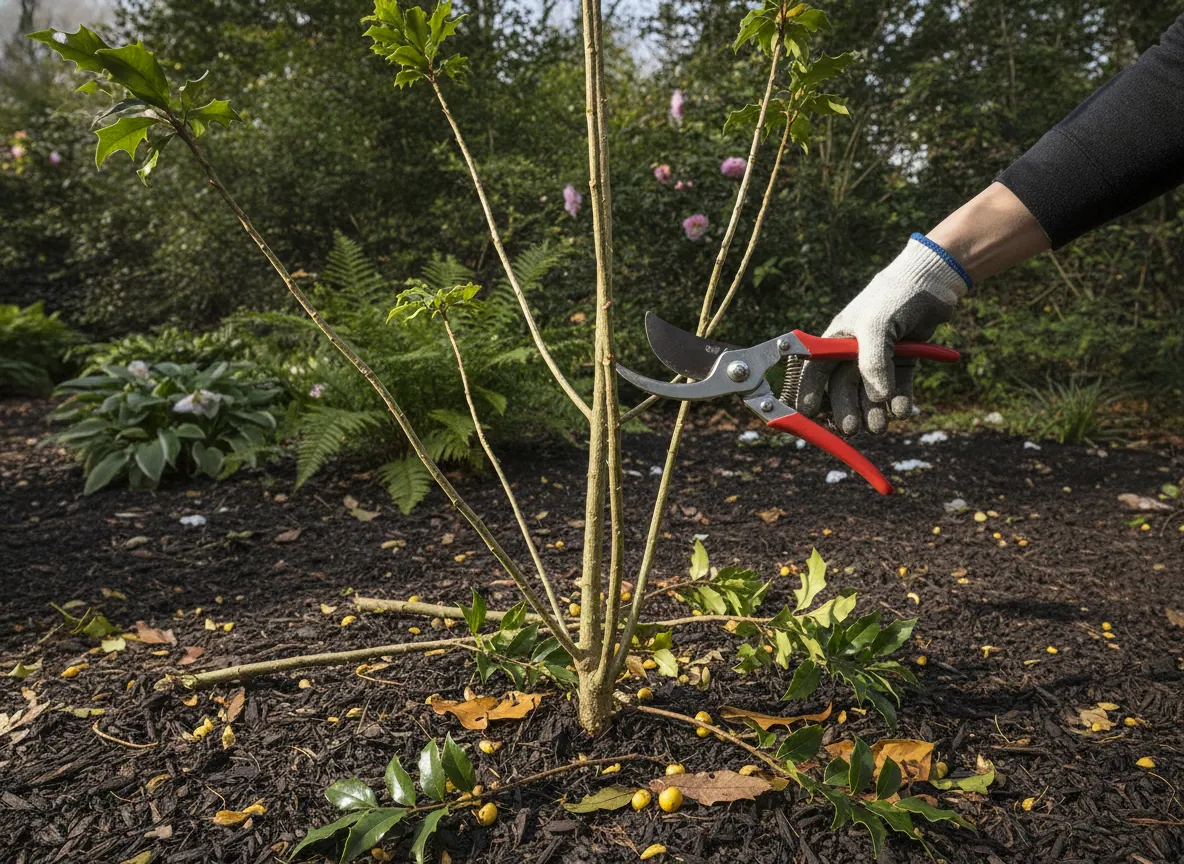 A gloved hand holds red-handled pruners beside a leggy, holly-leaved mahonia; cut leaves and berries lie on the mulch — AI-generated illustration
How to cut back a leggy mahonia
Once it is finished flowering, a bare-legged, overgrown mahonia is one of the few evergreens that will cheerfully take a hard renovation. The RHS method for a gaunt plant is to remove between a third and a half of the oldest stems, cutting them down to 30–60 cm from the ground, and shorten the rest of the shoots by about a third.
Two things make or break it:
- Cut just above a whorl of leaves or an old leaf scar. Mahonia breaks readily from those points — you can see the dormant buds as faint rings around the stem. A cut into clean bare wood with no leaf node above it is slower to resprout.
- Feed and mulch afterwards. A hard prune is a big ask; follow it with a general-purpose feed and a thick mulch of compost or well-rotted manure over the root zone to fuel the regrowth.
If the thought of halving the plant in one go makes you nervous, spread it over two or three springs — take the worst third of the stems low each year and the shrub is never bare. Either way you get a bushy, leafy-to-the-base plant back within a couple of seasons instead of the leggy flagpole you started with.
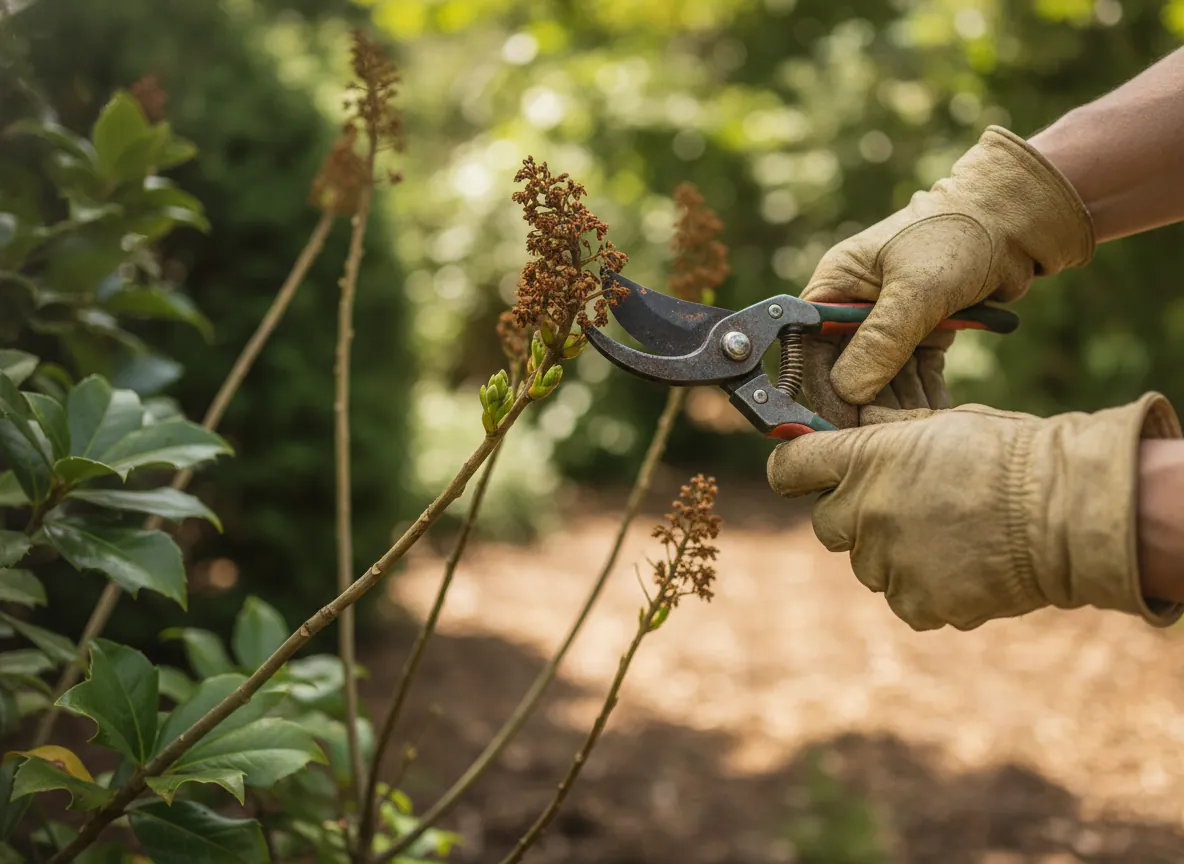 A gloved hand holds pruners next to a spent mahonia flower spike — AI-generated illustration
The one cut it doesn’t want: deadheading
Here is the twist that catches tidy gardeners. If you snip the spent racemes off the moment they fade, you cut off the next good thing the plant does — the clusters of dusty blue-black berries (“Oregon grapes”) that follow the flowers and feed blackbirds and thrushes well into spring. Leave the faded flowers on and let the berries form. It is the same logic behind leaving the fruit on a beautyberry: the berry display is the point, and deadheading quietly cancels it.
The only time to remove spent spikes is if they genuinely bother you, and even then a snip of the dead raceme alone — not into the leafy stem below — keeps the plant’s shape without the full renovation.
Let Cresco track the window for you
Mahonia’s rule is simple to state and easy to forget: don’t cut it in autumn, prune it right after the flowers fade, and never deadhead if you want the berries. The hard part is remembering when the flowers have actually finished, which shifts by weeks depending on the variety and your local winter.
That is exactly what Cresco’s pruning calendar is built for — it tracks each plant’s real window against your own weather, so the reminder to prune your mahonia lands the week it’s ready, not the week the autumn tidy-up itch strikes.