By late September the pampas grass (Cortaderia selloana) is at its absolute peak — those big cream plumes standing head-high over the fountain of arching foliage, catching the low autumn sun. And that is exactly when the temptation strikes: the garden is winding down, the tidy-up urge kicks in, and a plant this size looks like an obvious candidate for the chop before winter. Put the shears down. Cutting pampas grass back in autumn is one of the most reliable ways to kill an otherwise unstoppable plant, and it throws away the best three months of the display for nothing.
Why cutting it back now is a mistake
The problem is in the stems. Pampas grass grows a dense clump of long, hollow-based leaves and flower stems, and if you cut that whole crown down to a stubble in autumn, you leave dozens of open, hollow tubes pointing straight up at the sky. Every one of them acts like a drinking straw. Autumn and winter rain runs straight down into the heart of the plant, pools in the crown, and sits there cold and wet for months. When it freezes, it expands — and that is what rots and splits the crown from the inside.
Cold alone rarely kills an established pampas grass. A wet, exposed crown does. The mass of old foliage that looks so untidy is actually the plant’s own winter coat: left standing, it sheds the worst of the rain, traps a little air around the base, and keeps the growing point relatively dry. Shear it off in September and you strip that protection away at the worst possible moment, leaving a soft, freshly cut crown open to every downpour and hard frost between now and March. There is no upside to cutting now, and a real risk of coming back in spring to a black, mushy, dead centre.
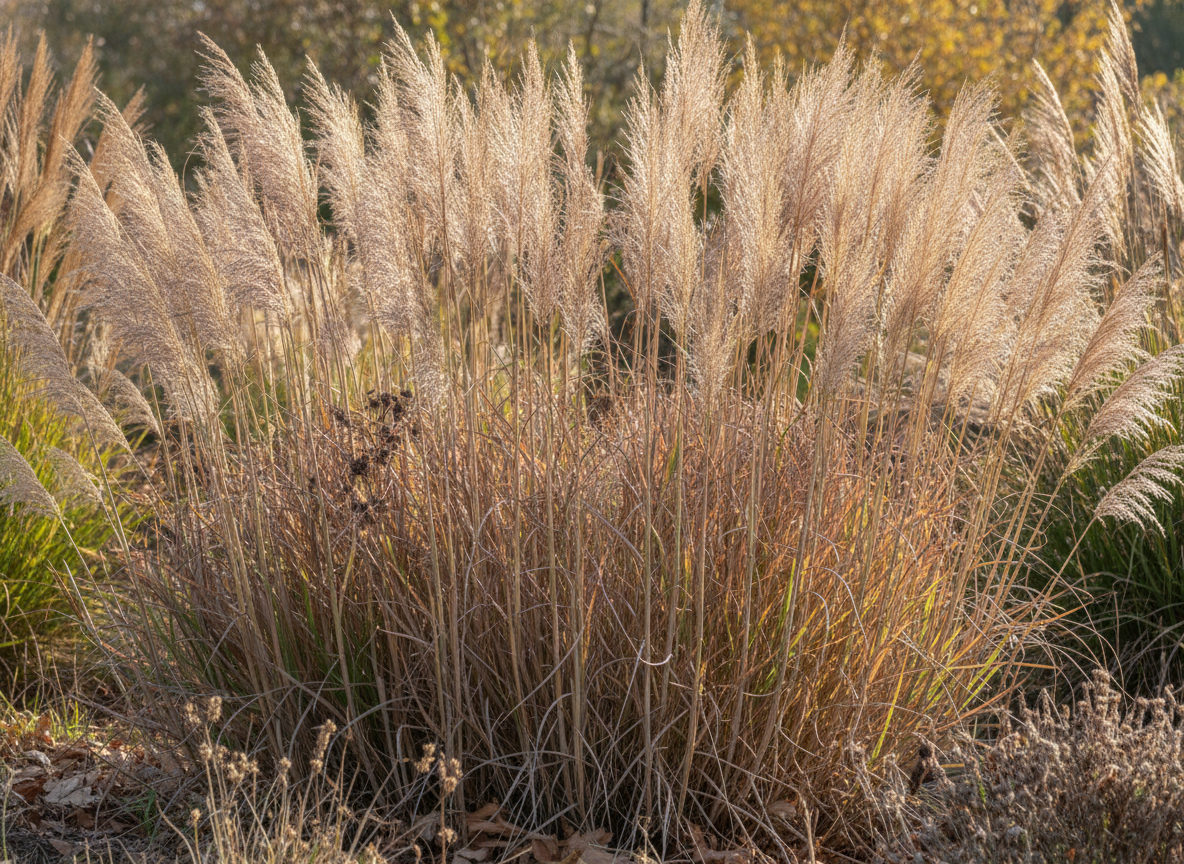 Golden pampas grass plumes stand tall in natural light — AI-generated illustration
Leave the plumes — they earn their keep
Even setting the plant’s survival aside, cutting now would be a waste. The plumes are only just getting going. They open silvery-cream in late summer, then hold — fading gently to buff and pale gold — right through autumn and deep into winter, long after most of the border has collapsed to brown mush. Backlit by a low January sun or rimed with frost on a still morning, a stand of pampas is one of the few things in the garden still doing real work in midwinter.
It pulls its weight for wildlife, too. Small birds shelter in the dense base through cold snaps, and the seedheads and the thatch of old foliage give overwintering insects somewhere to hide. This is the same logic that keeps ornamental grasses standing until spring and leaves sea holly’s steel-blue seedheads up all winter: the plant looks finished, but its winter job is only just beginning. An autumn-cut clump gives you a bare stump for six months; a plant left alone gives you structure, movement and shelter until spring.
 AI-generated illustration
The autumn job is a comb, not a cut
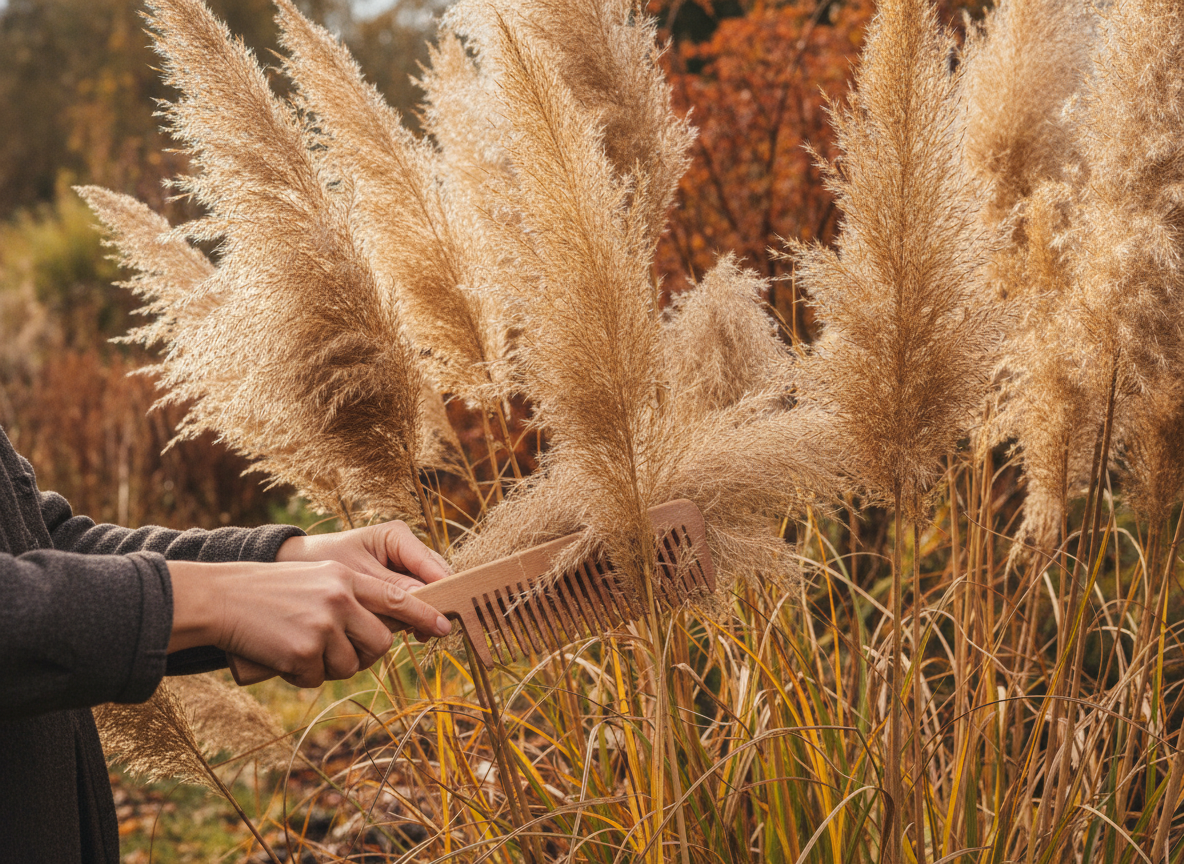
There is one useful thing you can do now, and it is gentle. If the clump has built up a skirt of dead, straw-coloured leaves at the base, you can comb them out — but comb, don’t cut. Pull a gloved hand or a spring-tine rake down through the foliage from the crown outwards and lift out the loose dead blades that come away easily. Leave everything that’s still anchored and everything green. You’re grooming the plant and improving airflow at the base, not removing its winter protection.
A word of warning that catches people out every year: pampas leaves are viciously sharp. The blades have fine serrated edges that slice skin like a paper cut, but longer and deeper. Never run a bare hand up a leaf, and never grab a handful. Wear thick leather gauntlets that cover the wrist and forearm, long sleeves, and eye protection — a whippy plume or leaf-tip to the eye is a genuine risk when you’re working in close. This is a job to do slowly and deliberately, not a quick grab on your way past.
Never set fire to it
Somewhere along the way, burning pampas grass off became a “tip” — set light to the dead clump, let it flash off, and save yourself the work. Don’t. It’s dangerous: a dry pampas clump goes up like a torch, fast and hot and hard to control, and every year that trick ends with scorched fences, singed neighbours’ hedges and worse. It’s also bad for the plant. The fire cooks the crown at the centre, and you’ll get weaker, patchier regrowth — if it comes back at all — than from a clean spring cut. There is no version of burning that beats a rake and a pair of secateurs.
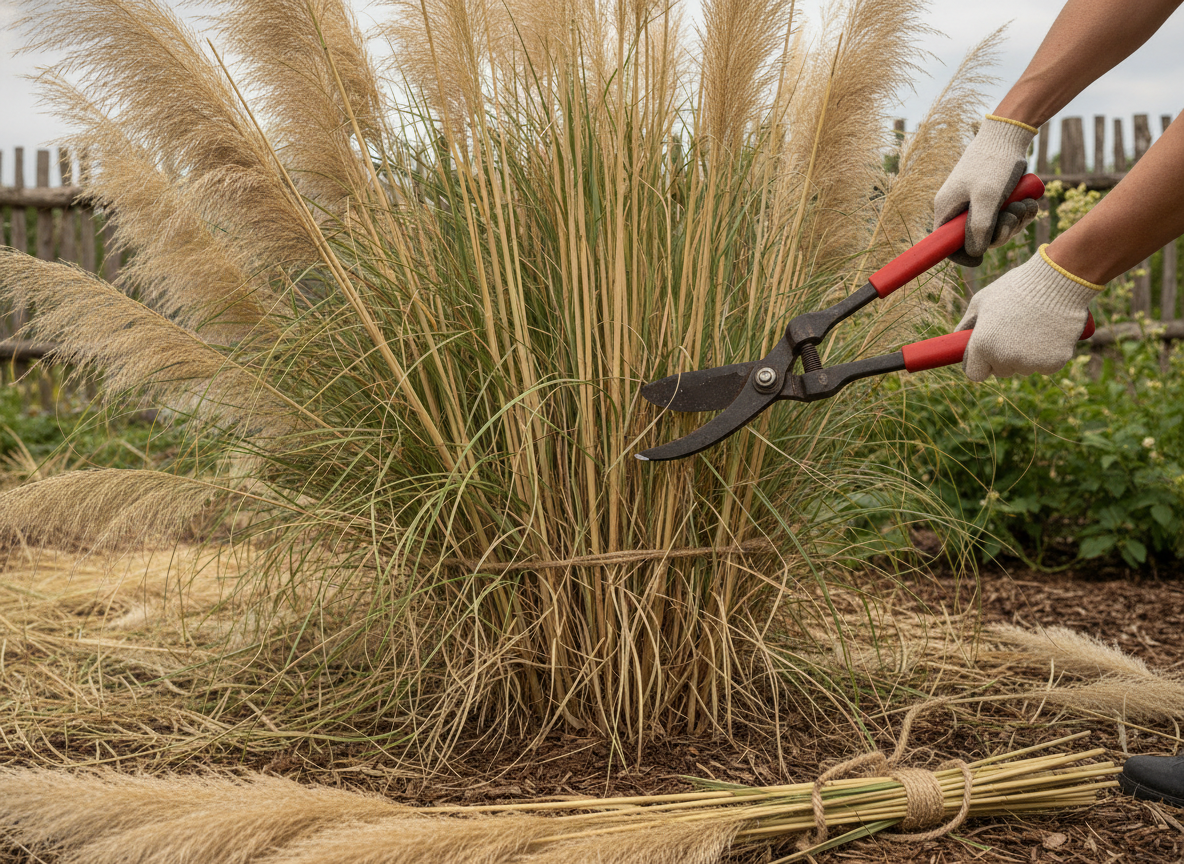 General This image should illustrate the concept of “When and how to cut back” pampas grass. It should feature a large, established… — AI-generated illustration
When and how to cut it back
The right time is late winter into early spring — roughly February to early April — once the worst of the winter wet is behind you but before the new green shoots push up more than a few centimetres. As with the autumn decision, take your cue from the plant, not the calendar: wait until you can see fresh growth starting at the base, then get in before it grows tall enough to be chopped and ruined.
Then cut hard. Take the whole clump down to about 20–30 cm (a hand’s width or so above the crown) with long-handled loppers or a sharp pruning saw for an old, tough clump — hedge shears struggle on a big one. Pull out the loosened dead material as you go so the centre is clear and open. Gauntlets and eye protection again, every time. That single hard cut each spring keeps the plant vigorous, clears out the accumulated thatch, and makes room for a full flush of fresh foliage and better plumes the following autumn.
One last thing worth knowing before you plant more of it: pampas is enormous and long-lived, and a mature clump is a serious job to remove or move. In some regions Cortaderia selloana self-seeds aggressively and is treated as invasive, so deadheading the plumes before the seed disperses — or choosing a sterile, non-seeding cultivar — is worth doing if you’re anywhere it could escape.
The short version
- Don’t cut pampas grass back in autumn. The cut hollow stems fill with rain, freeze, and rot the crown — a wet crown, not cold, is what kills it.
- Leave the plumes and foliage standing. They give winter structure, feed and shelter wildlife, and the old growth is the crown’s own rain shield.
- The autumn job is a comb, not a cut. Rake or hand-pull the loose dead blades — wearing thick gauntlets and eye protection, because the leaves are razor-sharp.
- Never burn it. It’s a fire risk and it cooks the crown; regrowth is weaker than after a clean cut.
- Cut hard in late winter (Feb–April), down to 20–30 cm, once fresh growth shows at the base — the one big cut of the year.
Not sure whether the thing you’re looking at wants cutting now or in spring? Cresco builds a pruning schedule around your actual plants and your local weather, so you get a reminder at the right moment for each one — instead of guessing against a generic calendar and losing a plant to good intentions.