Right now, in the middle of September, asters are doing the job nothing else can — throwing a sheet of blue, violet, pink and white across a border that had otherwise started to fade. Michaelmas daisies earn their name by peaking around Michaelmas at the end of the month, and they carry the garden through until the frosts. So it feels early to be thinking about the shears. But this is exactly when the question lands: the first flowers are going over, the plant is getting top-heavy, and the tidy instinct says cut it back. On an aster, that instinct is mostly wrong — and getting the timing right is the difference between a plant that returns bigger next year and one that quietly rots away over winter.
The short answer: not yet, and not to the ground
Asters don’t want a hard cut in autumn. The right sequence is: deadhead and support them now while they flower, leave the dead stems standing over winter, and cut the whole plant back in early spring. The one job you do reach for the secateurs for in September is deadheading — snipping off spent flower clusters — not felling the plant.
The reason is the same one that governs most late-border perennials. An aster overwinters on a crown at soil level, and that crown comes through far more reliably with a tangle of its own dead growth over it than stripped bare and left open to months of cold, wet weather. Cut a healthy plant flat in October and you take away its own insulation at the worst possible moment. It’s the identical logic that keeps Japanese anemones standing until spring — another autumn perennial that resents the autumn chop.
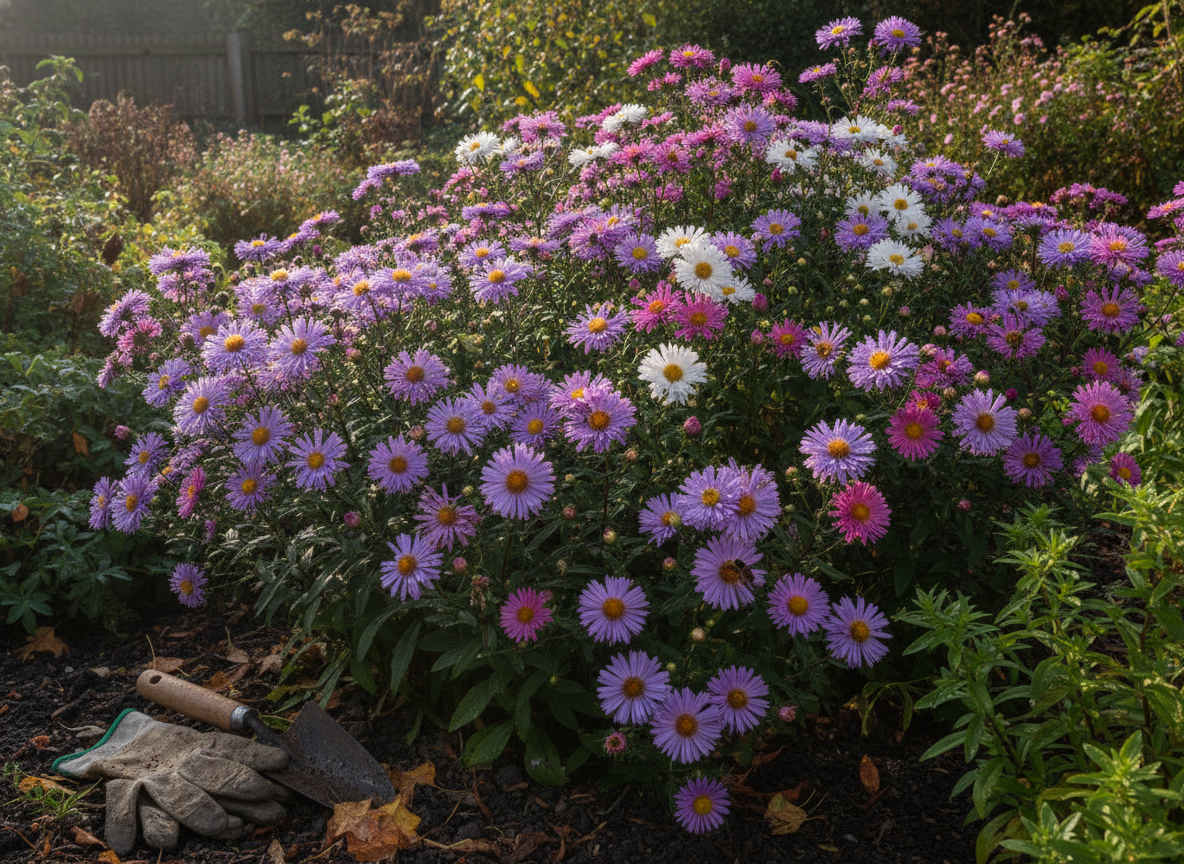 Asters blooming in a garden with gardening tools — AI-generated illustration
What to do right now, in September
While the plant is in full flow, three small jobs keep the display going and set up an easier winter.
Deadhead the spent clusters. Asters flower in tiers — the top of a stem opens first, the side branches follow. Snip each faded cluster back to the next healthy bud or side-shoot and the plant keeps pushing colour rather than tipping its energy into seed. It won’t produce a whole second flush the way a sheared catmint does, but steady deadheading noticeably stretches the show into October.
Stop the self-seeders. This matters most with the old New York asters (the novi-belgii types). Left to set seed, they scatter seedlings all over the border, and those seedlings almost always come up a muddy, washed-out mauve — nothing like the named variety you bought. Deadheading before the seed ripens keeps the clump true and stops the muddling. It’s the same problem that makes gardeners regret leaving phlox to seed itself into magenta.
Prop up the floppers. Tall asters that weren’t given the Chelsea chop back in late May are often leaning by now. Don’t cut them shorter to fix it — you’d lose the flowers. Slip a few twiggy supports or a discreet ring in behind the clump and lift the stems back upright. Make a note to shear these ones by a third in late May next year so they stand on their own.
Why the dead stems earn their place all winter
Once the frost finally blackens the last flowers, resist the urge to clear the plant away. Those spent stems and seedheads are doing three jobs at once through the cold months.
They feed and shelter wildlife — goldfinches and other small birds work the seedheads, and hollow stems give overwintering insects somewhere to sit. They hold winter structure, catching frost and low sun long after the border has otherwise gone flat, exactly the case for leaving sedum seedheads standing until spring. And most practically, they buffer the crown — the dead top-growth traps a layer of still air and litter over the base, softening the freeze-and-thaw that heaves shallow-rooted plants out of the ground and helping keep the worst of the winter wet off the crown. A plant left standing simply comes through more reliably than one cut naked in autumn — the same reason to leave echinacea cones for the birds rather than tidy them off.
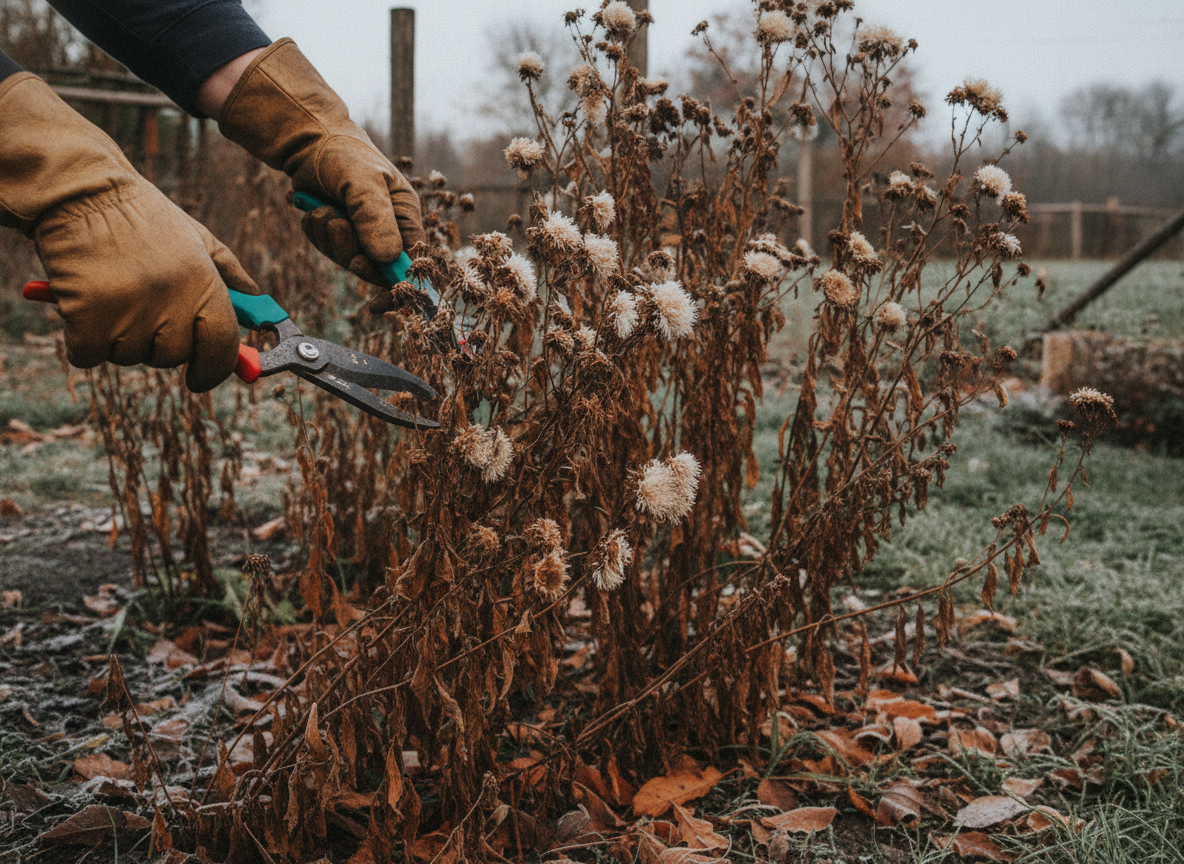 A person prunes dried asters with gardening shears — AI-generated illustration
The one time an autumn cut makes sense
There’s a single exception to leaving the stems, and it’s disease. Asters — especially the New York (novi-belgii) types — are prone to powdery mildew, that grey-white bloom that creeps up the leaves in a dry summer. If your plant finishes the season covered in mildew, don’t leave that infected top-growth standing over winter. Cut it down once flowering is over and bin or burn the clippings — do not compost them — so you’re not carrying a bank of spores through to next year’s fresh shoots. It’s the same house-keeping that keeps mildew off bee balm: remove the affected material rather than let it overwinter.
For a clean, healthy plant, though, there’s nothing to gain from an autumn cut and a crown’s worth of winter protection to lose. Leave it standing.
Cut back in early spring — then think about dividing
The real cut comes at winter’s end. In late February or March, as the first new shoots push up from the base, cut all last year’s dead stems right down to just above that fresh growth. Now the border is clear, the crown has come through under cover, and the plant is away.
Spring is also the moment to divide an aster — and this is where they differ from a lot of perennials. Where many clumps are happily split in autumn, asters are best lifted and divided in spring, just as growth restarts, so the divisions establish through the growing season rather than sitting cold and wet in the ground. Every two or three years, lift a congested clump, discard the tired, woody centre and replant the vigorous outer pieces. It keeps the flowering strong and, by opening the clump up to air, is one of the best ways to cut mildew before it starts. (For the general how-to, see dividing perennials for more flowers — just do your asters in spring, not autumn.)
 A vibrant garden featuring a variety of purple, white, and pink aster flowers — AI-generated illustration
Which aster do you have?
It’s worth knowing your type, because it changes how fussy the plant is. The New England asters (Symphyotrichum novae-angliae) are tall, robust, far more mildew-resistant, and don’t mind a bit of dryness. The New York asters (Symphyotrichum novi-belgii) are the classic Michaelmas daisies — brilliant colour, but thirstier and much more mildew-prone. If mildew is a yearly battle, that’s almost always a novi-belgii, and the fixes are the same three every time: divide in spring, don’t let it dry out at the roots, and give it air. Newer garden asters like the ever-reliable frikartii ‘Mönch’ sidestep most of the trouble altogether.
The one-line rule
Deadhead now, leave the stems standing through winter, cut back in spring — and divide in spring, not autumn. The only reason to cut an aster down in October is mildew you don’t want to overwinter.
Not sure of the timing for the rest of your late border? Cresco builds a pruning calendar around your actual plants and local weather, so every “cut now / leave until spring” call is made for you, on the day it matters. See how it works on the Cresco pruning calendar.