The one border plant you cut, when everything else stays standing
Most of what I write in autumn tells you to put the secateurs down. Leave the sedum seedheads for the frost, leave the ornamental grasses standing until spring, leave the hollow stems for the ladybirds. A border cut flat in October is bare for five months and empty of shelter.
Herbaceous peonies are the exception. This is the one clump you should cut right down before winter — and not for tidiness. The reason is a disease, and the dying foliage is where it hides.
 AI-generated illustration
What peony wilt is, and why the leaves matter
Peony wilt is a fungus, Botrytis paeoniae — a close relative of the grey mould you see on strawberries and soft fruit. It shows up in spring as young shoots that suddenly blacken and flop at the base, sometimes with a fuzzy grey growth in wet weather, and buds that go brown and never open. By the time you see it in May, it’s frustrating to treat.
The point that matters now is where it spends the winter. The fungus overwinters as tiny hard resting bodies on dead peony stems and fallen leaves, sitting at the base of the plant through the cold months. Come spring, that debris is the launch pad — spores wash and splash straight up onto the new shoots pushing through. Leave the old foliage lying around the crown and you’ve handed next year’s growth a ready-made infection right where it’s most vulnerable.
Cutting the plant down and clearing the debris removes that reservoir. It’s the single most effective thing you can do against peony wilt, and it costs nothing but ten minutes.
When to make the cut
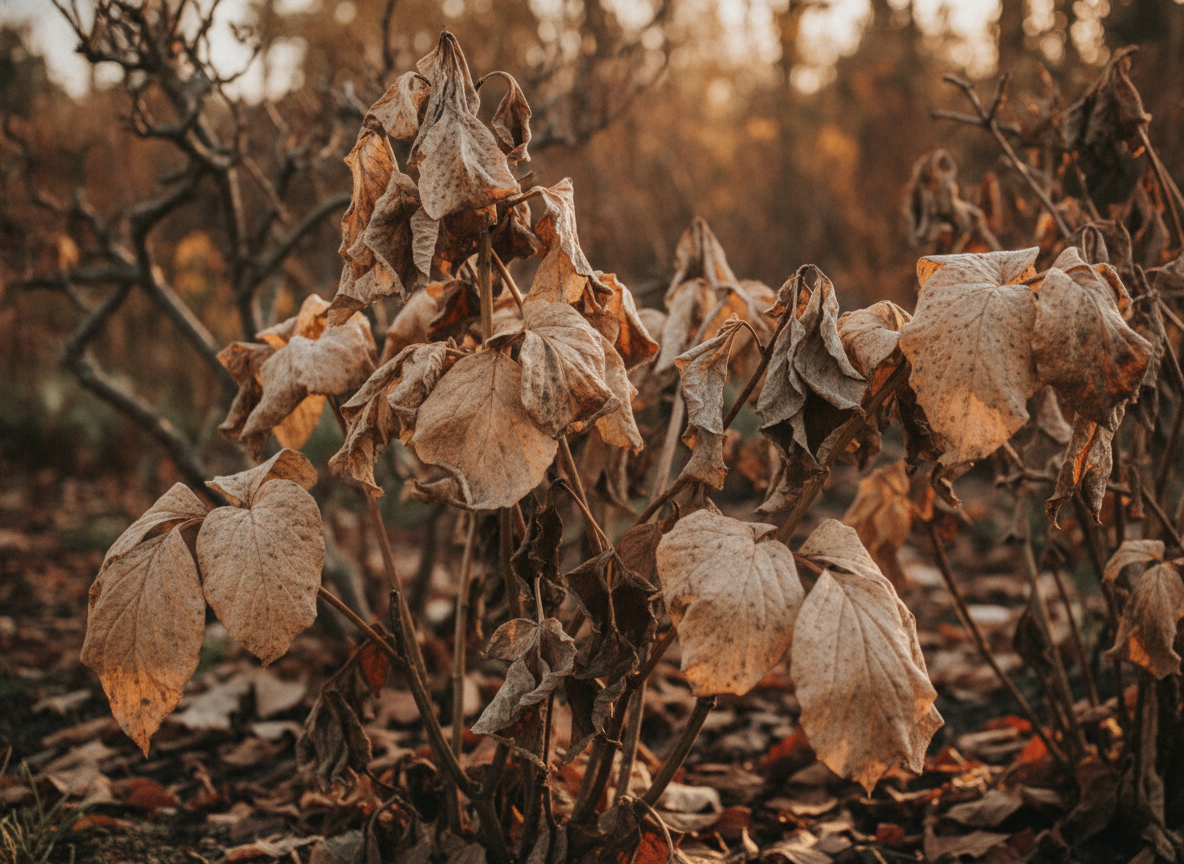
Wait for the foliage to die back on its own. Through September the leaves are still working, pulling energy down into the crown to build next year’s flower buds — cut too early and you rob the plant of that last feed. The signal is the foliage turning: the green fading to yellow, bronze and red through October, the stems going soft and slack. Once it’s clearly dying down, usually after the first frosts have knocked it back, it’s time.
There’s one exception to the waiting. If the plant has shown wilt this year — blackened shoots, collapsed stems, buds that browned and failed — don’t wait for a tidy die-back. Cut out and remove the affected stems as soon as you spot them, and take the whole plant down early in autumn. Leaving diseased material standing just tops up the spore bank for next spring.
 Dried plant stems and pruning shears next to a woven basket in a garden — AI-generated illustration
How to cut, and where the stems go
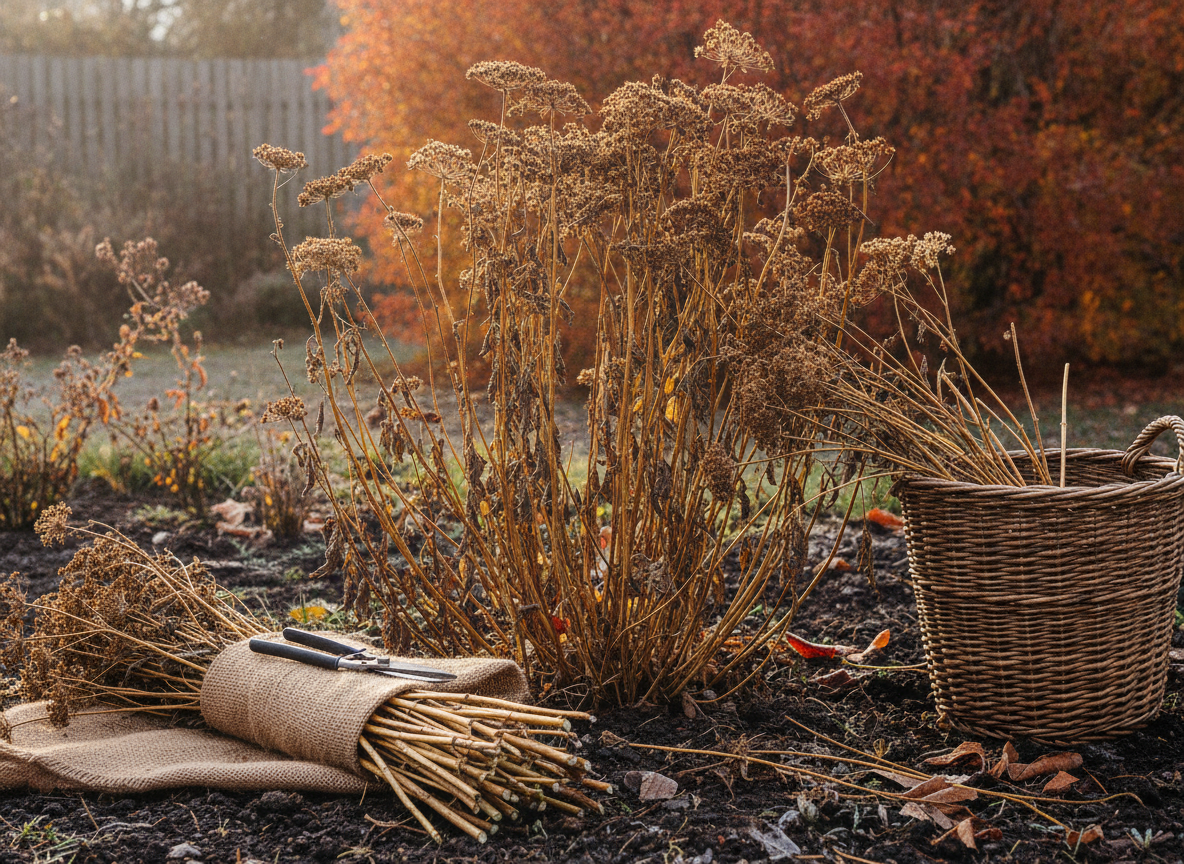
Cut every stem right down, to an inch or two above the soil. Don’t leave long stubs — those hollow stumps are exactly the dead tissue the fungus overwinters in, so the lower you cut, the less material you leave it. Take the leaves too, including any that have already dropped around the crown. A hand shears or secateurs is all it needs; the stems are soft and cut easily once they’ve started to go over.
Then the part people skip: get the debris out of the garden. Do not compost it. A normal garden heap rarely gets hot enough to kill Botrytis, and all you’d be doing is culturing the spores and spreading them back through next year’s mulch. Bin it, burn it if you’re allowed, or send it out with the council green waste — anywhere but back onto your own beds. Clear the surface around the crown while you’re there, so the plant goes into winter with clean, open soil above it.
You don’t need to mulch heavily over the crown afterwards, and it’s better not to bury it — herbaceous peonies flower badly if their buds sit too deep. A light scatter of compost around, not over, the crown is plenty.
Tree peonies: leave these well alone
One important caveat. Everything above is for herbaceous peonies — the kind that die down to nothing each winter and come back from the ground. Tree peonies (Paeonia suffruticosa and its relatives) are woody shrubs, and cutting them to the ground would destroy them. They keep a permanent framework of branches through winter and need only the lightest attention — the same hands-off approach I set out for tree peonies after flowering. If yours has a solid woody stem that stays put all year, leave the secateurs in the shed. The autumn cut is only for the soft, fully herbaceous clumps.
Intersectional (Itoh) peonies sit in between but behave like herbaceous ones above ground — they die back each winter, so treat them the same way: cut down and clear once the foliage collapses.
 Late autumn ground with frost-covered leaves and blooming crocuses — AI-generated illustration
The spring reward
This is a job you do in autumn and get paid for in spring. Come the new season, clean, healthy shoots push through clean, open soil with no spore bank waiting at the base — far fewer blackened stems, far fewer failed buds, and a fuller plant to work with. And if you want those flowers as big as they’ll go, that’s a separate job for early May: disbud the side buds while they’re pea-sized and let each stem put everything into one bloom.
The one-line rule
Once the foliage has died back in autumn, cut herbaceous peonies right down to the ground, clear every scrap of stem and leaf, and bin it — never compost it. Leave tree peonies alone.
Not sure whether the peony in your border is herbaceous or a tree peony — or when this week is the right week to cut it where you garden? Cresco reads your own photo, identifies exactly what you’re growing, and gives you the job for this week in your garden, not a generic calendar.