The itch to tidy up now
Every autumn the same urge arrives. The crop is picked, the leaves are starting to turn, the garden is winding down — and the fruit tree in the middle of it looks shaggy and overdue for a haircut. It feels like the natural moment to get the secateurs out and neaten it up before winter.
For a free-standing apple or pear tree, it’s the wrong moment. Not slightly early — actively risky. The weeks around leaf-fall are the single worst window in the year to cut into these trees, and the reason isn’t tidiness or tradition. It’s a fungus that’s waiting for exactly the wound you’re about to give it.
This post is about ordinary open-grown apples and pears — bush trees, half-standards, standards, the kind you can walk under. If you grow a trained cordon, espalier or fan against a wall or wires, your main cut is a summer one and the rules are different; that’s a separate job with its own timing. Everything below is for the free-standing tree.
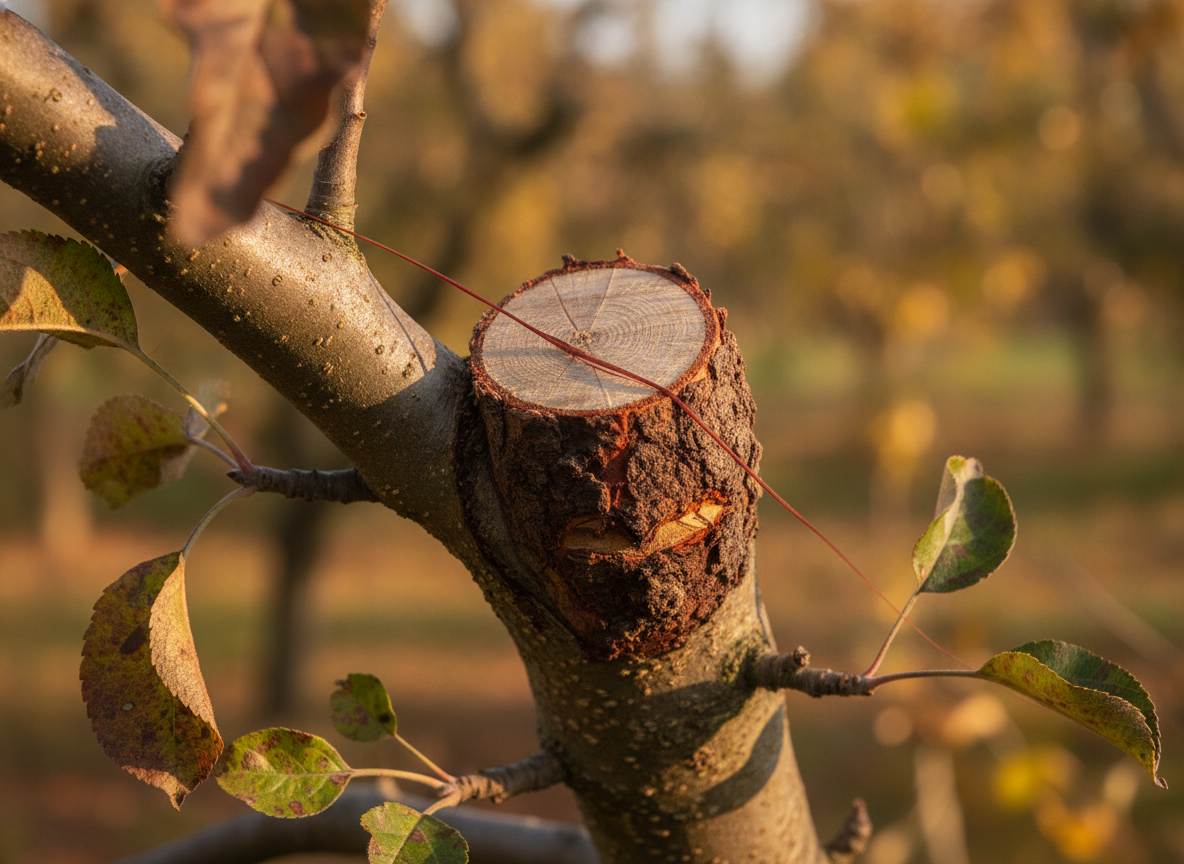 The cut branch of an apple tree with canker — AI-generated illustration
The real reason: canker rides in on autumn cuts
The villain here is apple and pear canker (Neonectria ditissima), a fungal disease that sinks into the bark, girdles shoots and branches, and kills everything beyond the wound. It spreads by spores, and it needs two things to get established: an open entry point, and damp weather to move around in.
Autumn hands it both at once. In a British and north-European climate, the peak season for canker infection is leaf-fall itself — the wet, mild weeks of late autumn when spores are flying and every falling leaf leaves a fresh scar on the twig. Prune into that, and each cut is a clean, undefended wound in exactly the conditions the fungus loves. You’re not just failing to help the tree; you’re cutting a dozen new doorways for the disease during the week it’s most active.
Wait for deep winter and the picture flips. In hard, dormant cold the fungus is inactive, the air is drier, and a cut has time to seal over before spring warmth wakes anything up. Prune an apple in January and by the time canker is on the move again the wounds have callused shut. Same tree, same cut — the timing is the whole difference between a wound that heals and a wound that infects.
Soft growth that frost then kills
There’s a second reason autumn is wrong, and it has nothing to do with disease. A pruning cut is a signal to grow. Cut a tree while there’s still any warmth in the soil and you can nudge it into pushing out soft, late shoots — growth with no time to harden before the first frosts arrive. Those tender tips get blackened and killed, which leaves yet more damaged wood for disease to colonise over winter. In full dormancy the tree simply ignores the cut until spring, and then responds with strong, well-timed growth exactly where you wanted it.
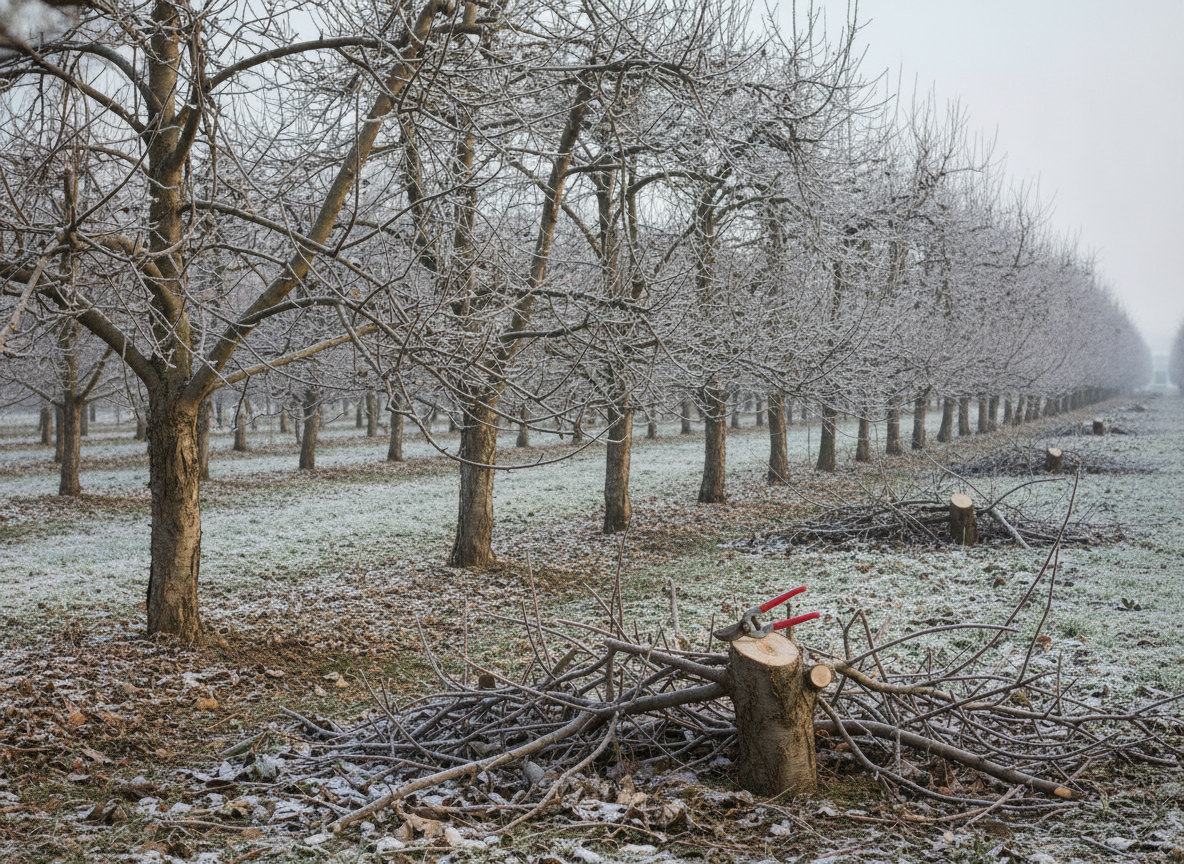 . A winter apple orchard with pruned trees and cut branches on the snowy ground — AI-generated illustration
What the winter cut is actually for
Timing aside, winter is also when you can see what you’re doing. With the leaves down, the whole framework of the tree is laid bare — you can read the branch structure, spot the crossing and rubbing stems, and find the dead or cankered wood that was hidden under foliage a month earlier.
The job itself is simple in principle. On an open-grown apple or pear you’re working toward a goblet shape: an open centre with a handful of well-spaced main branches radiating outward, like fingers cupping the air. That open middle lets light and airflow reach every part of the canopy, which means riper fruit, drier leaves and far less disease. Each winter you take out:
- Dead, diseased and damaged wood — cankered stems first, cutting back to clean, healthy wood well below the sunken bark.
- Crossing and rubbing branches — the wounds they grind into each other are themselves infection sites.
- Congested growth in the centre — thinning it out to keep that goblet open.
Then you shorten the previous year’s growth on the main branches to encourage the short fruiting spurs that carry next season’s crop. It’s restrained, once-a-year work — not the hard chop the shaggy autumn tree seems to be begging for.
When, exactly
The window is full dormancy: from leaf-fall through to bud burst, which in most of Britain, the Netherlands and northern Europe means roughly late November to early March. Any dry spell in that stretch will do — pick a day when the wood is dry and no hard rain is forecast for a day or two, so the cuts aren’t sitting wet.
Two edges of the window are worth naming. Don’t jump the gun in October just because the leaves are dropping: wait until they’re properly down and the tree is asleep. And don’t leave it so late that the buds are already swelling and greening in March — prune after that and the tree bleeds energy it’s just started to mobilise. The sweet spot is the quiet middle of winter.
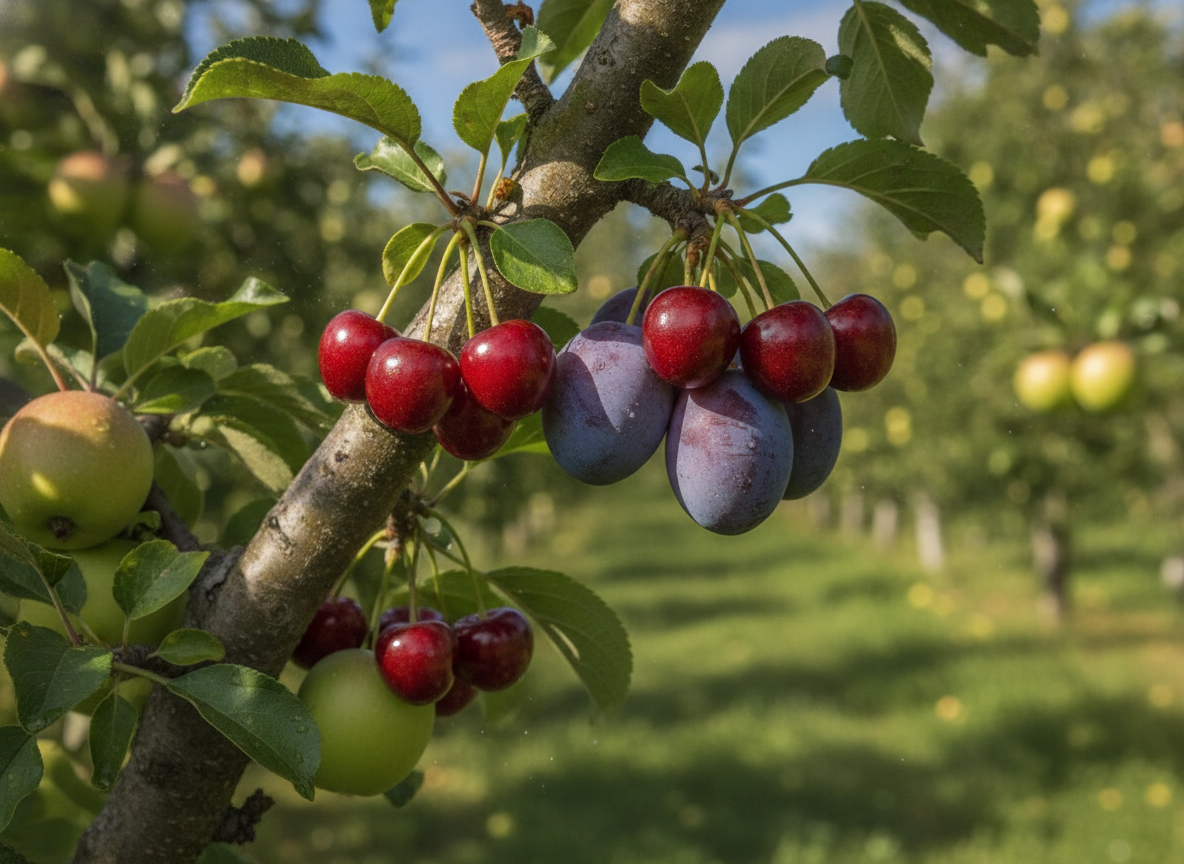 Plums and cherries grow from an apple tree branch — AI-generated illustration
The exception that proves the rule: plums and cherries
If you also grow plums, cherries, gages or damsons, forget everything above — the timing is reversed. These stone fruits are pruned in summer, never in winter, precisely because they’re vulnerable to a different disease, silver leaf, whose spores are most active in the cold, damp months. Cutting them in the dormant season does to them exactly what autumn pruning does to an apple. The full window is in when to prune plums and cherries — worth reading if you don’t want to muddle the two.
What to do with the tree this autumn instead
So if the shears are off-limits, is there anything useful to do now? Yes — autumn is for hygiene, not shaping:
- Rake up and remove fallen leaves and any mummified fruit. Both harbour the spores of canker, scab and brown rot over winter. Clearing them is the single most effective thing you can do this month for next year’s health.
- Spot the canker while you can still see stems. Look for sunken, cracked patches of bark, often ringed and flaking. Mark them now, cut them out in winter.
- Pick off shrivelled “mummies” still clinging to the branches — each one is a reservoir of rot for spring.
Then note the date for the real job. The most common way people harm an otherwise healthy apple tree is simply pruning it at the wrong time of year — and the right time is a moving target that depends on your local season, not a fixed calendar square. That’s exactly what Cresco’s pruning calendar is built to track: it watches your weather and tells you the week your apple is truly dormant, so the one cut you make is the one that heals.