Why the usual fruit-tree cut backfires on a quince
The last quinces came in during October, the kitchen smells of jelly, and the tree is dropping its yellow leaves. Now is when many gardeners treat it like an apple: go over the whole crown and shorten every one of this year’s shoots by a third. On an apple that’s a reasonable habit. On a quince (Cydonia oblonga) it’s how you end up with a big healthy tree and hardly any fruit.
The reason is where the flowers come from. A quince flowers late, in May, with large pale-pink cup-shaped blooms. Each flower sits alone at the end of a short shoot that grows in spring from a bud near the tip of last year’s wood, or from an older spur. The tree is what fruit growers call partly tip-bearing. Shorten all the one-year shoots in winter and you cut off the buds that would have made those flowering shoots. The tree answers with a mass of leafy regrowth, and the crop goes with it.
So the quince rule is simple: thin, don’t tip. Take whole branches out where the crown is crowded, and leave most of the remaining shoots their full length.
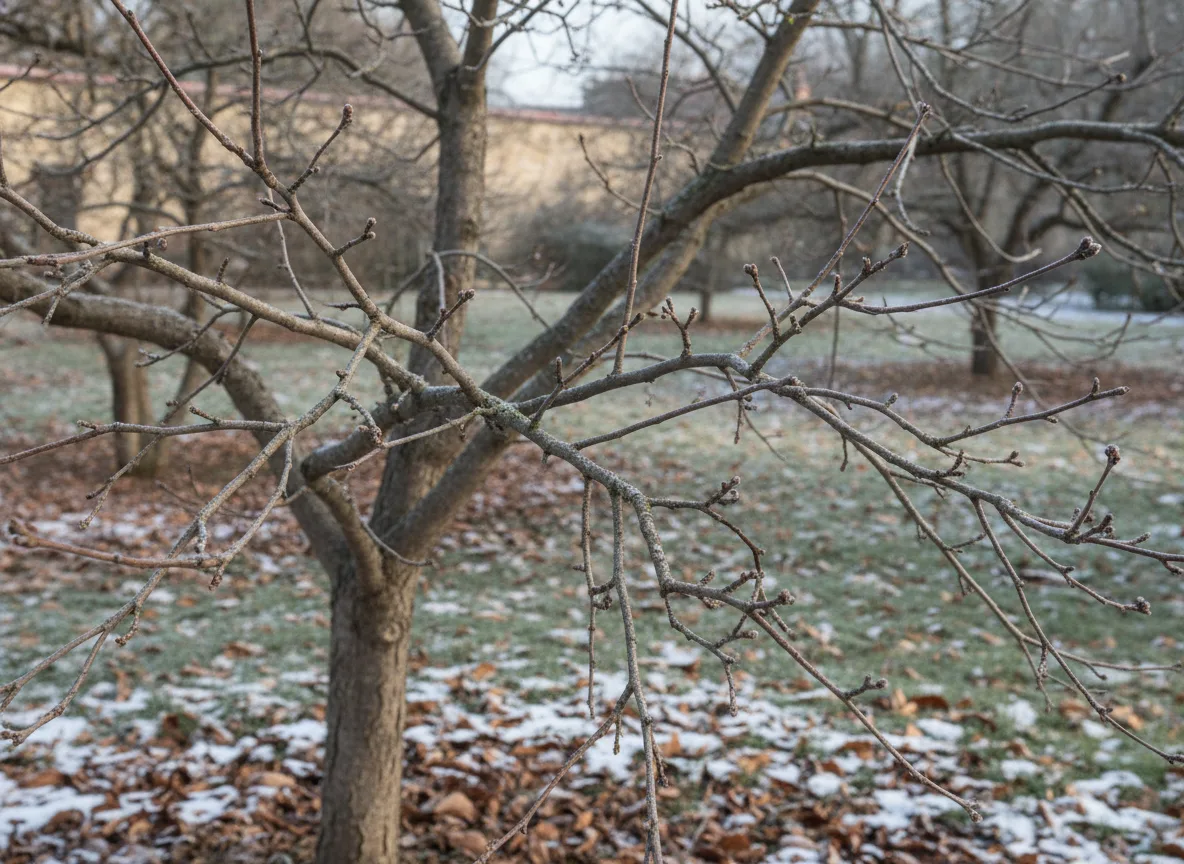 A dormant quince tree stands in a winter garden with fallen leaves — AI-generated illustration
When to prune a quince
Quince is pruned while it’s dormant, the same window as apples and pears, which are pruned in winter rather than autumn. In practice that means from when the leaves are down, usually late November in Britain and the Low Countries, until the end of February, before the buds start to swell.
- Wait until the leaves are off. You need to see the structure, and a tree still in leaf is still moving sugars down into its roots.
- Pick a dry, mild day. Avoid cutting in hard frost (wood can split around the cut) and in wet weather, when fungal spores travel easily.
- Don’t leave it until spring. Cuts made once growth has started remove the young shoots that would have flowered, and they’re more open to fireblight, which quince is prone to.
Quince doesn’t bleed like a birch or a mulberry, so there’s no rush in the first weeks. Just get it done before March.
The winter prune on an established quince, step by step
A grown quince, say five years and older, needs only a light going-over each winter. Most are grown as an open-centred bush or a short standard, and that open goblet shape is what you’re keeping.
- Dead, damaged and diseased wood first. Cut back to healthy wood. Shoots with blackened, shrivelled tips and leaves still clinging to them can be a sign of fireblight; cut those at least 30 cm (a foot) below the visible damage, and wipe your blades with disinfectant between cuts.
- Crossing and rubbing branches. Where two branches chafe, take out the weaker or worse-placed one completely, back to where it joins a bigger branch.
- Open the centre. Quinces grow twiggy and dense. Remove one or two branches that head straight into the middle, so light and air reach the fruit. A crowded crown stays damp, and damp leaves are where leaf blight starts.
- Thin the drooping wood. Older quince branches tend to arch downwards with the weight of fruit. Where a branch hangs low, cut it back to a younger side shoot pointing outwards and slightly upwards. That lifts the branch without stubbing it.
- Leave the tips alone. Of the shoots that remain, leave most of them unpruned. If a single shoot is far too long or spoils the shape, shorten that one to an outward-facing bud, but don’t shorten them all.
Make each cut just outside the slight bulge where a branch meets a bigger one, never flush. The same rule applies to any tree: cut outside the branch collar, so the tree can seal the wound itself.
How much is too much? Take out no more than about a fifth of the crown in a single winter. Quince reacts to hard pruning with a forest of upright water shoots, which don’t flower, and which you’d only have to remove again next year.
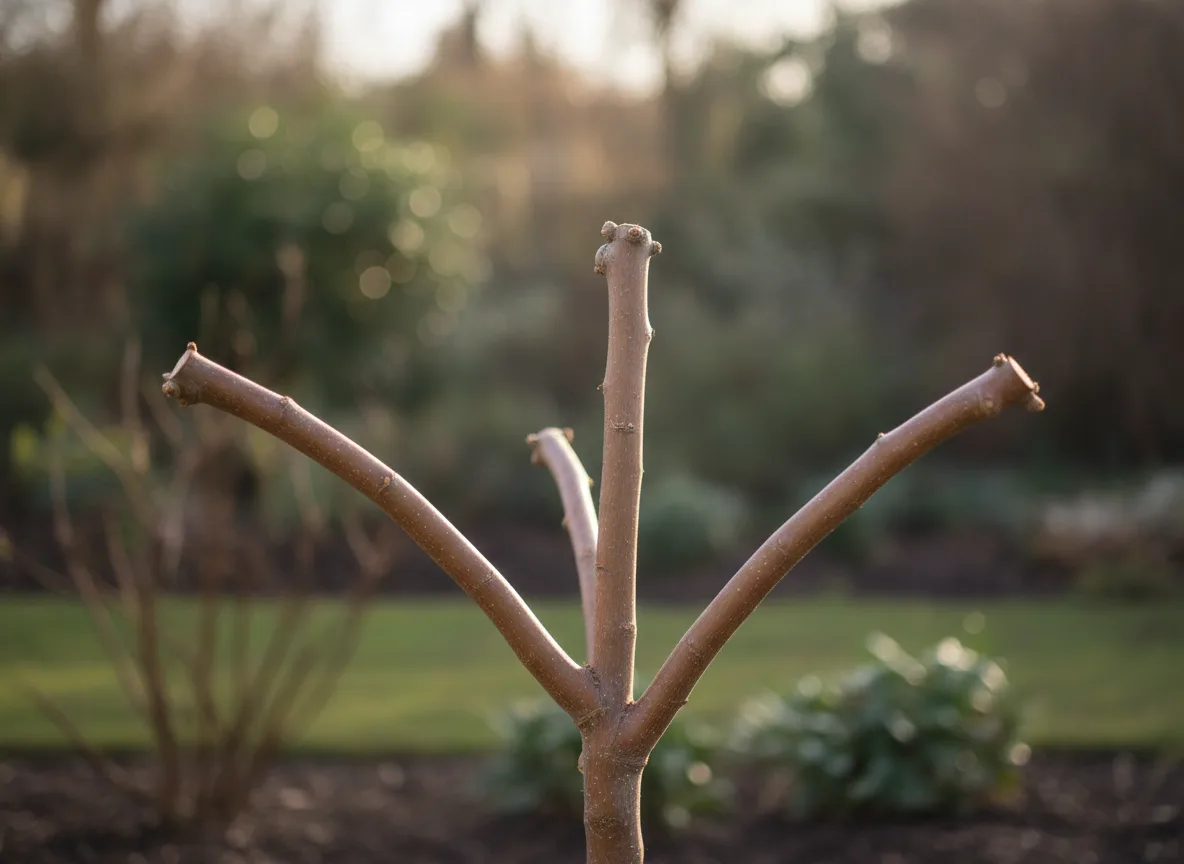 A young quince tree pruned to establish its main framework — AI-generated illustration
Young quince trees: build the frame first
A young quince is pruned harder for its first three or four winters, because you’re building the framework, not chasing fruit.
- Year one: after planting, choose three or four well-spaced branches to form the main framework, and shorten each of them by about a half to an outward-facing bud. Remove any others.
- Years two to four: shorten the leading shoot of each main branch by about a third, and choose a few more well-placed side branches to fill out the goblet. Remove anything that heads into the centre.
After that, switch to the light thinning above. Expect the first proper crop from about year four or five.
Rake the leaves while you’re there
Quince has one disease you can fight with a rake rather than shears: quince leaf blight (Diplocarpon mespili). It shows up in summer as small red-brown spots on the leaves, which run together until the leaves drop early, and in a wet year it can spot and crack the fruit too. The fungus overwinters on fallen leaves and on infected shoot tips.
So while you’re under the tree this month:
- Rake up and remove the fallen leaves. Bin them or put them in a hot compost heap, not a cold one.
- Cut out shoots with dark, dead tips when you do the winter prune, back to clean wood.
- Keep the crown open. The thinning cuts above dry the leaves out faster after rain, which is the best protection there is.
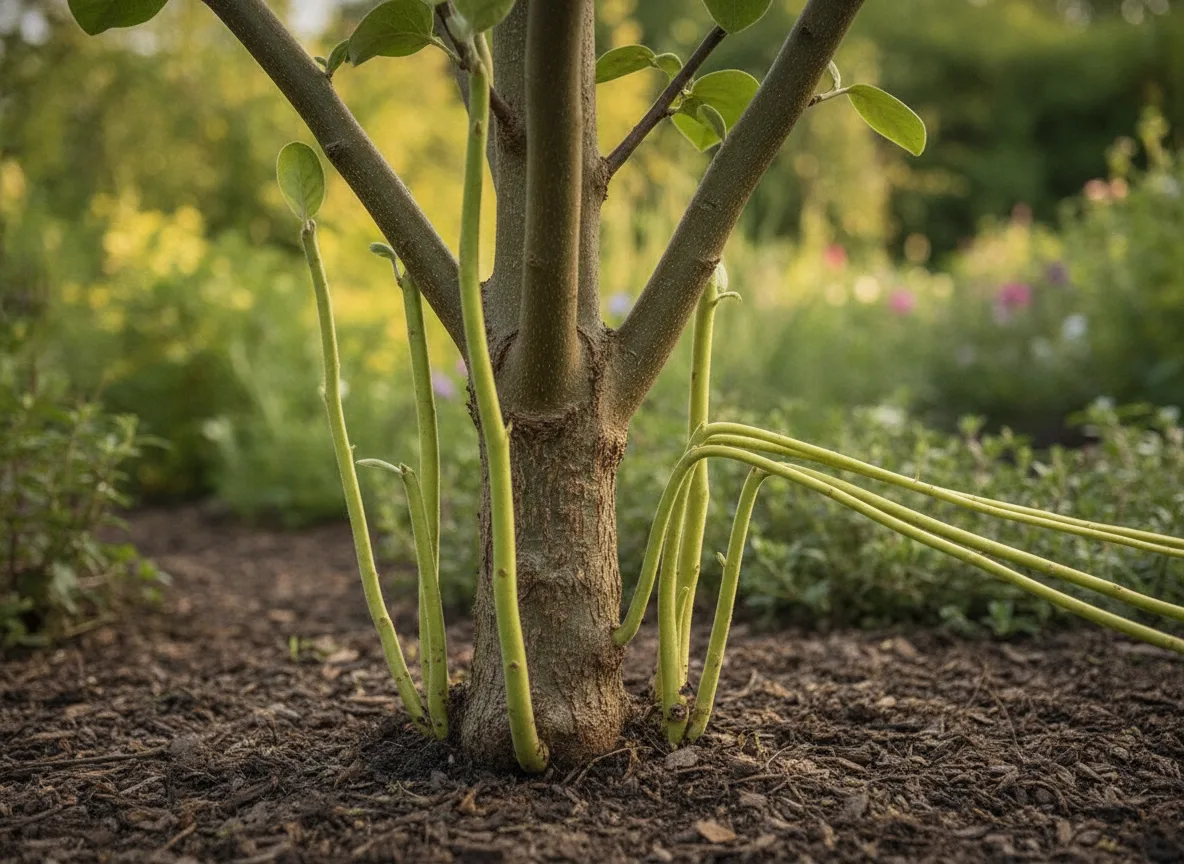 Close-up of quince tree suckers emerging from the rootstock — AI-generated illustration
Suckers and the rootstock
Many quince trees are grafted on a quince rootstock (such as Quince A or Quince C), and nearly all quinces throw up suckers from the base. Pull or cut these off at the point where they leave the root, not at soil level, whenever you see them. Left in place, they turn the tree into a thicket and take strength from the crown.
Quick checklist
- When: leaf-fall to late February, on a dry, frost-free day.
- What: dead and diseased wood, crossing branches, crowded and drooping wood.
- How much: no more than a fifth of the crown per winter.
- Never: shorten every one-year shoot. That’s where the flowers form.
- Bonus: rake up the leaves against leaf blight.
If you’d like Cresco to remind you when your quince is due, add it to your garden in the Cresco app and you’ll get a nudge in the right week, along with the rest of your fruit trees.