The window closes at the end of August
A bay (Laurus nobilis) grown as a clipped standard — the lollipop, the cone, the spiral in a pair of pots by the door — needs two light trims a year to hold its outline: one in late spring once the first flush firms up, and one now, in late summer. That second cut is the one that matters, because it’s the last one you can safely make. Across the Netherlands, Belgium and the southern UK the sensible cut-off is the end of August, early September at the very latest. Trim after that and you’re gambling with the first frost.
Bay is only borderline hardy — it takes a knock at around −5 °C, and a plant in a pot feels the cold far sooner than one in open ground, because its roots sit up in the air with nothing around them to buffer the drop. A trim wakes the plant up: every cut is a signal to push fresh shoots. Do it now and that soft growth has six to eight warm weeks to firm up and go leathery before the cold arrives. Do it in October and the plant answers with pale, sappy shoots that meet the first hard night still soft — and soft bay growth blackens overnight.
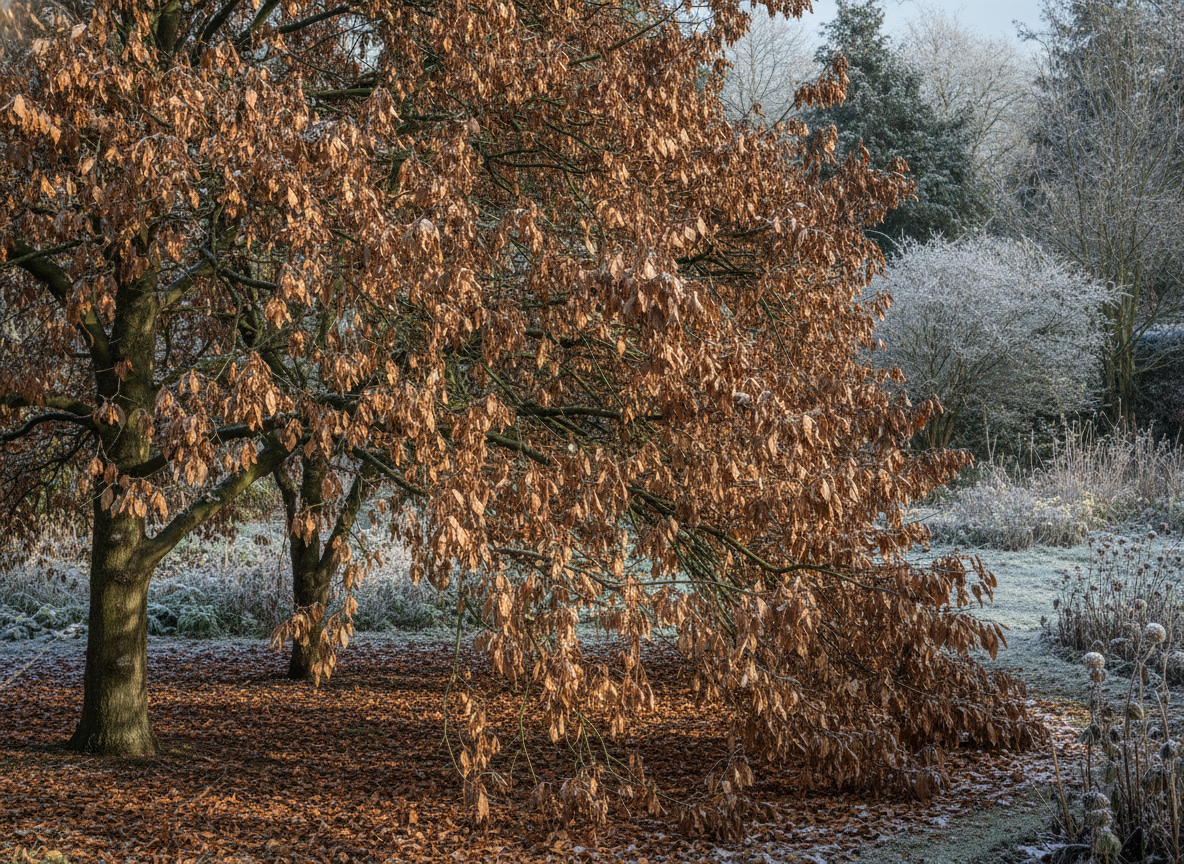 Bay tree with brown leaves against a frosted winter garden — AI-generated illustration
Why a late cut shows all winter
Timing matters more on bay than on a deciduous shrub for one reason: bay keeps its leaves. A frosted deciduous plant drops the damage and starts clean in spring; a frosted evergreen wears it. Blackened tips and brown, curled leaves sit on a clipped bay right through the winter — exactly when an evergreen in a pot by the door is doing its one job, which is to look sharp while everything else is bare.
You can’t tidy the damage off straight away, either. Cutting frost-hit bay in the depths of winter just opens fresh wounds for the cold to widen. The fix is to wait until growth restarts and the frosts ease — around May — then cut each damaged shoot back to the first healthy leaf. So a careless autumn trim doesn’t cost you a week; it costs you the whole winter display and a remedial cut the following spring.
Get the timing right and none of that happens. The late-summer cut is a small, dull job with an outsized payoff: a crisp, dense shape that holds its line until the plant starts moving again next April.
 AI-generated illustration
Secateurs, one shoot at a time
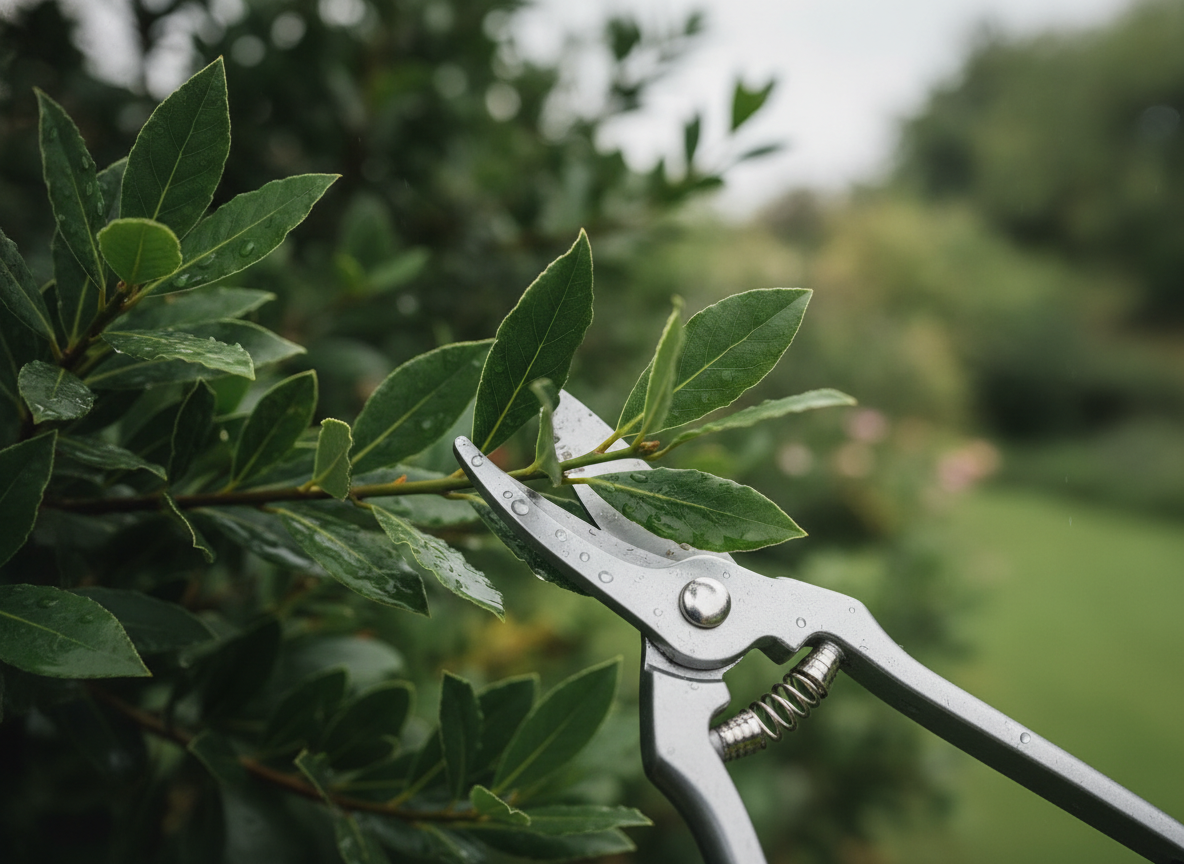
Whatever you do, don’t reach for hedge shears or a powered trimmer. Bay leaves are big, thick and glossy, and shears slice straight through the middle of them. Each halved leaf browns along the cut within days, and because bay holds its foliage you’re left looking at a plant stippled with hundreds of torn brown half-leaves for months. It’s the same reason a cherry laurel hedge should be cut with secateurs, not shears — big-leaved evergreens punish the trimmer that’s in a hurry.
So take the slow route. Cut shoot by shoot with clean, sharp secateurs, snipping each stem just above a leaf or a bud, and cut inside the outline so the cut end tucks behind the leaves around it. Stand back every minute or so and turn the pot — a lollipop is a sphere, and it’s easy to flatten one side while you’re leaning over the other. It takes twenty minutes on a standard bay instead of two, and it’s the difference between a clean green ball and a shredded one. The same discipline saves the leaves on a big-leaved holly, for exactly the same reason.
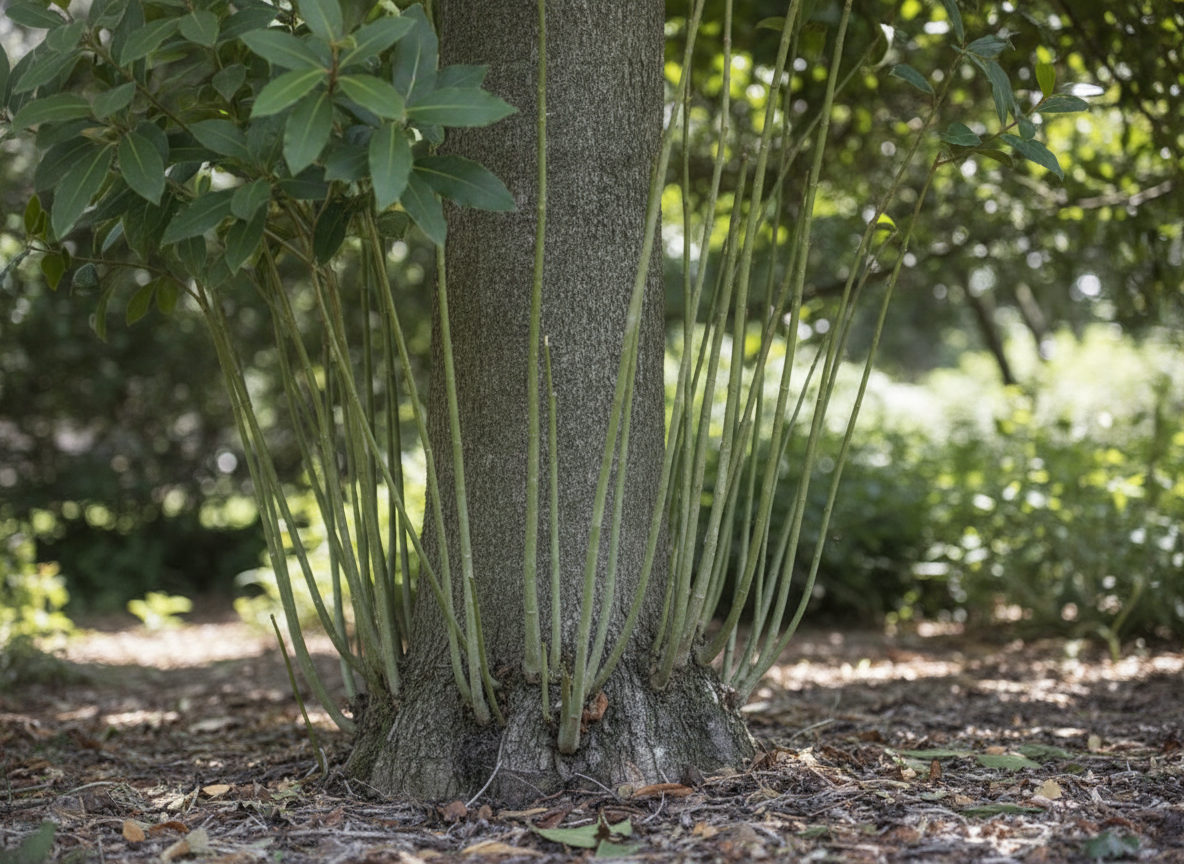 Bay tree trunk with many new shoots emerging from the base — AI-generated illustration
The suckers no one warns you about
A standard bay is a single clear stem with a mop of growth on top, and the plant does not naturally want to be that shape. Left alone it throws up shoots from the base and low on the trunk, and if you let them run they thicken, steal the plant’s energy, and turn your neat lollipop back into a bush over a couple of seasons. Every time you trim the head, run your eye down the clear stem and across the soil surface and rub or pull off any shoot coming from below the crown. Pulling them while they’re small and green beats cutting — it takes the dormant buds at the base with them, so they’re slower to return. It’s the same logic that makes pulling rose suckers cleanly beat snipping them.
Save the hard cut for spring
If your bay has gone bare and leggy in the middle, or simply outgrown its spot, it can take a genuinely hard prune — bay is tough and breaks readily from old wood — but that is a mid-to-late spring job, not a late-summer one. A hard cut forces a mass of new growth, and that growth needs a full season ahead of it to mature before winter. Do the renovation in April or May; keep the late-summer cut to a light shaping trim of this year’s growth. Shape now, renovate in spring — the same split that governs almost every evergreen you clip.
For the exact fortnight to give your bay its last trim — worked out for your own postcode and this year’s weather, not a generic calendar — Cresco builds the window into your plant’s care plan.