It looks like perfect pruning weather. A still, bright morning in late February, the birch bare against the sky, every crossing branch and awkward stub plain to see. You cut one — and a week later the wound is still weeping, a slow run of clear sap down the white bark. It’s rarely dangerous for the tree, but the bark gets stained and the wound stays wet for a long time.
The branch did need cutting. The problem was never the cut. It was the month.
Why a birch bleeds in spring
A birch moves a lot of sap upward in late winter and early spring, weeks before the buds break. That flow is under real pressure — the same rising sap that makes a grapevine or a walnut “bleed” if you catch them at the wrong moment. Cut into that current and the tree has no valve to shut: the sap runs out of the open wound until the pressure drops on its own, which can take days to weeks.
In practice, there’s no way to stop a bleeding cut once it’s started. In most cases the bleeding is harmless, but on a young tree prolonged bleeding can weaken the branch, stain the bark and keep the wet wound open to insects and disease for longer.
Midwinter isn’t a good time either. The tree is dormant and slow to seal wounds, and the closer you get to February, the more likely it is that the sap is already moving. Early spring, at the peak of the flow, carries the highest risk of bleeding. So the moments we often reach for the saw — the dead of winter and the first mild days of spring — are best skipped on a birch.
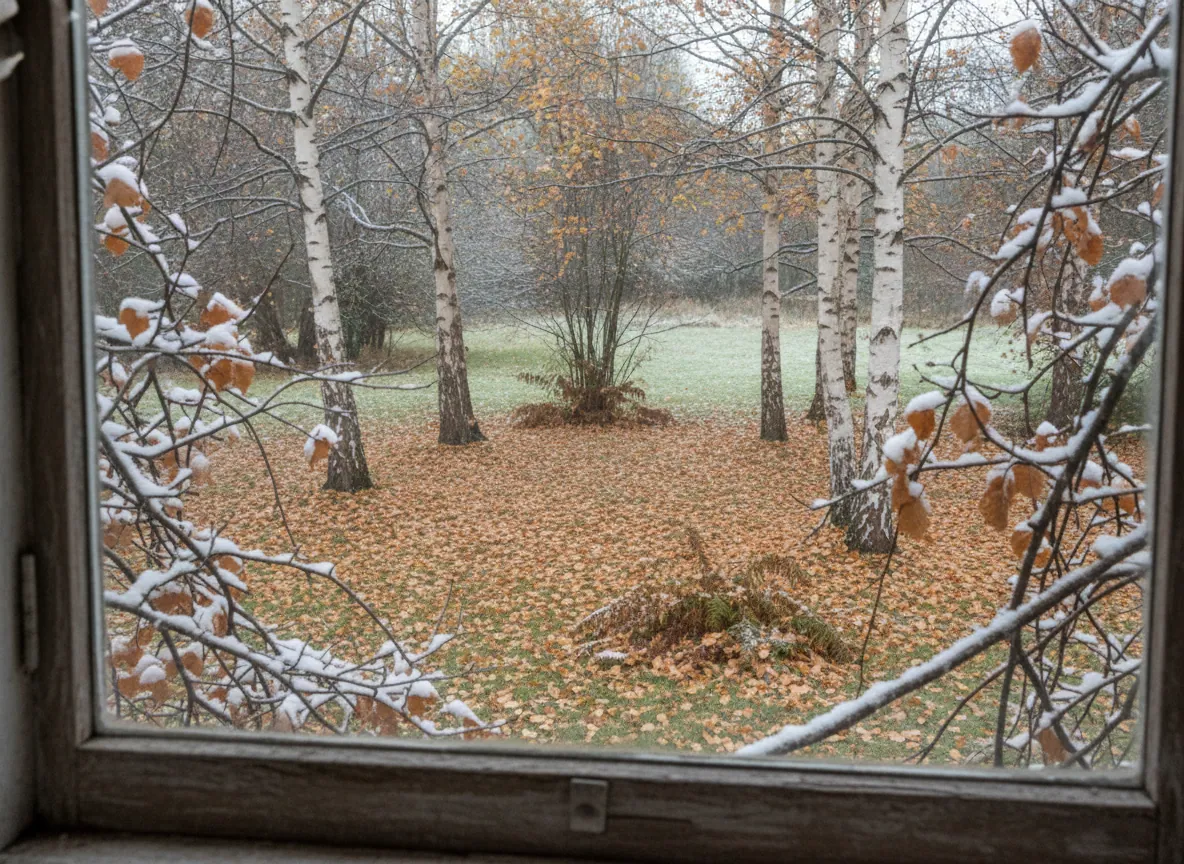 Birch trees with fallen autumn leaves and light snow visible through a window — AI-generated illustration
The window: late summer to early autumn
From August onward, the sap pressure in a birch is low. Growth is slowing, the sap is quiet, and the spring surge is still months away. Cut in this period and the wound barely weeps. That makes late summer and early autumn (August to October) the best time — and by October, as the canopy thins, you can also read the branch structure more easily.
A birch cut in August is still active and has until winter to seal its wounds, which is the same logic behind pruning a Japanese maple in August rather than April. You can still prune later in autumn, but the closer you get to late winter, the greater the chance that the sap starts moving again and the cut bleeds. So aim to finish before November, and skip late winter and early spring.
Cold isn’t part of the decision: birch is very hardy. Silver birch (Betula pendula) grows in USDA zones 2–7 and needs no winter protection, so the timing is about sap flow, not the weather.
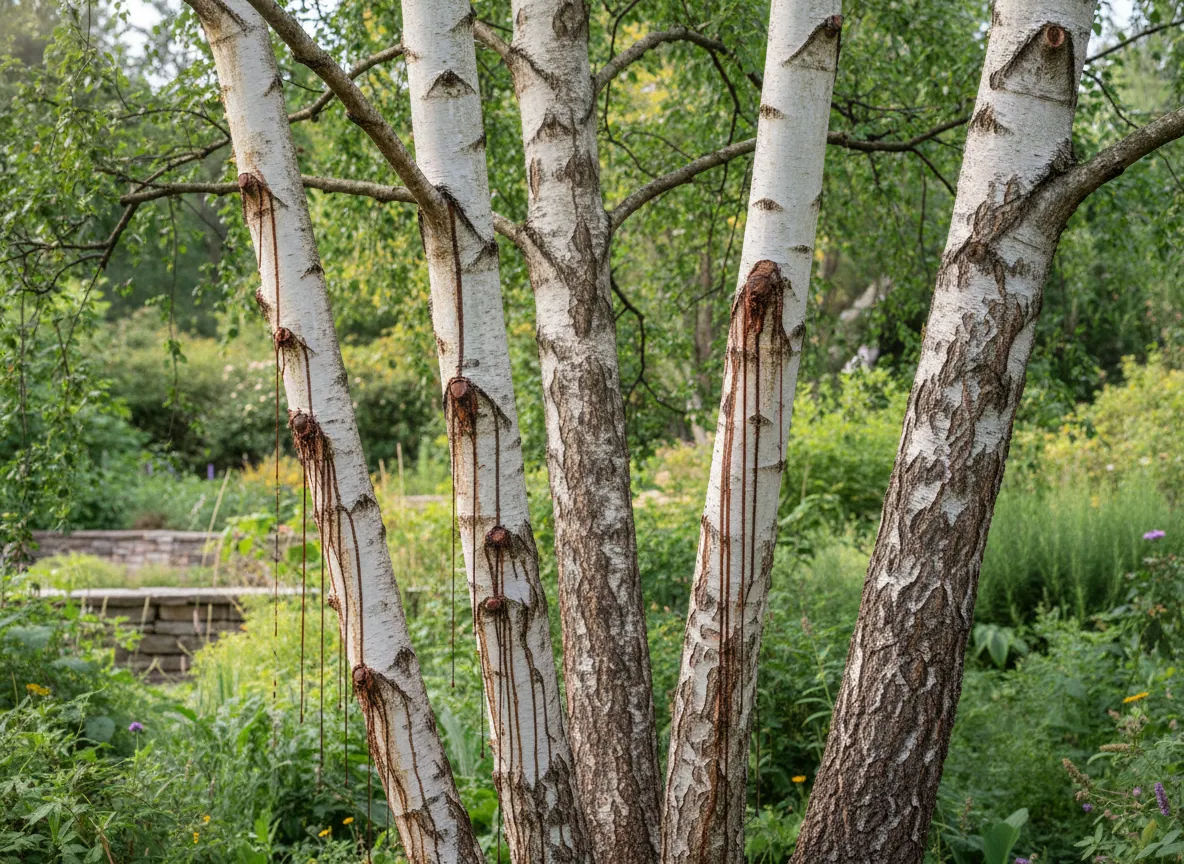 Bleeding birch trees in a garden — AI-generated illustration
The bleeders — and the trees that break the rule
Birch isn’t alone. A handful of trees and climbers all share the same early, high-pressure sap rise, and all of them bleed if you cut them in late winter or spring:
- Birch (Betula) — the classic offender, and the one whose pale bark shows every stain.
- Walnut (Juglans) — bleeds heavily and for a long time; prune preferably in late summer, while the tree is still in leaf, and not in the dormant months.
- Grapevine (Vitis) — cut a vine as the sap rises and it can drip for days. That’s why its main pruning is done in winter dormancy, with a summer prune in August on top, and not in spring.
- Maples (Acer) — including Japanese maples and the larger field and Norway maples.
- Hornbeam (Carpinus) as a tree.
For birch, walnut, maple and hornbeam the rule of thumb is the same: prune when the sap flow is quiet, in late summer or early autumn, and avoid late winter and early spring. Grapevine is the exception here: its main pruning is done in winter dormancy.
It’s worth knowing which trees don’t follow this rule, because the advice is the opposite. Apples and pears are not bleeders — their structural pruning is done in the depths of winter dormancy, exactly when you’d rather leave a birch alone. The same goes for mulberry (Morus): it bleeds too, but you prune it in late autumn to early winter, once it’s fully dormant. If you treat every tree the same, sooner or later you’ll cut one at the wrong time. (Here’s why apples and pears are pruned in winter, not autumn.)
What to cut on a birch — and how little
A birch is grown for its bark and its light, airy outline, and it builds that shape better left largely alone. Most trees need nothing more than a ten-minute once-over. Work through it in this order:
- Dead, damaged and diseased wood — back to healthy growth or the branch collar. This is cutting that’s almost always worthwhile.
- Crossing and rubbing branches — remove the weaker of any pair that chafe; rubbing wounds are where decay gets in.
- Low branches over a path, lawn or drive — lift the canopy by taking these off cleanly just outside the branch collar.
- A young tree’s shape — guide the leader and remove competing rivals early, while the cuts are small.
Resist the urge to “reduce” a birch that’s simply got too big. You can’t shrink one into a tidy shape — top it and it answers with a thicket of upright whips that ruin the outline for years. A birch that has outgrown its spot is a specialist’s job, or a tree in the wrong place, not an autumn haircut.
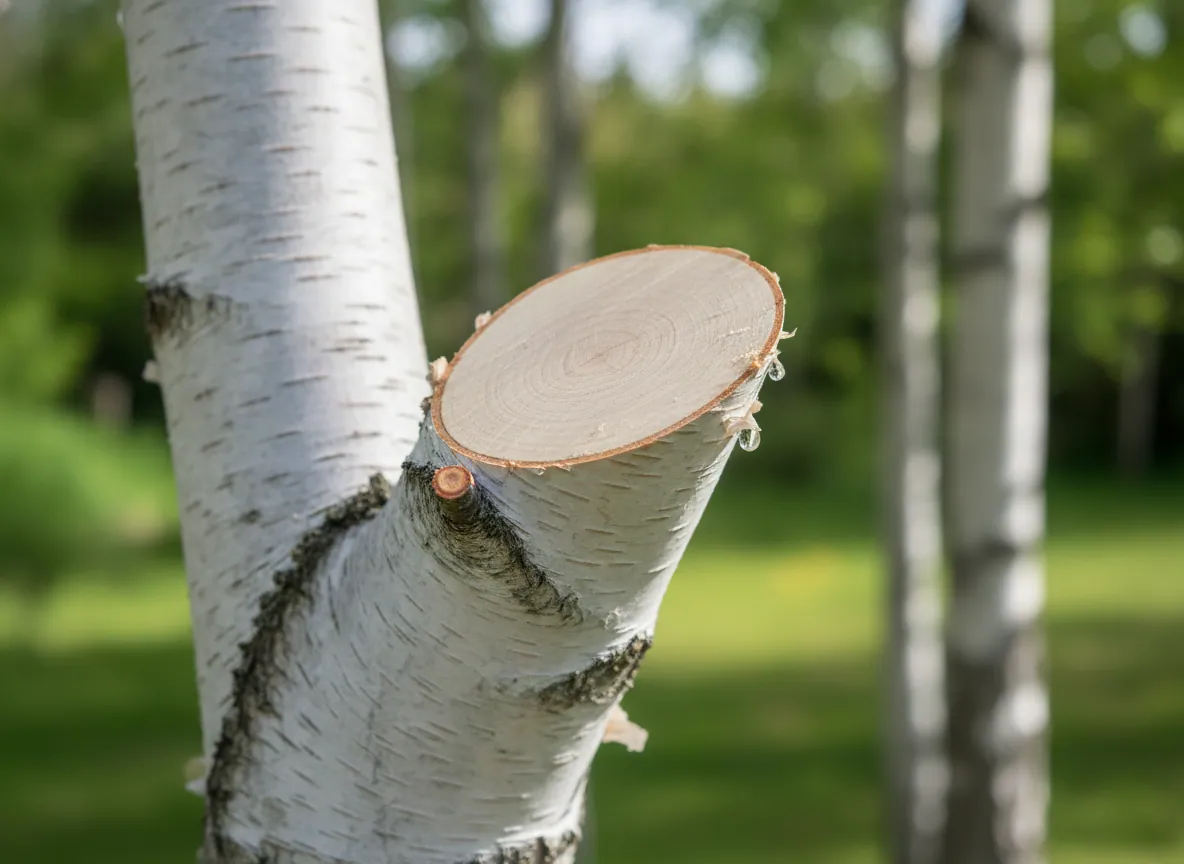 AI-generated illustration
Make the cut clean
Because these trees seal slowly, a tidy cut matters.
- Sharp, clean blades. Wipe them with alcohol if you’ve been cutting anything diseased — birch is prone to fungal cankers that spread through dirty tools.
- Cut to a fork or the collar, not mid-stem. A stub left between buds often dies back and can rot inward. Follow the branch to a junction and cut just outside the slight swelling of the collar — don’t cut flush.
- Keep wounds small. Several thin cuts on young wood heal far better than one cut through a thick limb. Anything more than a few centimetres across is a job to think twice about.
- No wound paint. It traps moisture and often does more harm than good; a healthy tree seals a clean cut on its own.
If you miss the window
Don’t force it in spring because the tree looks untidy. The branch will still be there in August, and that’s a good time again: a cut made then costs the tree little, while the same cut in March can bleed for days to weeks. However tempting an early-spring tidy-up, on a birch it’s better to keep the saw in the shed.
Not sure which of your trees will bleed if you cut them this week and which are waiting for midwinter? That’s exactly what Cresco is for — snap a photo and get pruning advice for your tree in your garden, so you prune at a time the tree can handle.