Reach for the secateurs on a mild April afternoon, snip a wayward branch off your Acer palmatum, and within a day the wound is weeping. Not a bead or two — a steady drip that can run for weeks, staining the bark and quietly draining the branch above it. Do it to a young tree and you can lose the whole limb.
The frustrating part is that the branch needed cutting. The problem was never the cut. It was the calendar.
Why a spring cut bleeds
Maples move an enormous volume of sap upward in early spring, before and just as the leaves break. That flow is under real pressure — it’s the same rising sap that makes birch and grapevines “bleed” if you cut them at the wrong moment. A fresh wound in March or April sits right in the current, and the tree has no way to shut the tap. It bleeds until the pressure drops on its own.
Late winter is just as bad, sometimes worse, because the tree is dormant and slow to seal anything over. So the two times most of us instinctively tidy a tree — the dead of winter or the first warm days of spring — are the two worst times to touch an acer.
By high summer the picture has flipped. The leaves are fully out, the spring surge is long over, and sap is moving steadily rather than under pressure. Cut now and the wound barely weeps. The tree is also still in active growth, so it seals the cut and lays down callus before autumn, instead of leaving it open to the winter wet.
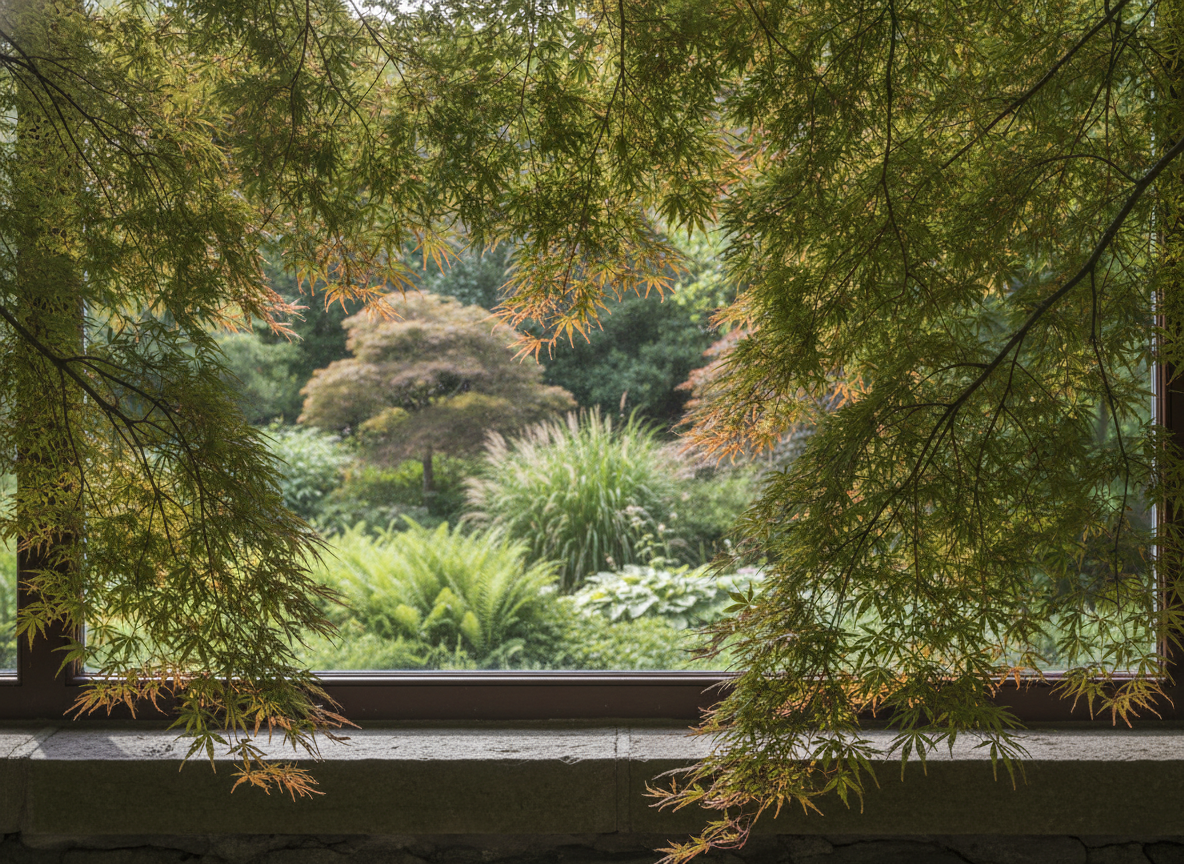 Japanese maple leaves frame a window overlooking a lush garden — AI-generated illustration
The window: mid-July to late August
The RHS puts the safe pruning season for Japanese maples at roughly July through to January, with two sweet spots: mid- to late summer for any shaping, and full dormancy in the depths of winter for removing larger dead or crossing limbs. For the average garden acer, late summer is the one to use. The tree is still warm and growing, the sap is calm, and you can see exactly what you’re doing because the canopy is in full leaf.
So August, right now, is close to ideal. Aim to finish before the first flush of autumn colour and leaf-drop — you want the tree to have a few weeks of active growth left to close the wounds. If you miss the window, don’t force it: wait until the tree is fully dormant and leafless in December or January, and take out only what’s plainly dead or crossing.
This is the same logic behind summer-pruning a grapevine in August rather than in spring — cut a vine while the sap is rising and it will bleed for days. Different plant, identical rule: prune the bleeders when the flow has slowed.
What to actually cut — and how little
Here is the part most people get wrong. A Japanese maple’s beauty is its shape: the layered, slightly irregular, fine-twigged form it builds on its own. Prune it hard and you don’t tidy it, you wreck it — and it can take years to grow back into itself. So the goal in August is thinning and shaping, never reduction for its own sake.
Work through the tree in this order:
- Dead, damaged and diseased wood — take it back to healthy growth or to the branch collar. This is the only cutting that’s always justified.
- Crossing and rubbing branches — where two stems chafe, remove the weaker or more awkward of the pair. Rubbing wounds are where dieback and disease get in.
- Congestion in the centre — thin out a few whippy inner shoots to let light and air into the canopy. An open centre keeps the interior twigs alive and shows off the branch structure.
- The one branch that spoils the outline — if a single shoot has bolted out of the graceful dome, follow it back inside the canopy and cut it to a fork, so the cut disappears.
Resist everything else. If you’re removing more than about a fifth of the canopy in one go, stop — you’re pruning too hard for a tree that resents it.
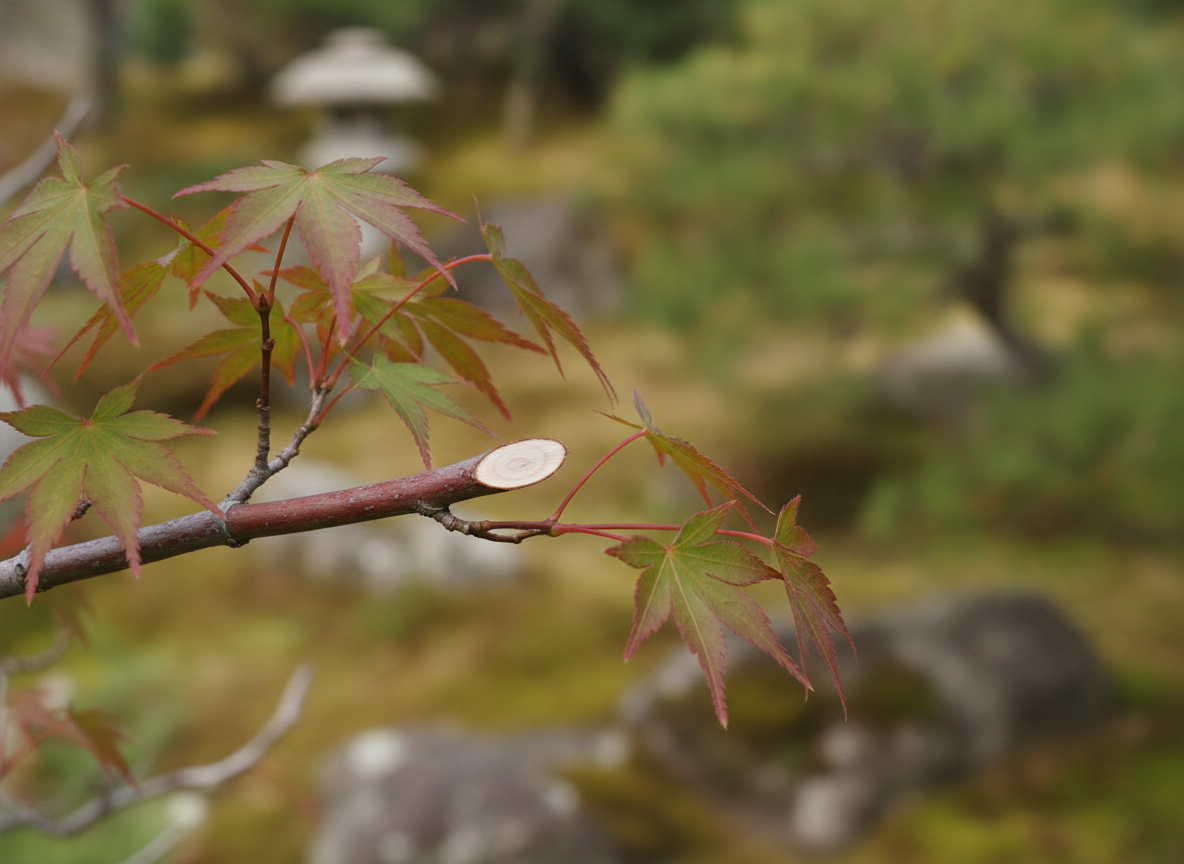 An autumn Japanese maple branch has a clean cut and green leaves — AI-generated illustration
Make the cut clean
Because acers seal wounds slowly, tidiness matters more than it does on a vigorous shrub.
- Sharp, clean blades. Wipe them with alcohol between trees, and before you start if you’ve been cutting anything diseased. Acers are prone to a fungal dieback that spreads through dirty cuts.
- Cut to a fork or a bud, never mid-stem. A stub left between two buds dies back and rots inward. Follow the branch to a natural junction and cut just above it, leaving the slight swelling of the branch collar intact — don’t cut flush.
- Small wounds, not big ones. Several thin cuts on young wood heal far better than one cut through a thick limb. On anything more than a couple of centimetres across, think twice and wait for winter.
- No wound paint. It traps moisture and does more harm than good. A clean summer cut on a healthy tree seals itself.
The mistakes that ruin an acer
Three things do lasting damage, and all three are common:
Shearing it like a hedge. Hedge trimmers leave a mess of stubs and a shorn outline that fights the tree’s natural layering. Every cut is by hand, with secateurs or loppers, following a branch back to where the cut won’t show.
Topping or “reducing” a maple that’s simply too big. You can’t shrink an acer into a smaller shape — cut back to a stub and it responds with a thicket of upright water shoots that look nothing like the original. If a maple has outgrown its spot, that’s a slow reshaping job over several winters, or a move, not an August haircut.
Cutting in spring because it “looked untidy.” This is the bleeding cut we started with. However tempting the spring tidy-up, hold off — the branch will still be there in July, and so will the safe window.
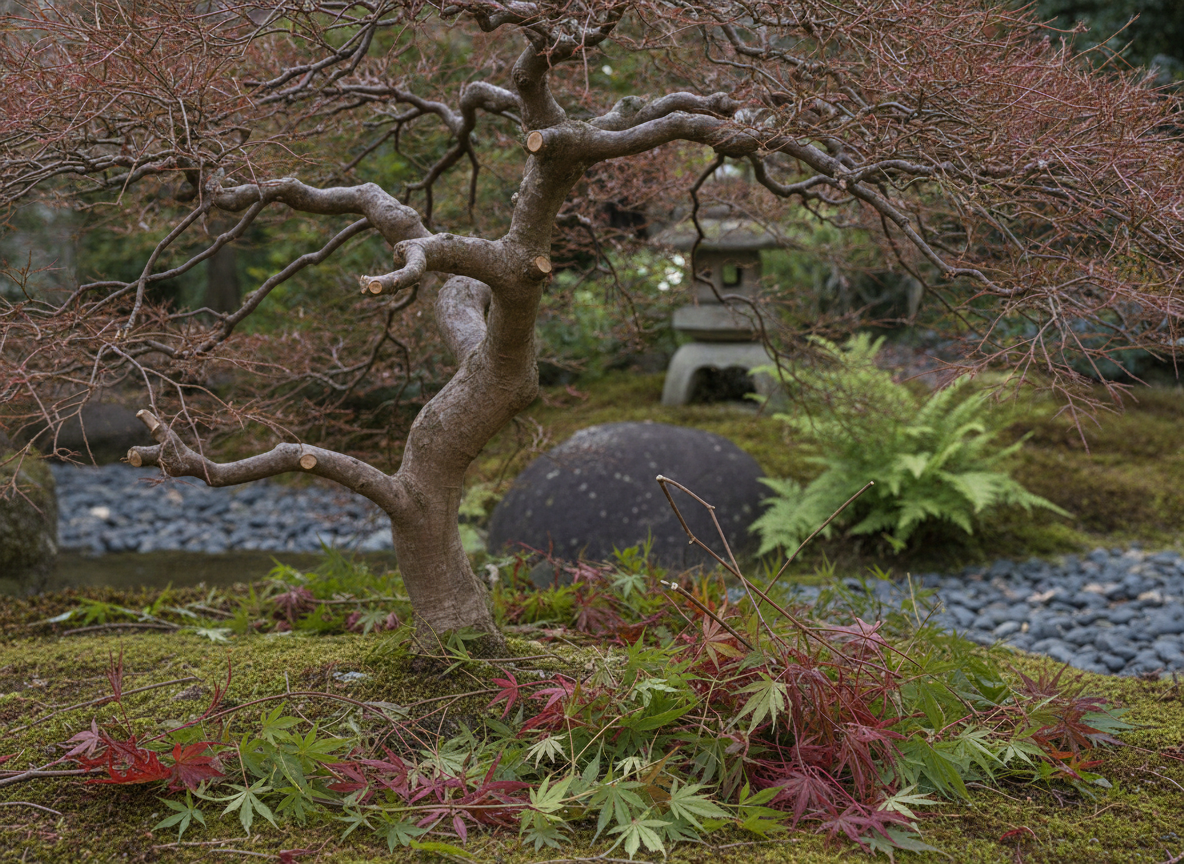 A pruned Japanese maple tree in a garden setting — AI-generated illustration
After you’ve pruned
There’s almost nothing to do, which is the point. Don’t feed a maple in late summer — nitrogen now pushes soft growth that won’t harden before frost. Keep it watered through any late-summer dry spell, especially if it’s in a pot, because drought stress and fresh cuts together invite dieback. A mulch of leaf mould or compost over the root zone in autumn does more for the tree than any amount of pruning.
Then leave it be. A well-placed acer wants your secateurs about once a year, for ten minutes, in the right month — and nothing more.
Two more late-summer jobs while you’re out there
August is a quiet pruning month with a few sharp deadlines. If the maple’s done, it’s also the moment for rosemary’s last trim before autumn — one more light shear before the wood turns woody for winter. And when you’re tidying the border, remember what not to touch: leave ornamental grasses standing until spring, where the old growth shelters the crown through the cold.
Not sure which of your trees and shrubs are safe to cut this week and which will bleed or sulk if you do? That’s exactly what Cresco is for — snap a photo, and it tells you the right pruning window for your plant in your garden, so the secateurs only come out when the tree can take it.