The plant that flowers for as long as you keep cutting it
Helenium — sneezeweed, if you go by the old country name — is one of the great late-summer perennials, a mound of warm daisies in rust, copper, gold and burnt orange that lands exactly when the border starts to tire. ‘Moerheim Beauty’, ‘Sahin’s Early Flowerer’, ‘Waltraut’, ‘Rubinzwerg’: the varieties differ in colour and height, but they share one habit worth understanding. Left to itself, a helenium flowers hard for three or four weeks and then, as the first blooms set seed, slows and starts to fade.
Deadhead it, and that same plant flowers for two or three months instead. The seed is where the difference lives. A daisy flower’s job, from the plant’s point of view, is to become a seedhead — and once enough of them are ripening seed, the plant reads the season as finished and stops producing new buds. Snip the fading flowers off before they seed and you keep the plant “hungry”, still pushing out the side buds that carry it deep into autumn. In a mild year a well-deadheaded helenium is still throwing colour when the first frosts arrive.
August is the month that decides which of those two plants you get. The first flush is fading now, the seedheads are forming, and every spent bloom you leave on is a vote to shut the show down early.
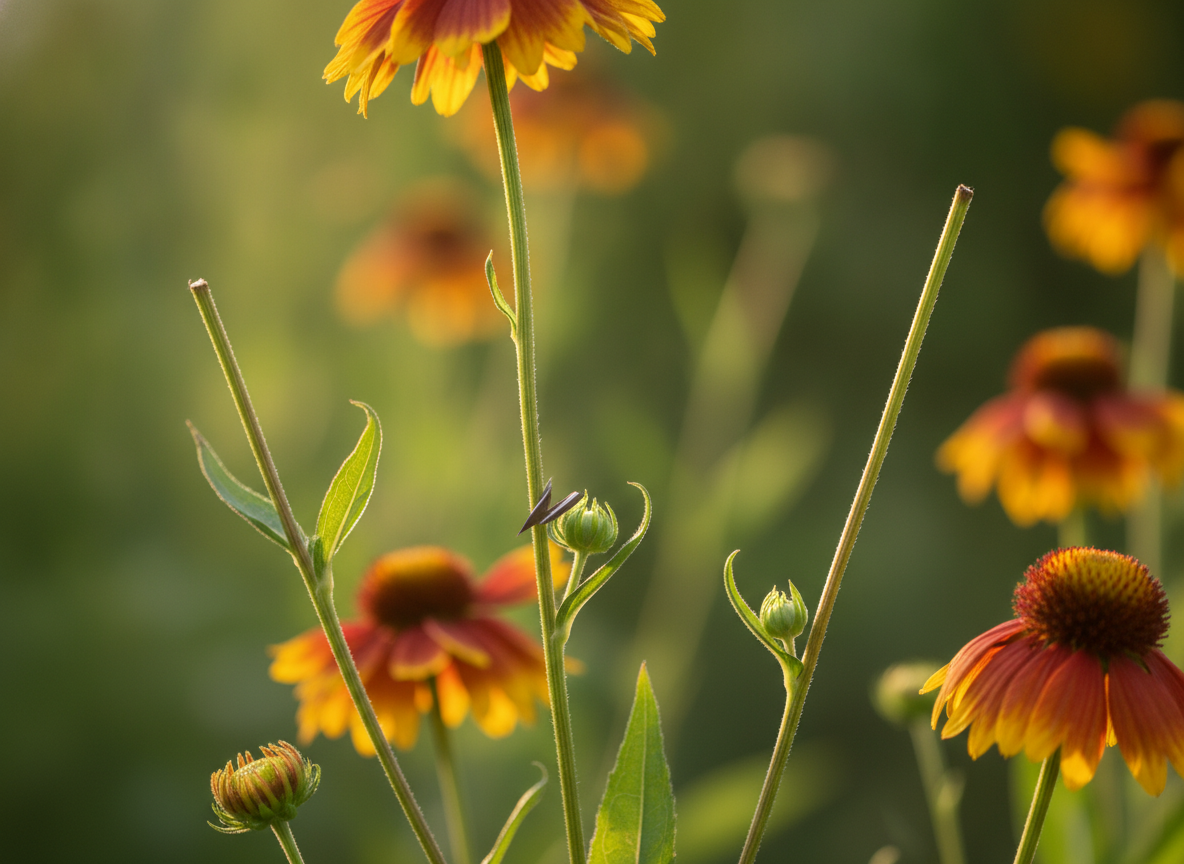 . Helenium flowers and stems with one bud cut — AI-generated illustration
Cut to a bud, not just the head
The mistake is snapping the dead flower off at the top and calling it done. A helenium stem doesn’t carry one flower — it branches, and below each spent bloom sit smaller side buds waiting their turn. Behead the stem too high and you leave a bare stub with the buds still trapped below a dead tip; cut too low and you take off buds that were about to open.
The cut you want follows the stem down from the faded flower to the first fat side bud or healthy leaf-joint, and takes it off just above that. It’s the same principle that keeps cosmos flowering to the frosts — you’re not tidying the top, you’re releasing the next flower down. On a big clump you’ll be doing this every week or so through August and September; it goes quickly once your eye learns to drop past the dead head to the live bud beneath.
Two things make the job easier. Deadhead little and often rather than saving it for one big session — five minutes with secateurs each weekend keeps ahead of the seed. And cut into a jar or trug rather than dropping heads into the clump, because a helenium that self-seeds freely will give you seedlings that rarely come true to the parent’s colour.
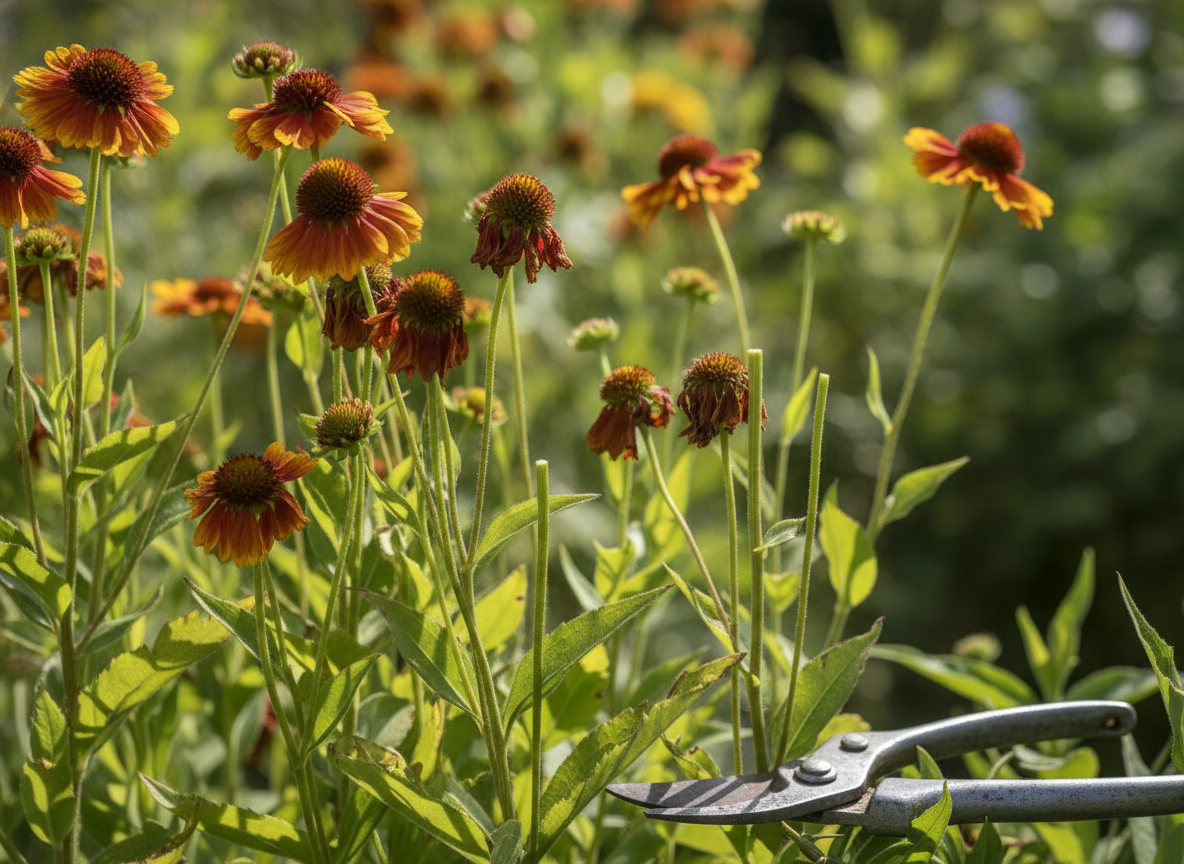 Heleniums with faded blooms and garden snips, in natural daylight — AI-generated illustration
Missed the midsummer chop? Deadheading is the catch-up
The tidiest heleniums you’ll see had a second trick played on them earlier: a cut-back of about a third in late spring, the Chelsea chop that keeps the plant shorter, stouter and later-flowering so it doesn’t flop and doesn’t finish too soon. If you did that in May, your plant is probably just hitting its stride now.
If you didn’t — and most of us have at least one clump we meant to get to and didn’t — August deadheading is the way back into the same effect. You can’t shorten the whole plant now without cutting off the flowers you waited all summer for, but by keeping the seed off and steering each stem down to its side buds, you buy most of the extended season the chop would have given you. Next spring, when the Hampton hack window and the Chelsea chop come round again, that’s the plant to remember.
One thing deadheading won’t fix is a helenium that’s flopping outward with a bald centre. That’s age and congestion, not pruning — the clump wants lifting and dividing in spring, splitting the woody old middle away and replanting the vigorous young outer pieces. Do that every three years or so and the plant stays upright and floriferous; leave it a decade and no amount of deadheading rescues the sprawl.
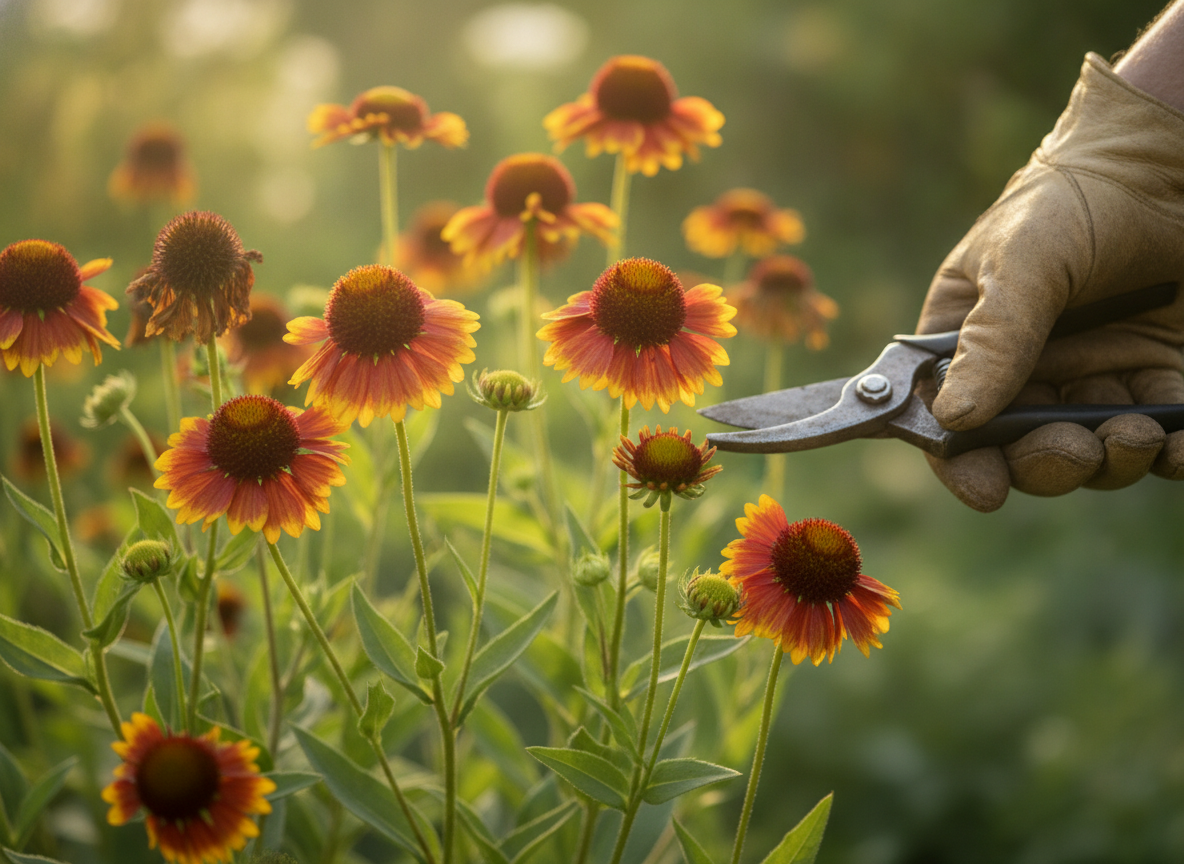 A person’s gloved hand holding pruning shears near heleniums in a garden — AI-generated illustration
Don’t cut the whole plant down yet
There’s a temptation, once deadheading starts to feel relentless in late September, to give up and shear the lot to the ground. Resist it while the plant is still throwing buds — you’d be trading three weeks of the best autumn colour in the garden for a tidy gap.
And when flowering genuinely does finish, think twice before cutting to the ground even then. Helenium stems and the last seedheads earn their keep through winter: the seed feeds goldfinches and other small birds, and the hollow stems shelter overwintering insects — the same case for leaving structure standing that means you stop deadheading coneflowers for the last cones. Leave the framework up, cut it down to the base in late winter or early spring instead, and you get the wildlife dividend and a clearer view of the new basal shoots when they push. If you can’t bear the mess, cut back after the first hard frost — but the birds will thank you for waiting.
The one August habit that pays off till the frosts
It comes down to a single, repeatable move: each week through August and September, walk the border with secateurs and take every fading helenium bloom down to its next live bud, before it sets seed. That’s the whole discipline, and it’s the difference between a plant that’s over by early September and one that carries the border to the frosts.
The catch, with heleniums as with everything, is timing it to your own garden rather than a calendar — the fade comes weeks apart between a warm southern border and a cold northern one. The Cresco pruning calendar tracks each plant’s window against your local season, so you get the nudge to start deadheading when your heleniums actually turn, not when a book says they should.