Why late summer, and why only once
By mid-to-late August a hornbeam hedge has done its growing for the year. The soft, whippy shoots that shot up in June have firmed off, the sap has stopped rising hard, and the plant is easing into autumn. Cut it now and the shape you make is the shape it keeps — there is no second surge of ragged growth to blur your lines before winter.
That is exactly why late summer is the moment. Trim earlier, in the flush of May and June, and you are cutting into active growth: hornbeam can bleed sap from fresh wounds, the soft regrowth that follows is easily scorched by an early frost, and — just as important — you risk disturbing nesting birds, who are legally protected while eggs or chicks are in the hedge. Wait until the growth has slowed, and one clean cut carries the hedge crisply through to spring.
For most gardens the window runs from mid-August into September. That timing isn’t only about tidiness — it’s the key to the trick hornbeam is famous for.
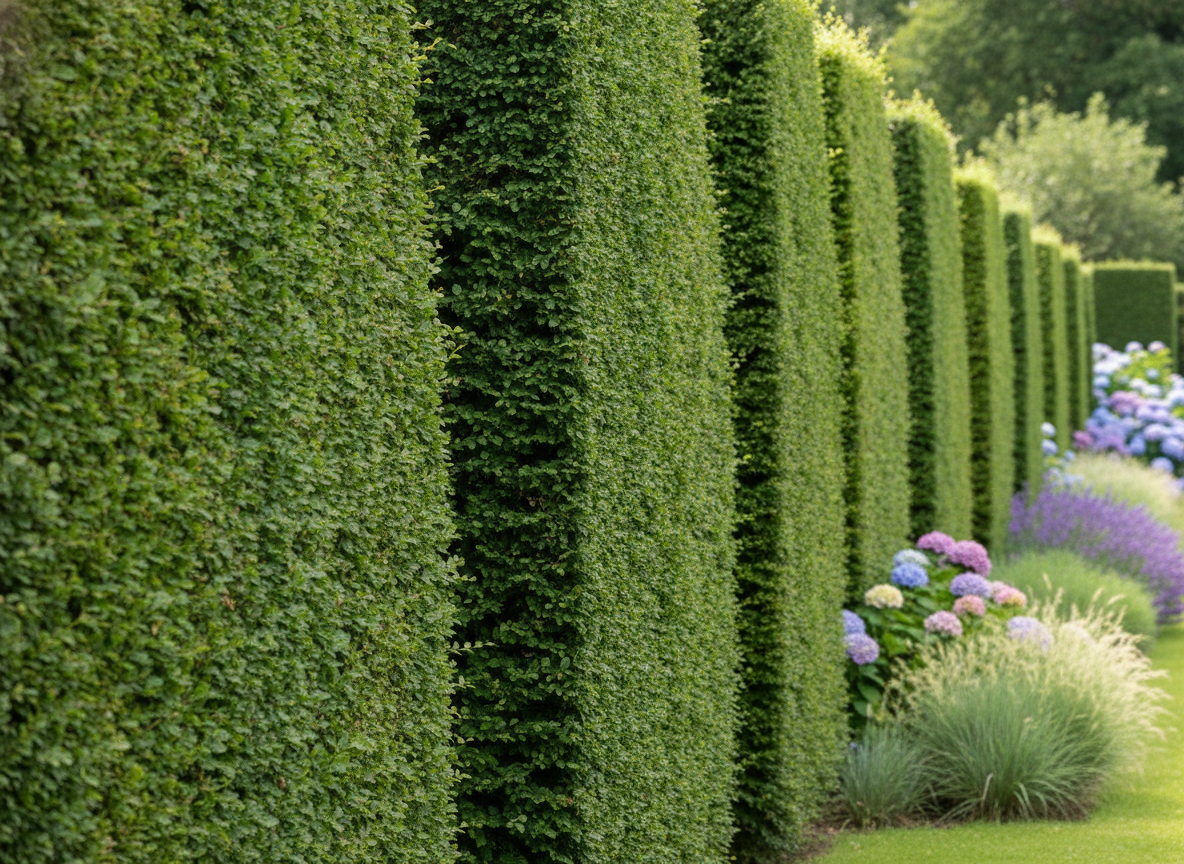 A row of neatly trimmed hornbeam hedges stands alongside flowering hydrangeas and lavender — AI-generated illustration
The August cut is what keeps the leaves on
Hornbeam is deciduous, but a clipped hornbeam hedge behaves as though it isn’t. Through winter it hangs on to its dead leaves — a muddy gold fading to brown — instead of dropping them in October. This is marcescence, and it’s why a bare-branch garden in January can still have one wall of solid, rustling cover.
Here’s the part gardeners miss: marcescence is strongest on young, regularly cut growth. A mature, unpruned hornbeam tree lets most of its leaves fall; a hedge that gets sheared every year keeps its outer growth in a permanently juvenile state, and juvenile growth clings to its leaves. So the late-summer trim isn’t just cosmetic — it’s what forces the fresh, leaf-holding shoots that give you a private, wind-filtering screen right through the coldest, most exposed months. Skip the cut for a couple of years and the hedge starts behaving like a tree: thinner, gappier, and shedding by midwinter.
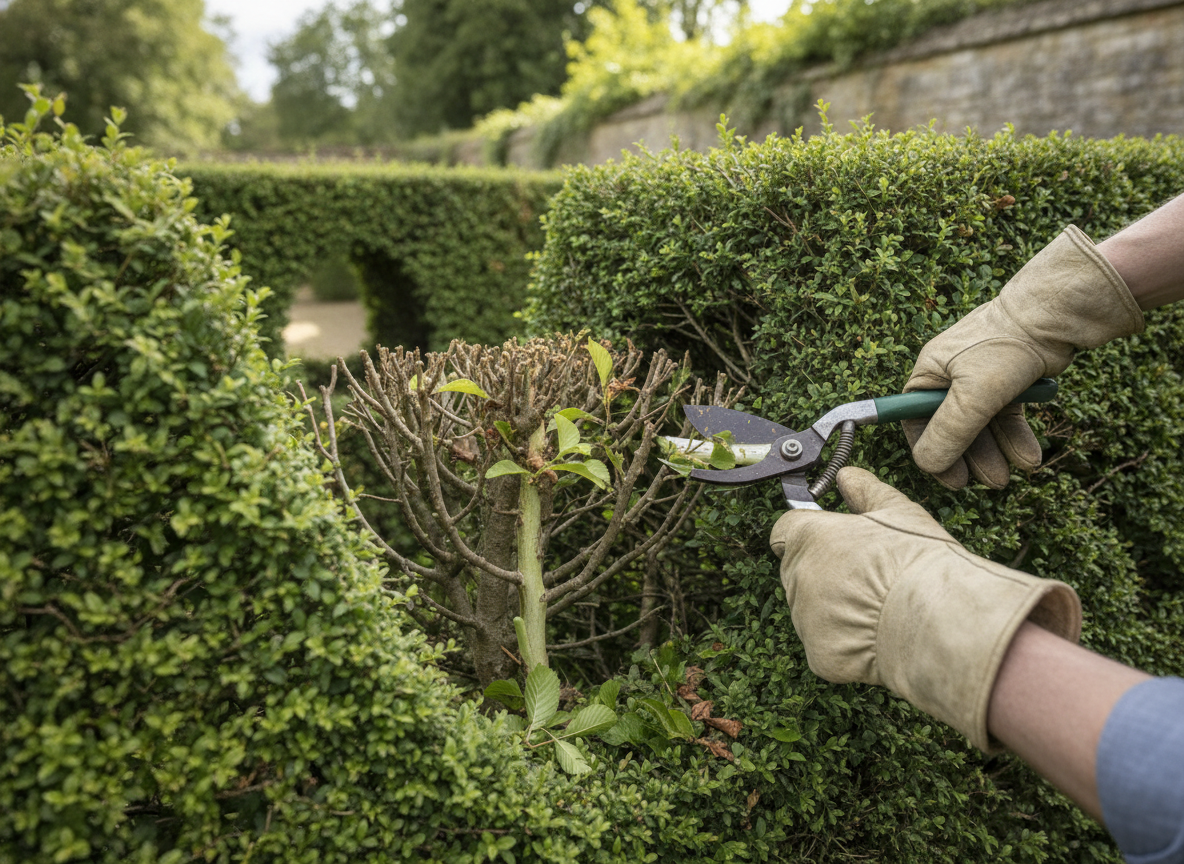 A gardener prunes a hornbeam plant in a formal garden — AI-generated illustration
How to make the cut
The annual trim is a light one — you’re shaping this year’s growth, not reducing the hedge. Work with sharp shears or a hedge trimmer and clean the blades first; hornbeam is tough, but a clean cut heals faster and looks better than a chewed one.
- Cut the sides to a batter. Keep the hedge fractionally wider at the base than the top — a slight taper. Light reaches the bottom, the base stays clothed in growth, and snow slides off instead of splaying the top open.
- Run a string line for the top. By eye, tops drift. A line pulled taut between two canes gives you a level run and stops the middle sagging.
- Stay in the green. For a maintenance trim, cut back to just above where this season’s growth started. Don’t carve into bare old wood on a whim — save that for winter.
- Don’t trim in a heatwave or hard frost. Freshly cut foliage scorches in blazing sun and blackens in frost. A mild, overcast day is ideal.
One reassurance: unlike a conifer such as leylandii, hornbeam will break from old wood, so it forgives a hard renovation — but that’s a winter job on a dormant plant, cutting one face back one year and the other the next. If your hedge has outgrown its space, note it and wait; don’t try to renovate and maintain in the same August cut. (For why conifers can’t take the same treatment, see our note on the leylandii summer trim, and for the deciduous exception that thrives on a hard cut, the yew hedge renovation guide.)
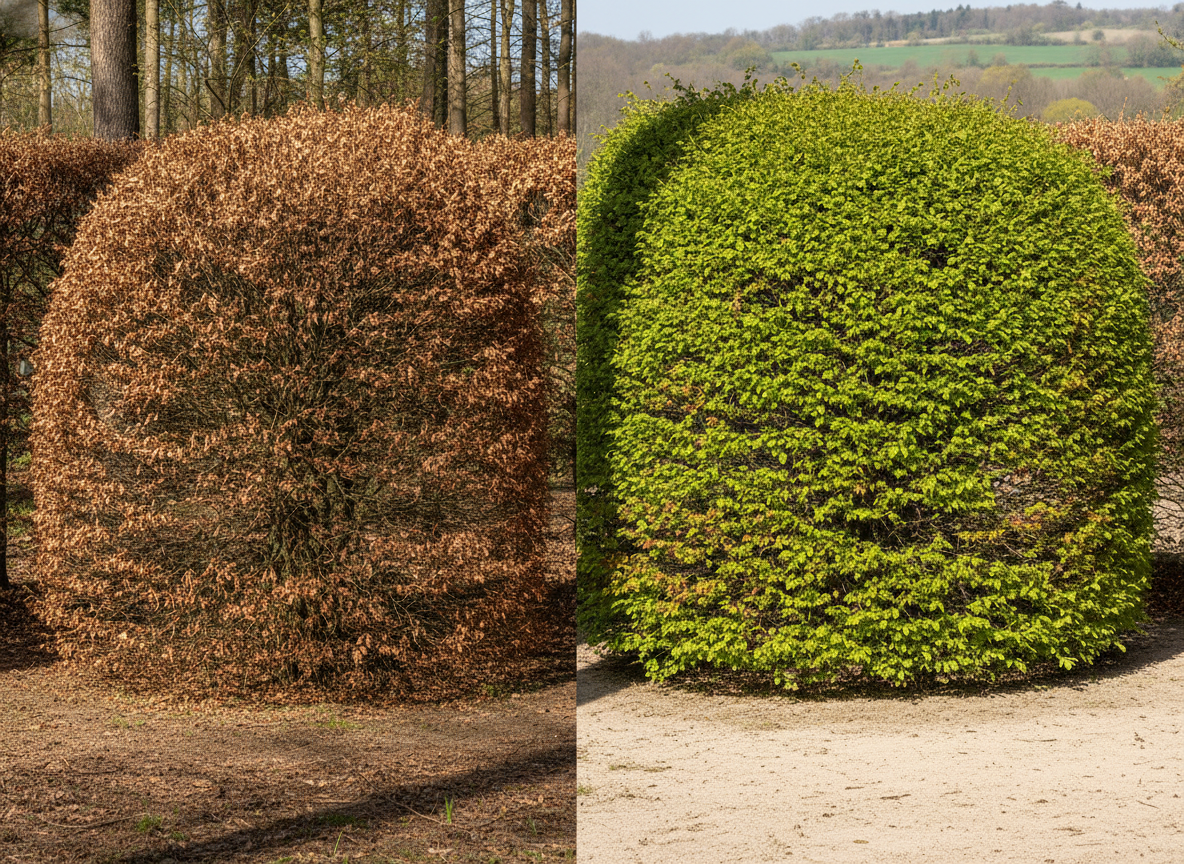 Two shaped trees, one with brown leaves and one with green leaves — AI-generated illustration
Hornbeam or beech? Same trim, different site
People mix these two up constantly, and no wonder — both are native, both are marcescent, and both get their main trim in late summer. The difference isn’t in the pruning; it’s in where they’ll grow.
Hornbeam is the hedge you plant where beech won’t cope. It shrugs off heavy clay and ground that sits wet through winter — the exact conditions that rot a beech’s shallow roots and leave it gappy. Beech pays you back with a warmer copper in its winter leaves; hornbeam’s held foliage is a muddier yellow-brown. So: beech for dry to average soil and that russet glow, hornbeam for clay, damp, and exposure.
If you’re actually growing beech, the timing advice differs slightly — we cover it in when to trim a beech hedge.
One cut a year, or two?
For an informal or semi-rural hedge, a single late-August trim is genuinely all you need — it’s the low-effort, high-reward option. If you want a crisp, formal, architectural face, add a lighter tidy-up in late May to catch the first flush, then the main shaping cut in August. Two cuts give you a denser, sharper hedge; one cut gives you a healthy, leaf-holding one. Both are correct — it depends how formal you want it to look.
Whichever you choose, finish the season by clearing the clippings off the base (they smother and invite disease) and, on a hungry or newly planted hedge, mulching along the line with compost in autumn.
Let Cresco time the cut for your garden
“Late August” is a national average — your hornbeam takes its cue from your local weather, your soil, and how hard a summer it’s had. Plant & Bloom by Cresco builds a pruning calendar around your actual conditions, so you get a reminder when your hedge has stopped growing and the window opens — not a date from a book. Snap a photo, and it’ll confirm you’re looking at hornbeam and not its lookalike neighbour before you pick up the shears.