By August the flowers are a distant memory. The magnolia that stopped every passer-by in April is now a big green dome of leaves, and if it has crept over a path or started to block a window, the urge to take it in hand is strong. Most people wait for winter, wait for the leaves to drop so they can “see what they’re doing,” and then cut it back hard.
That is the one move a magnolia rarely forgives. The tidy-up is reasonable. The timing and the severity are where it goes wrong.
The rule almost every magnolia guide skips
A magnolia flowers on old wood — buds that were set the summer before they open. The fat, felty flower buds you’ll notice on the bare branches next February were formed on this year’s growth, months earlier. Cut that growth off and you are not shortening the plant, you are posting next spring’s display into the green-waste bin.
This is why a hard winter prune is so disappointing. You cut a leggy, over-tall magnolia down to a sensible size in January, feel pleased with yourself, and then spend April looking at a bushier, flowerless plant while the neighbour’s blooms. The wood you removed was carrying every bud.
It puts magnolia in the same camp as lilac and camellia — shrubs where the calendar, not the technique, decides whether you get flowers. The difference is that a magnolia would honestly rather you left it alone.
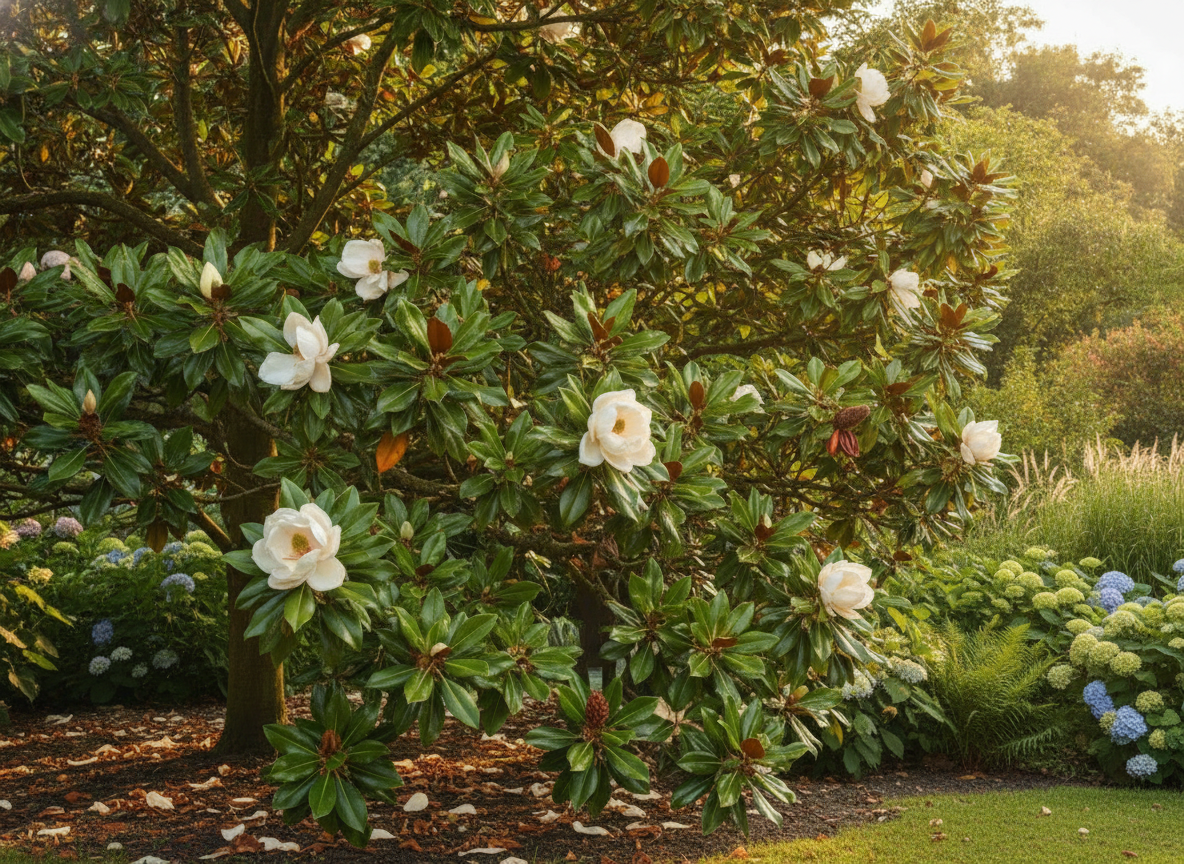 A magnolia tree with large white blossoms in a garden setting — AI-generated illustration
Why late summer is the window
If a cut genuinely needs making, the tree is telling you when it can cope. A deciduous magnolia heals best when it’s pruned in full leaf, from midsummer into early autumn — so mid-August to September is the sweet spot. The plant is still actively growing, so it seals a wound quickly and lays down a callus over the exposed edge before the cold arrives.
Do the same job in winter or early spring and you get the worst of both worlds. Dormant wood is slow to close over, so the wound sits open and raw for months. And like Japanese maple, a magnolia carries a lot of sap in spring; a late-winter cut can bleed and dies back further than you intended. Full-leaf summer pruning sidesteps both problems at once.
 AI-generated illustration
What “light” actually means
For an established magnolia, pruning is a tidy-up, not a reshaping. Work through it in this order and you’ll rarely need to do more:
- Dead, damaged or diseased wood — take it out whenever you spot it, back to healthy tissue or the branch collar.
- Crossing or rubbing branches — remove the weaker of the two, so the canopy isn’t wearing holes in itself.
- One wayward branch spoiling the shape or reaching over a path — shorten it back to a side branch that’s growing the way you want, not to a random point in mid-air.
Always cut back to a bud, a side branch, or the collar where a branch meets its parent. A cut left as a bare stub in the middle of a branch has nothing to grow away from, so it dies back and rots inward. Clean, angled cuts just above a healthy growing point are what the tree can seal.
The hard cut that comes back to bite you
There’s a specific reason not to reach for the loppers and take a mature magnolia down by a third. Big wounds on old magnolia wood heal slowly, and the tree’s response to a heavy cut is to throw up a thicket of vertical watershoots — vigorous, whippy, upright stems that grow fast, ruin the plant’s naturally tiered shape, and flower poorly or not at all. You end up with more work, a worse outline, and fewer blooms.
If a magnolia is simply in the wrong place or has outgrown its spot, the honest answer is usually that it was planted too close to the house, and no amount of annual butchery will fix that. Renovation is possible on some vigorous types, but it’s a multi-year project done in stages — not a single autumn afternoon with a saw. For most gardeners, the right move is a light hand now and patience.
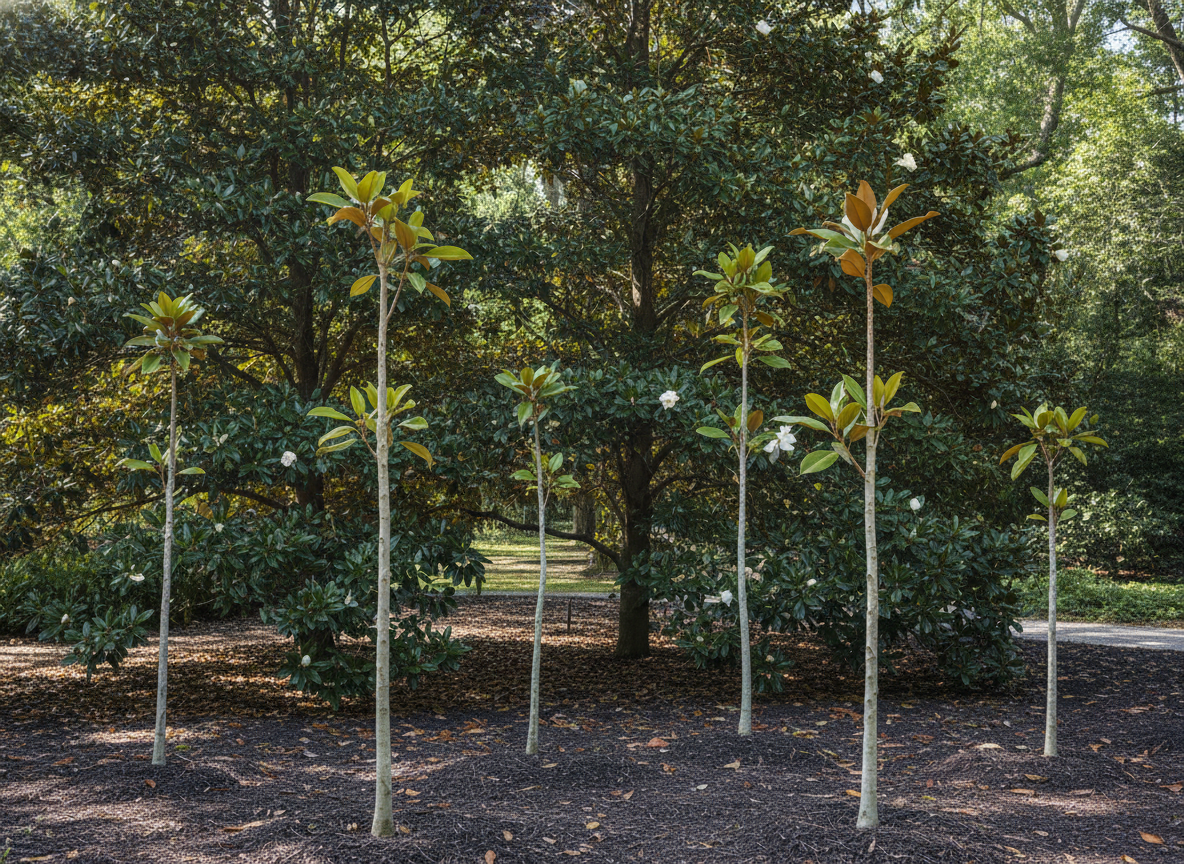 Young evergreen magnolias grow in a garden — AI-generated illustration
Young trees and evergreen magnolias
A young magnolia is the one case where a little shaping pays off. In the first few years you can remove a competing leader or a badly placed branch to build a good framework — still in late summer, still lightly. Get the structure right early and a mature magnolia needs almost nothing.
Evergreen magnolias, like the wall-trained Magnolia grandiflora, play by a different clock: prune those in spring, as growth begins, rather than in late summer. The advice here is for the deciduous, spring-flowering magnolias most of us grow — M. stellata, M. soulangeana and the like.
The one-line version
Cut only what’s dead, crossing or genuinely in the way; do it in full leaf between now and early autumn; and never take a magnolia back hard. Respect that its flowers are already sitting on this year’s wood, and next April will look after itself.
Not sure whether your tree is a deciduous or evergreen magnolia — or when any other shrub in the garden wants cutting? Cresco identifies the plant from a photo and gives you the pruning window for your own garden and local weather, so you’re never guessing at the calendar.