The winter job the summer prune was setting up
If you shortened your gooseberry side-shoots to five leaves back in July, you did the plant’s fruit a favour — and you left the real structural work for now. The summer cut feeds the spurs; the winter cut builds the bush those spurs sit on. Leave the framework alone for a few years and a gooseberry turns into a thorny dome with all its growth on the outside, a dead congested middle, and berries you can only reach by bleeding for them.
Gooseberries, like red and white currants, fruit on short permanent spurs clustered along a woody framework of older branches. That framework is what you shape in winter. The job is not to tidy the bush — it’s to keep an open, well-lit, airy structure that carries spurs right through the middle instead of only around the edge. Get the shape right and everything else follows: bigger berries, far less mildew, and a bush you can actually pick.
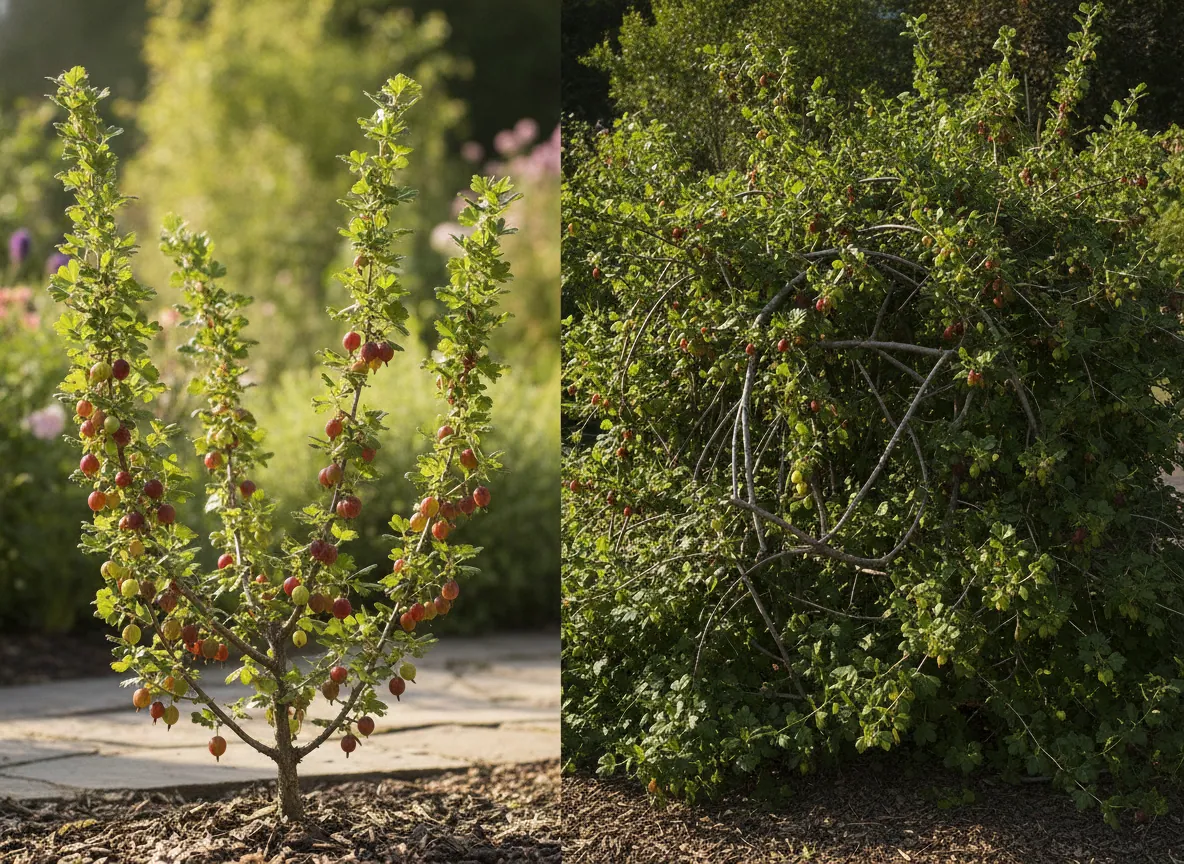 A gooseberry bush pruned in an open goblet shape next to an unpruned dense bush — AI-generated illustration
Why an open goblet, not a dense dome
The target shape has a name worth remembering: an open-centred goblet, or wine-glass — a short clear stem (the “leg”) with eight to ten main branches fanning up and out around an empty middle. Every cut you make in winter serves that shape, because the shape is doing four jobs at once:
- Light reaches the whole bush. Spurs in shade make small, slow-ripening berries. Open the centre and the sun gets to the wood deep inside, not just the outer shell.
- Air moves through it. American gooseberry mildew — the grey-white felt that ruins berries and shoot tips — thrives in still, crowded, humid growth. An open bush dries out fast after rain, and that airflow is your best non-chemical defence.
- You can see pests coming. Gooseberry sawfly caterpillars strip a bush to bare ribs in days each spring. On an open, uncluttered framework you spot the first chewed leaves low in the centre and pick them off before they spread.
- Picking stops drawing blood. A goblet with a clear middle lets you get a hand in among the branches instead of fighting a solid wall of thorns.
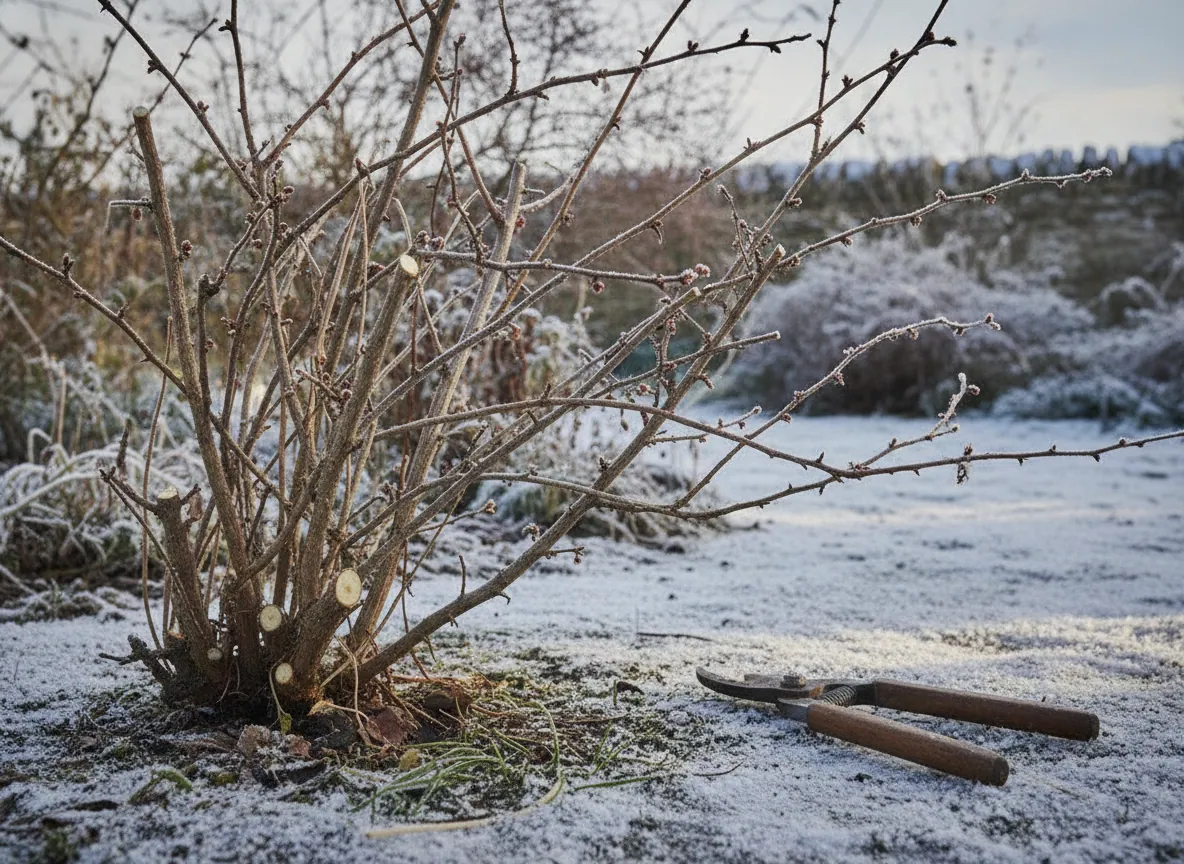 A pruned gooseberry bush in a winter garden with gardening shears — AI-generated illustration
When to make the winter cut
The window is the whole dormant season — from the moment the leaves are down in late autumn until the buds start to swell in late winter. Right now, with the leaves falling, the framework is bare and readable for the first time all year, which is exactly when the shape is easiest to see and fix.
If you want to split hairs, late winter (February into early March here) is the textbook moment: the cuts are exposed to frost for less time, and you can see over winter whether birds have been stripping the fat fruit buds — a real problem with gooseberries — before you commit to which shoots to keep. But there’s no harm in starting once the bush is fully dormant. Prune on a dry day so the open wounds aren’t sitting wet, and avoid a hard frost. What you don’t do is prune in autumn before the leaves drop or in spring once growth has started: cut too early and soft autumn regrowth gets frosted, cut too late and you lose the sap and the fruit buds you were trying to build.
How to prune an established bush
Work from the ground up, and take it one branch at a time. Stand back every few cuts to check you’re still heading for that open goblet.
- Clear the “three Ds” first — anything dead, diseased or damaged. Then take out branches that cross the middle or point inwards, and any that have flopped down to the soil. This alone opens most bushes up.
- Keep the leg clean. Rub or cut off any shoots and suckers coming from the short clear stem below the main branches. You want a single clear leg, not a thicket at the base.
- Choose your 8–10 main branches. Keep strong, well-spaced ones that fan up and out. On a congested old bush, remove one or two of the oldest, darkest, least productive branches right down to the base each year — this branch renewal keeps fresh young wood coming and stops the whole thing getting tired.
- Shorten the leaders by about a quarter. Cut each main branch tip back to a bud facing the way you want the branch to grow. On upright varieties pick an outward-facing bud; on the many gooseberries that naturally droop, cut to an upward-facing bud so the branch lifts off the ground instead of sweeping it.
- Spur-prune the side-shoots. Cut the side-shoots coming off the main branches back to one to three buds. Those short stubs are the spurs that carry the crop — shortening them hard builds fat fruiting spurs instead of long whippy growth.
If you grow gooseberries as cordons against a wall or wires, the logic is the same but simpler: you summer-prune the side-shoots to five leaves in July, then in winter shorten those to one or two buds and tip the single leader until it reaches the height you want.
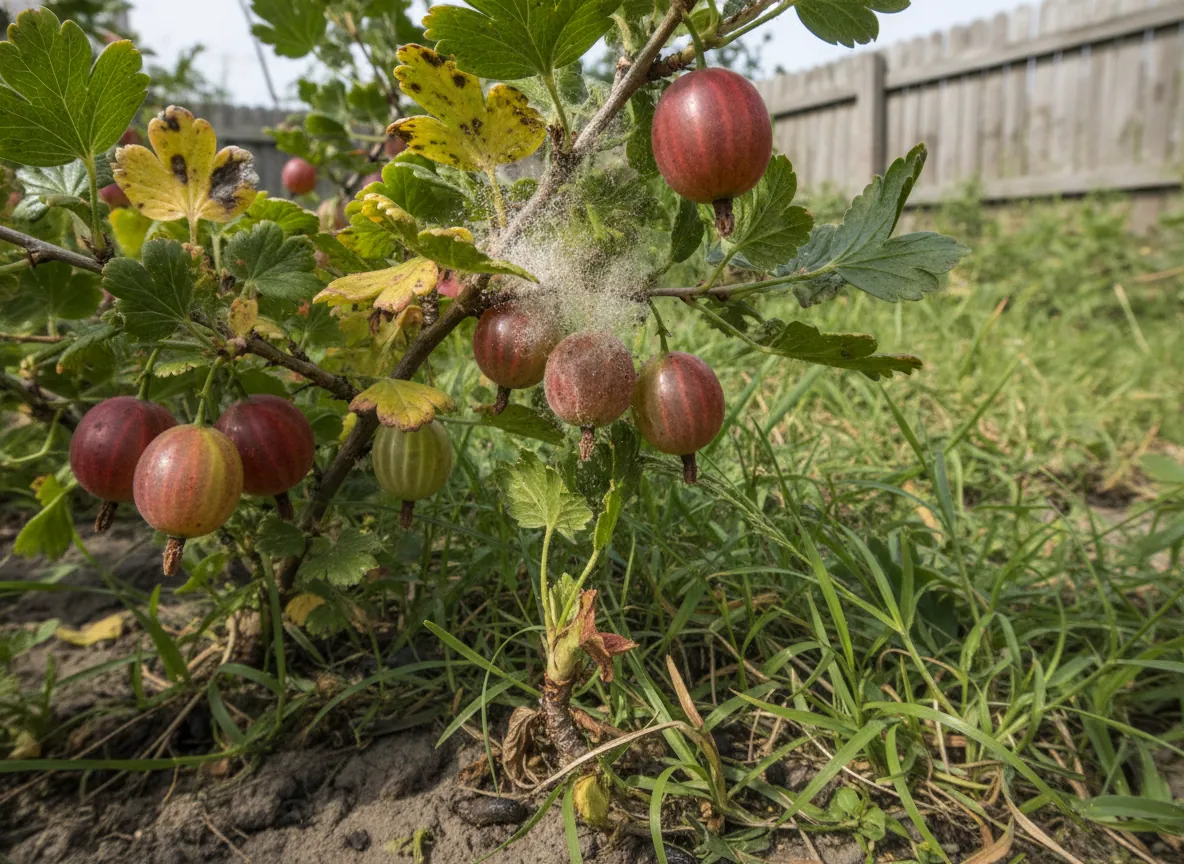 A gooseberry plant with fruit and spider mites — AI-generated illustration
The mistakes that quietly cost you the crop
- Shearing it like a hedge. Running the shears over the outside leaves a solid shell of growth and a dead, airless middle — the exact conditions mildew loves. Prune branch by branch, from the inside out.
- Cutting to the wrong bud. Prune a drooping variety to an outward or downward bud and next year’s branch heads straight for the soil, where the fruit rots and the slugs find it. Read the bush’s habit before you choose the bud.
- Leaving the leg buried. Low branches and suckers trailing on the ground invite mildew splash-up and make a mower-width mess. Keep a clear stem.
- Never renewing. A bush pruned only at the tips, year after year, slowly becomes all old wood and small fruit. Taking out a whole old branch now and then is what keeps it cropping.
Sanitation: what to bin, not compost
American gooseberry mildew overwinters on the plant, so pruning is also a clean-up. Any shoot tips carrying the tell-tale grey-white felt should come off and go in the bin or on the fire — not the compost heap, where the spores sit waiting for spring. The same goes for prunings from a bush that struggled with mildew all summer. If mildew is a yearly battle, the open goblet plus a resistant variety (Invicta, Hinnonmaki, Xenia and Captivator all shrug it off) will do more than any spray.
It’s the mirror image of the July five-leaf summer prune: summer feeds the fruit and the spurs, winter builds and renews the frame. And it’s the opposite logic to a blackcurrant, which fruits on young wood and gets the oldest branches cut out instead — treat the two the same and you’ll wonder why one crop keeps shrinking. If you’re sorting the fruit garden over winter anyway, it’s the same dormant-season thinking behind pruning apples and pears in winter, not autumn.
Not sure whether your bush is upright or drooping, or when your frosts make late winter the safer bet? That plant-by-plant, week-by-week timing is exactly what Cresco is built for — tell it what you grow and it tells you when to make the cut.