By the third week of October most of the border has thrown in the towel. The asters are over, the grasses have gone to seed, and you’re walking round with a barrow and a pair of shears cutting things down to tidy stubs. Then you reach one clump of narrow, iris-like leaves and realise it’s only just getting started — thin spikes of satin-red flowers opening a few at a time, as fresh as anything you had in June. That’s hesperantha, and an easy mistake with it is cutting it back now along with everything else.
A South African that saves its show for autumn
Hesperantha coccinea — you’ll still see it sold under its old name, Schizostylis coccinea, and labelled “river lily” or “crimson flag” — comes from the damp stream-banks and seeps of South Africa’s Drakensberg. That origin explains almost everything about how it behaves. It wants moisture at the root through summer, it spreads by fleshy rhizomes into a slowly thickening clump, and — crucially — it flowers from September right through to the first hard frosts, often well into November. In a season when genuinely new flowers are rare, that makes it one of the most valuable things you can grow.
The flowers come on wiry stems to about 60 cm, each spike opening from the bottom up over a couple of weeks. The classic form is a vivid scarlet; named kinds run from the pale shell-pink of ‘Mrs Hegarty’ to the big red ‘Major’ and near-whites like ‘Alba’. Whatever the colour, the pattern is the same: it peaks exactly when the rest of the garden is shutting down.
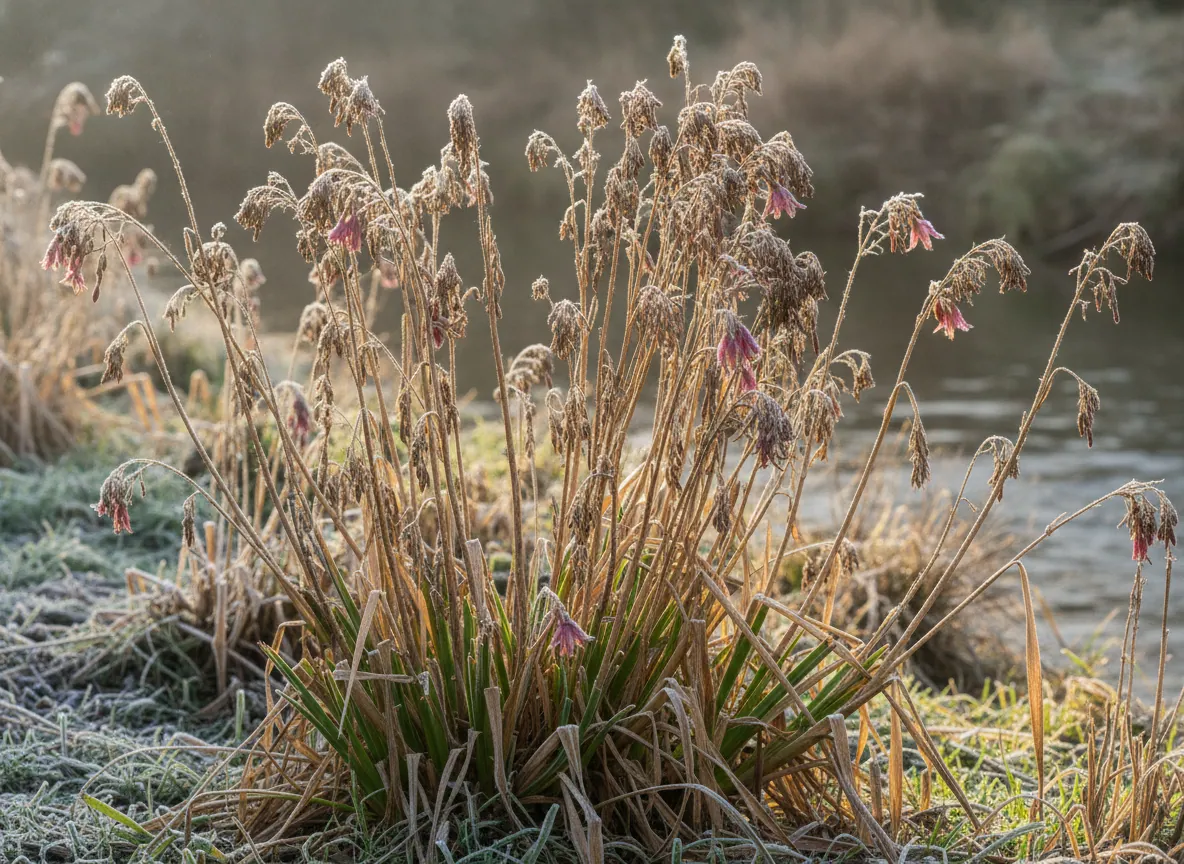 AI-generated illustration
Why you don’t cut it back now
Here’s the trap. The autumn tidy has a rhythm to it — you work along the border cutting spent perennials to the ground, and hesperantha’s grassy foliage looks, at a glance, like something that belongs on the compost heap. It doesn’t.
Two reasons. First, the obvious one: it’s still in flower, and still opening buds. Cut it now and you’re binning weeks of the best colour in the garden for the sake of neatness. Leave it, and it carries the border into November on its own.
Second, and less obvious: that foliage is the plant’s winter coat. Hesperantha is only semi-evergreen and hardy to about −10 °C (USDA zones 8–10) once established — young plants and plants in pots are more vulnerable — and it dislikes winter wet more than cold. The clump of leaves and the litter around the base trap air and keep the worst of the frost and wet off the rhizomes sitting just below the surface. Shear it to the ground in October and you hand a soft, shallow crown straight to winter. In a mild garden it may shrug that off; in a cold, wet one it’s exactly how the plant gets lost over winter.
 River lily plants with seed pods and flowers on a lake, with gardening gloves and a basket — AI-generated illustration
What to actually do in October
The job now is light, not drastic:
- Snip out fully spent spikes at the base as they finish, the same way you’d deadhead — it keeps the clump looking sharp and pushes energy into the stems still to come. Leave anything still carrying buds or open flowers well alone.
- Keep it watered if October turns dry. This is a streamside plant; a clump that goes bone-dry now sulks and cuts its own flowering short.
- Don’t shear the foliage. Leave the leaves standing exactly as they are.
That’s the whole job. No hard cut, no lifting, nothing heroic.
Winter: let the leaves blacken
As the first real frosts arrive, the older leaves may go brown or blacken at the tips. That’s normal, and it isn’t a signal to cut. In milder, coastal and city gardens the clump often stays more or less evergreen; inland and in cold pockets it’ll look battered by midwinter. Either way, the damaged foliage is still doing its job as a buffer, so leave it standing.
If you garden somewhere genuinely cold, give the crown a hand: a deep, dry mulch — bark, leaf-mould or coarse compost — over the base after the first frosts keeps the wet off and the worst of the cold out. The emphasis is on dry; a soggy mulch sitting on the crown does more harm than the frost would. In the coldest gardens a cloche or a layer of fleece over the clump is cheap insurance.
This is the same instinct behind leaving verbena bonariensis standing until spring and ornamental grasses uncut through winter: the plant’s own top-growth is better frost protection than anything you gain by cutting it off.
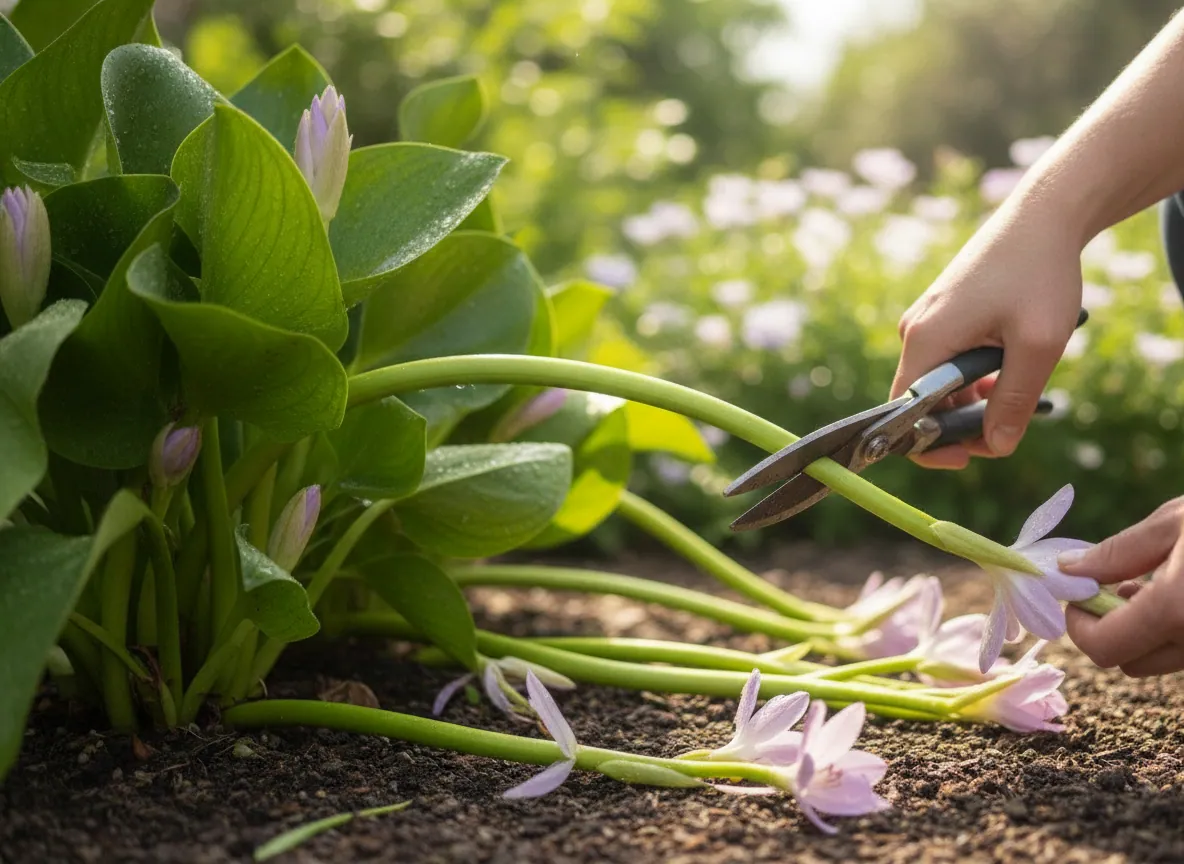 Hands cut blooming river lilies from a plant — AI-generated illustration
Spring is when the real cut happens
Come March or April, when you can see new green shoots pushing up through the old clump, shear or strim the tatty overwintered foliage away to make room for them, and top-dress with a little compost. That — not October — is the moment for the hard tidy.
Spring is also the time to divide, if the clump has grown congested and started flowering less in the middle. Lift it as growth begins, tease or chop it into sections with a good handful of shoots each — around half a dozen is plenty — and replant into soil improved with compost, keeping them moist while they re-establish. Every two or three years is often enough. It’s the same rhizome-and-clump logic as crocosmia, another South African that resents being tidied too hard, too early.
The one-line version
While the rest of the border comes down in October, hesperantha goes up. Deadhead the spent spikes, keep it watered, mulch the crown if you’re cold — and save the shears for spring, when the new shoots tell you it’s time. If you track your pruning in Cresco, this is exactly the kind of timing it flags per plant and for your own local weather, so the river lily gets a spring cut, not an autumn one.