Acanthus doesn’t die back — it flops
By October an acanthus looks like it’s finished. The great architectural leaves — the ones that gave Corinthian columns their shape two thousand years ago — splay out, soften at the edges and start to brown, and the tall flower spikes that stood like candelabra in July are now dry, grey and leaning. The border around it has gone over, the shears are out, and the obvious move is to cut the whole thing to the ground and, while you’re at it, dig out the bit that’s crept too far into the path.
Stop before you reach for the spade. Acanthus (Acanthus mollis and Acanthus spinosus, bear’s breeches) isn’t a soft herbaceous perennial that dies back to nothing — it’s semi-evergreen, with a deep, fleshy, far-ranging root system, and the two autumn jobs people most want to do to it are the two that cause the most trouble. Cutting the leaves off to the crown is unnecessary and throws away cold-season cover. And digging it — to tidy it, move it, or divide it — is how a tidy clump becomes a colony you can’t get rid of. The right autumn job is lighter than you think, and most of it is about what you don’t do.
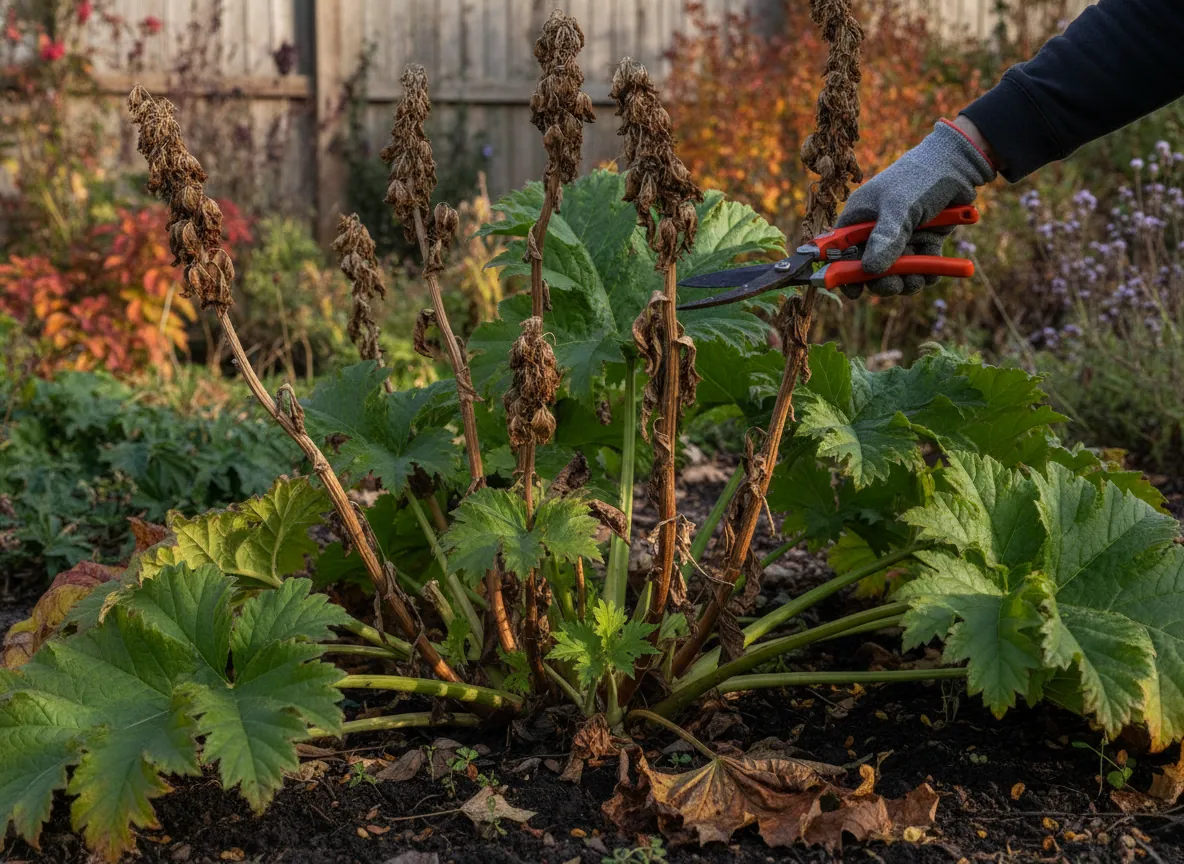 . A gloved hand uses pruning shears to cut dry acanthus leaves — AI-generated illustration
What to actually cut in autumn
The autumn job on acanthus is a tidy, not a cutback. Two things come off; the plant itself mostly stays.
First, the spent flower spikes. Once they’ve gone fully dry and brown and the seed pods have formed, you can cut them right down to the base — a clean cut low into the clump with secateurs or loppers. There’s a reason beyond neatness to take them off now rather than leave them: acanthus sets seed freely, and a spike left to shed into warm autumn soil is how you get a scatter of seedlings next summer, each one with the same deep taproot that makes the parent so hard to move. If you want the sculptural seedheads standing over winter — and they are genuinely good, stiff enough to hold snow and frost — that’s a fair trade, but know you’re choosing structure over control. Cut them if the plant is already where you don’t want it spreading.
Second, the leaves that have actually collapsed. Go over the clump and take off anything brown, flattened, slug-holed or lying on the soil — cut these back to the crown. But leave every leaf that’s still firm and green. Acanthus holds a good deal of its foliage through a mild winter, and in all but the hardest gardens that low mound of glossy, deeply cut leaves is worth keeping: it’s cover for the crown and it’s one of the few big, bold leaf shapes still standing in January. This isn’t the asters-and-geraniums treatment where the whole plant comes down. It’s closer to how you’d tidy a bergenia — remove what’s finished, keep what’s still working.
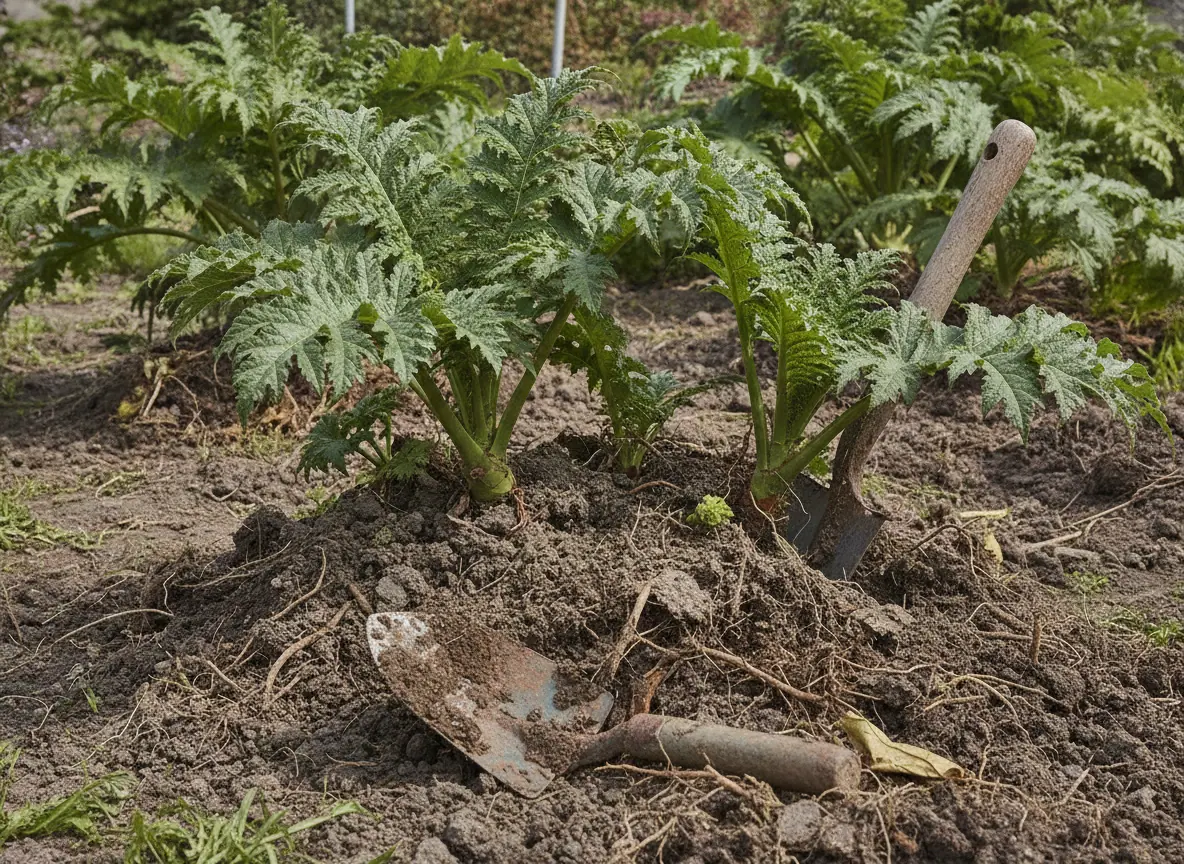 Acanthus plants and garden tools are in disturbed soil — AI-generated illustration
The one thing not to do: dig it
Here is the warning that matters most, and the reason this plant earns a post of its own rather than a line in a calendar. Do not dig, lift, divide or chop acanthus roots in autumn — or honestly, at all, unless you’ve decided to remove it completely and are prepared for a multi-year fight.
Acanthus spreads by root, not just by seed. Under a clump that looks modest at the surface runs a system of thick, brittle, fleshy roots — a central taproot that can be as thick as 50 mm, lateral roots that travel up to two metres sideways, and finer feeders near the surface. And here’s the part that catches people out: almost any piece of that root, left in the ground or dropped on the soil, will grow into a new plant. A fragment as small as 50 mm — the length of your thumb — is enough to throw up a fresh crown within a season or two.
So every tool that chops is a tool that propagates. Forking the clump over to “divide” it, slicing through the roots with a spade to lift part of it, or tugging out a crept-out section and snapping the root in the process — each of these turns one plant into several. This is exactly the opposite of the autumn division that works so well on most perennials. With a congested geranium or aster you lift the clump, pull it apart and get free plants where you want them; the logic behind dividing perennials in autumn for more flowers is sound — but acanthus is the plant it doesn’t apply to. Here, breaking the roots doesn’t rejuvenate a tired clump, it seeds a new patch exactly where you dropped the pieces.
If the clump genuinely has to move or go, accept it’s a project, not an afternoon. Dig as deep and wide as you can, chase the taproot down rather than snapping it off short, and then watch the spot for a couple of years and pull every regrowth while it’s small. And if you’re planting acanthus near more delicate neighbours, do what you’d do for bamboo: sink a vertical root barrier 50–60 cm deep at planting time so the laterals can’t march into the rest of the border. Give it room on purpose, because you won’t easily take it back.
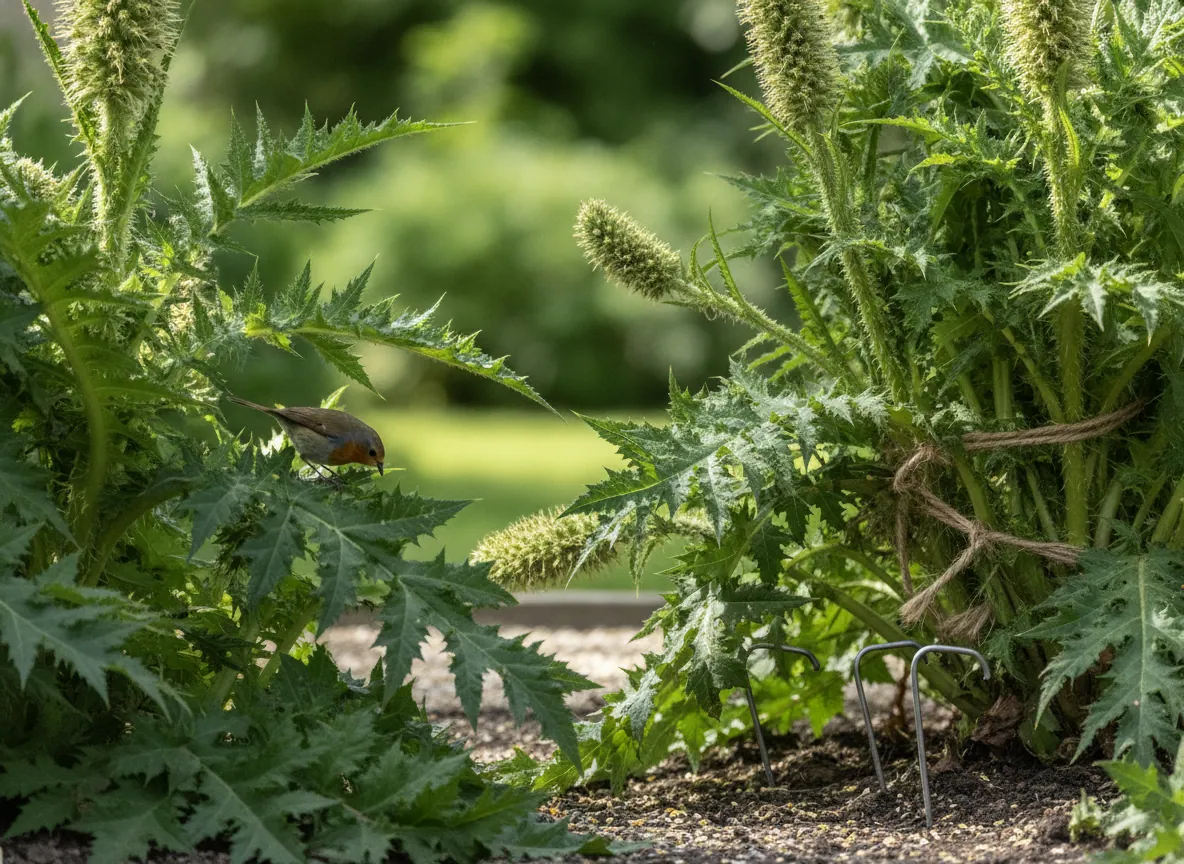 A robin perches among acanthus plants, one of which is tied with twine — AI-generated illustration
Spikes up for the birds, or down for control
The flower-spike decision is worth its own thought, because it’s a genuine trade-off rather than a right answer. Left standing, dry acanthus spikes are among the better winter silhouettes in the garden — tall, ribbed and architectural, holding frost well and giving structure to a flat, dormant border. That’s the same instinct that says to leave echinacea cones for the birds and the winter frame rather than deadheading everything to tidiness.
But acanthus seedheads come with a cost that echinacea’s don’t: fertility. This plant self-sows readily, and a seedling’s taproot is down and anchored long before you notice the leaves, at which point it’s another plant you can’t easily dig out. So the rule of thumb is simple. If your acanthus is a well-behaved clump in a spot where a few extra plants wouldn’t bother you, leave the spikes for winter and enjoy them. If it’s already testing its boundaries, or sitting in a tight planting where you don’t want volunteers, cut the spikes off now, before they shed, and take the structure loss. Control beats sculpture once a plant has shown you it spreads.
Mulch the crown, finish the tidy in spring
Acanthus is hardy in most gardens, but the crown appreciates cover in a cold or wet winter, especially on young plants or in heavier soil. Once you’ve cleared the collapsed leaves, draw a loose mulch of leaf mould, compost or bark over the base — enough to blanket the crown without burying the live growth. The semi-evergreen leaves you left in place do some of this sheltering job themselves, which is another reason not to strip the plant bare.
Then leave the rest until spring. Any foliage that browns off over winter can be cut away in February or March, as the new leaves start to push through from the centre — that’s the moment to neaten the clump properly and clear the last of the old growth, so the fresh spring leaves come up into clean space. Doing the final tidy then rather than now means the plant keeps its winter cover for as long as it’s useful, and you’re not left looking at a bare crown through the darkest months.
Let Cresco tell you which plants to leave alone
The hard part of the autumn tidy was never the cutting — it’s knowing which plants want the shears and which want to be left well alone. The border asks for half a dozen different answers at once: the hostas want cutting down after frost to clear slug eggs, the grasses want leaving till spring, and the acanthus wants almost nothing done to its roots at all. Plant & Bloom by Cresco tracks the actual plants in your garden and your local weather, so instead of giving everything the same October haircut you get the right job for each one — a reminder to deadhead the acanthus spikes before they seed, and a flat “leave the roots alone” where it counts. Snap a photo of a mystery clump and it’ll tell you what you’re looking at before you decide what comes off. The plants you regret are rarely the ones you cut — they’re the ones you dug.