Winter is pruning season — but not every winter day
The leaves are off, you can see the shape of every tree and shrub, and the list of winter jobs is long: apples and pears, grapevines before the sap rises, currants, gooseberries, wisteria spurs. Dormancy is exactly why these plants are pruned now.
But “prune in winter” doesn’t mean “prune on any winter day”. The morning after a hard frost, with the lawn white and the branches stiff, is the one time to leave the secateurs in the shed. The rule most fruit growers work to is short:
- Don’t prune when the wood is frozen.
- Don’t prune when it’s colder than about -5 °C, or when a hard frost is forecast for the nights right after.
- Do prune on a mild, dry day, ideally late morning once any overnight frost has thawed.
Here’s why it matters, and what you can still do when it’s cold.
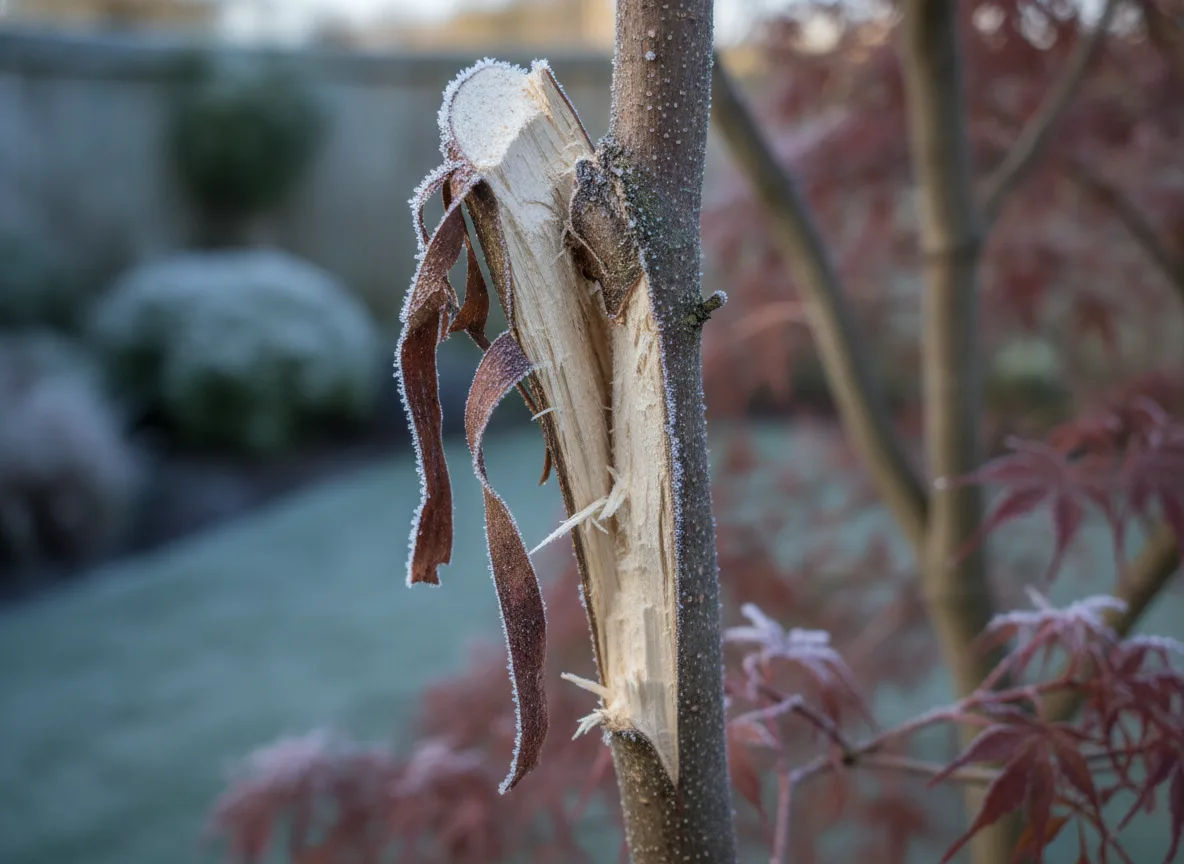 A frost-damaged pruning cut on a plant stem — AI-generated illustration
What frost does to a pruning cut
Frozen wood splits instead of cutting
Living wood is full of water. When it freezes, the stem turns brittle. A sharp blade that would slice cleanly through a stem on a mild day crushes, tears or cracks it when it’s frozen. You end up with a ragged cut, bark peeled back below the wound and sometimes a split running down into the branch.
A clean cut is what lets a plant seal a wound. A torn, crushed one leaves more damaged tissue, dries out further back and gives fungi and canker a much bigger door to walk through. With a saw on a thicker branch, frozen wood is also far more likely to snap and rip a strip of bark off the trunk before you’ve finished the cut, which is exactly what the cut outside the branch collar is meant to prevent.
Fresh wounds can’t defend themselves
A tree doesn’t heal a cut the way skin does; it walls it off, building chemical and physical barriers around the wound. That process is slow in winter at the best of times and practically stops in a hard freeze. A cut made at -8 °C just sits there, open, while the exposed tissue around it freezes and thaws over and over. The result is often a ring of dead bark around the wound and dieback a few centimetres below where you cut.
The buds below the cut take the hit
When you prune, you cut just above a bud. That top bud is the one you want to grow. In severe cold, the short stub and the bud beneath it are the most exposed part of the stem, and a frost straight after pruning can kill that bud outright. Then the shoot dies back to the next bud down, and your carefully chosen outward-facing bud is gone.
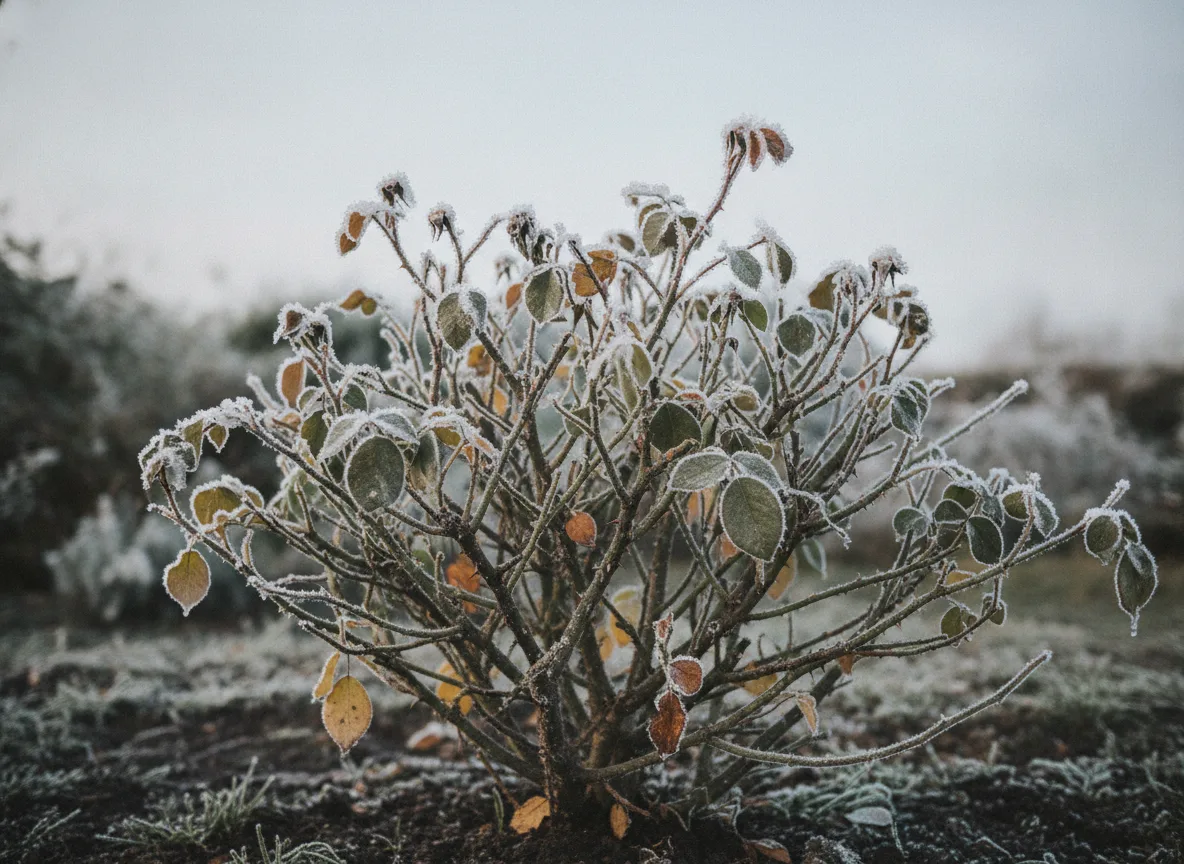 A frost-covered plant in a garden — AI-generated illustration
How cold is too cold?
There’s no magic number, but these are the working limits most growers use:
| Conditions | Prune? |
|---|---|
| Above freezing, dry | Yes — ideal |
| Light overnight frost (0 to -2 °C) that thaws by late morning | Yes, after the thaw |
| Wood still frozen at midday, or -5 °C or colder | No — wait |
| Hard frost forecast for the next few nights | Better to wait |
| Wet, raw and drizzly, even if mild | Avoid for stone fruit and anything canker-prone |
The easy test: bend a thin twig. If it flexes, the wood has thawed. If it snaps with a crack, it’s still frozen and it’s not a pruning day.
Most of the time that just means shifting the job a few hours or a few days. In a mild maritime winter, as in much of the UK and the Netherlands, frosts rarely hang on for more than a day or two before a dry, workable spell comes along.
Plants to be extra careful with
Some plants are more sensitive to winter cuts than others, frost or no frost:
- Borderline-hardy shrubs. Lavender, penstemons, hebes, phygelius and salvias should not be cut back hard going into winter at all. The old stems protect the crown, and a fresh cut lets frost and wet straight into the plant. Leave them until spring, when the risk of hard frost has passed.
- Hydrangeas. The faded flower heads on mophead and lacecap hydrangeas protect the buds just below them. Leave them on until spring and cut back to a fat pair of buds once the worst frosts are over.
- Stone fruit. Plums, cherries, apricots and peaches should not be pruned in winter in any weather. Wounds in dormant stone fruit invite silver leaf and bacterial canker, so they’re pruned in summer instead.
- Evergreens. Clipping an evergreen hedge or topiary in a cold spell exposes soft inner leaves that have never seen frost, and they scorch brown. Evergreens wait for spring or late summer.
Hardy deciduous trees and shrubs, such as apples, pears, currants, gooseberries and roses, are the ones that really are pruned in winter, as long as the day itself is mild enough.
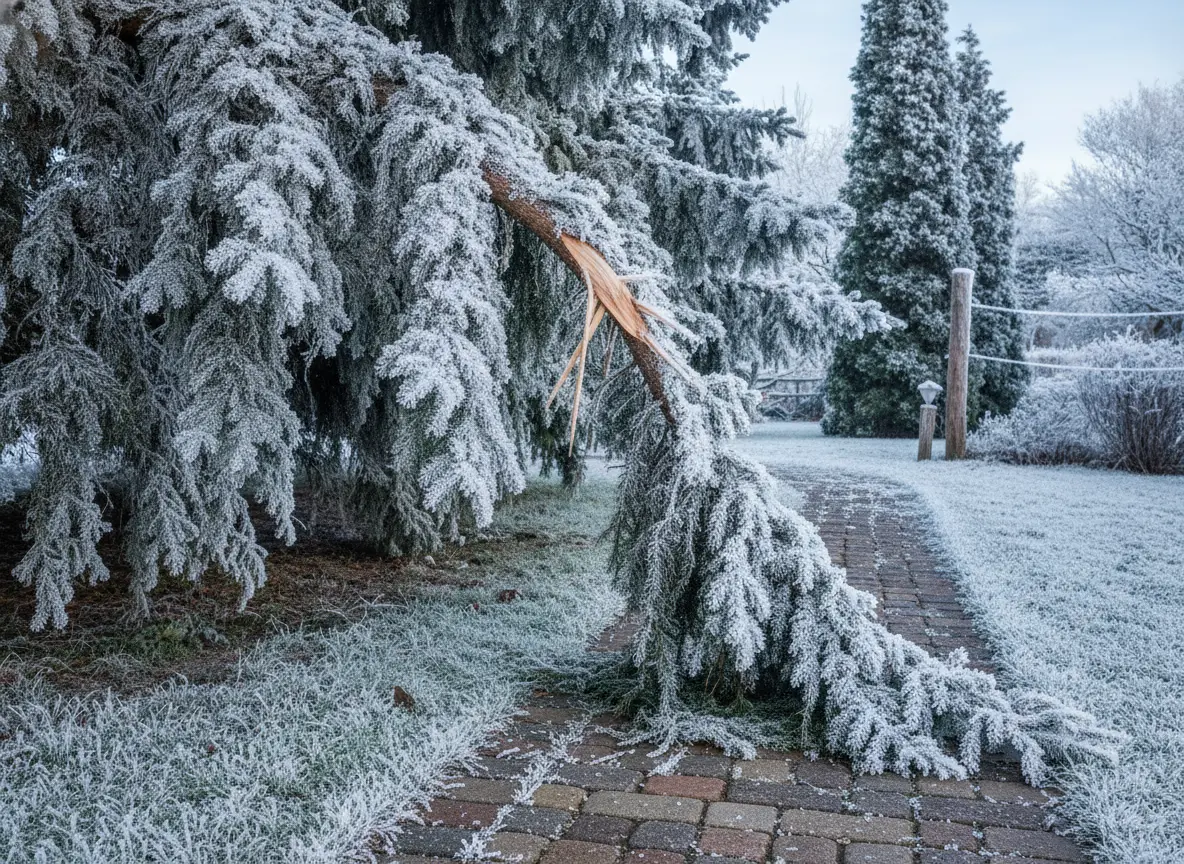 A frost-covered evergreen with a broken branch hanging over a paved path — AI-generated illustration
What you can still do on a frosty day
A frost doesn’t have to mean a lost day. There are two jobs that can’t wait, and a few that don’t involve cutting into living wood at all.
1. Broken and dangerous branches. Snow and ice snap branches, especially on evergreens and conifers loaded with wet snow. A half-torn branch hanging over a path should come down straight away, whatever the temperature. Make a quick, safe cut to remove the hazard and leave the stub, then come back on a mild day to tidy it up properly back to the collar or a healthy bud.
2. Snow on hedges and conifers. Not pruning, but it saves pruning later: brush heavy snow off hedges, box balls and conifers with a broom before it splays the branches apart or snaps the leaders. Work from below and knock it off gently; don’t shake frozen branches, which are brittle.
And on any frosty day:
- Clean and sharpen your tools. Sharp blades make cleaner cuts in any weather. Wash off sap and soil, oil the pivot of your secateurs and touch up the edge with a whetstone or diamond file.
- Plan the cuts. Walk around the tree or shrub and decide which branches are coming out. With the leaves gone, frost actually makes the structure easier to see.
- Stay off the frozen lawn. Walking on frosted grass breaks the frozen blades and leaves brown footprints that last for weeks. Wait until it has thawed.
- Mind the ladder. Frozen ground can be hard on top and soft underneath, and frosty rungs are slippery. If a cut needs a ladder, it can wait for a better day.
The short version
Winter pruning is right for most hardy deciduous plants, but the timing within winter matters. Pick a dry day above freezing, start once the morning frost has thawed and do the twig test before you cut. If the wood snaps, it’s not a pruning day. The plant will be just as dormant next week, and the cut will be a lot cleaner.
For a reminder of which plants in your garden are due for winter pruning, and which should be left until spring, add them to Cresco and you’ll get a pruning schedule for each one. If your apples and pears are next on the list, read why they’re pruned in winter rather than autumn.