Why the calendar matters more than the cut
Back in August, the job was a light, repeated pinch to ripen the grapes. The big structural cut was left for winter on purpose. That winter window is now about four weeks away, and it’s narrower than most gardeners think.
A grapevine is one of the few garden plants where when you prune matters as much as how. The RHS puts the main pruning window in early winter, from late November into December, once the vine is fully dormant. Wait until January or later and the sap is already starting to move. A cut made then “bleeds”: clear sap drips from the wound, sometimes for days. It won’t usually kill an established vine, but it wastes energy the plant would have put into new shoots. It can also run down over the buds you were trying to keep.
The rule is simple. Leaves off, sap down, cut. Don’t prune while the vine still has its autumn leaves, and don’t leave it until after the New Year.
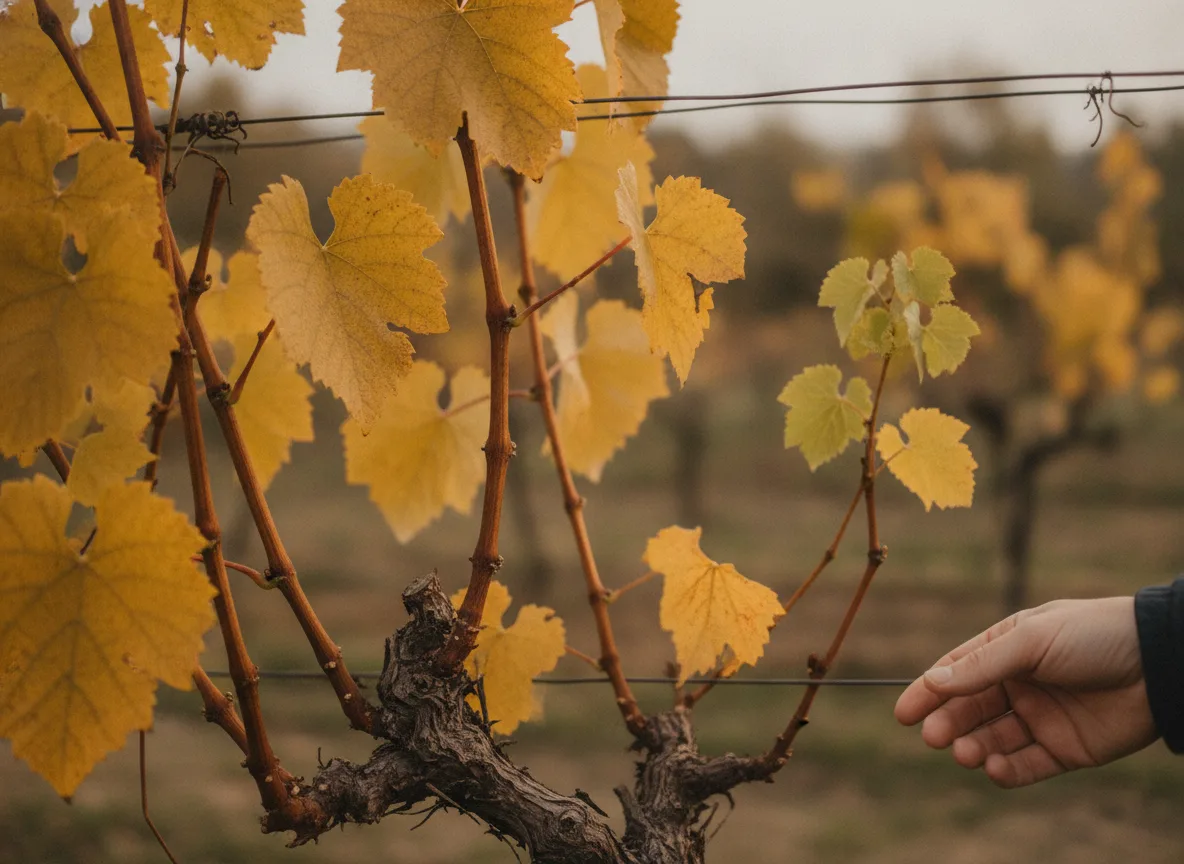 A hand touches yellowed vine leaves in late November — AI-generated illustration
How to tell the vine is ready
Don’t go by the date. Watch the plant:
- The leaves have fallen, or they’re yellow and drop when you touch them. A vine that’s still green is still moving sugar back into its wood, so give it another week or two.
- This year’s canes have turned brown and woody right to the tips. Green, bendy tips mean the wood hasn’t ripened. Those tips will die back over winter anyway, which is one more reason to cut them off.
- You’ve had a frost or two. It isn’t required, but a couple of cold nights usually sends the vine fully dormant.
In most gardens that lines up with the second half of November. In a mild, sheltered city garden it might slip into early December. Vines under glass are the exception: their sap rises earlier, so prune them as soon as the leaves are down, ideally before December.
One exception the other way: if your garden is a frost pocket where late spring frosts regularly blacken new shoots, some growers delay pruning until early spring. The buds that are left then break later. It’s a trade-off. You accept a little bleeding in return for frost protection, and it only makes sense if spring frost is a real problem for you.
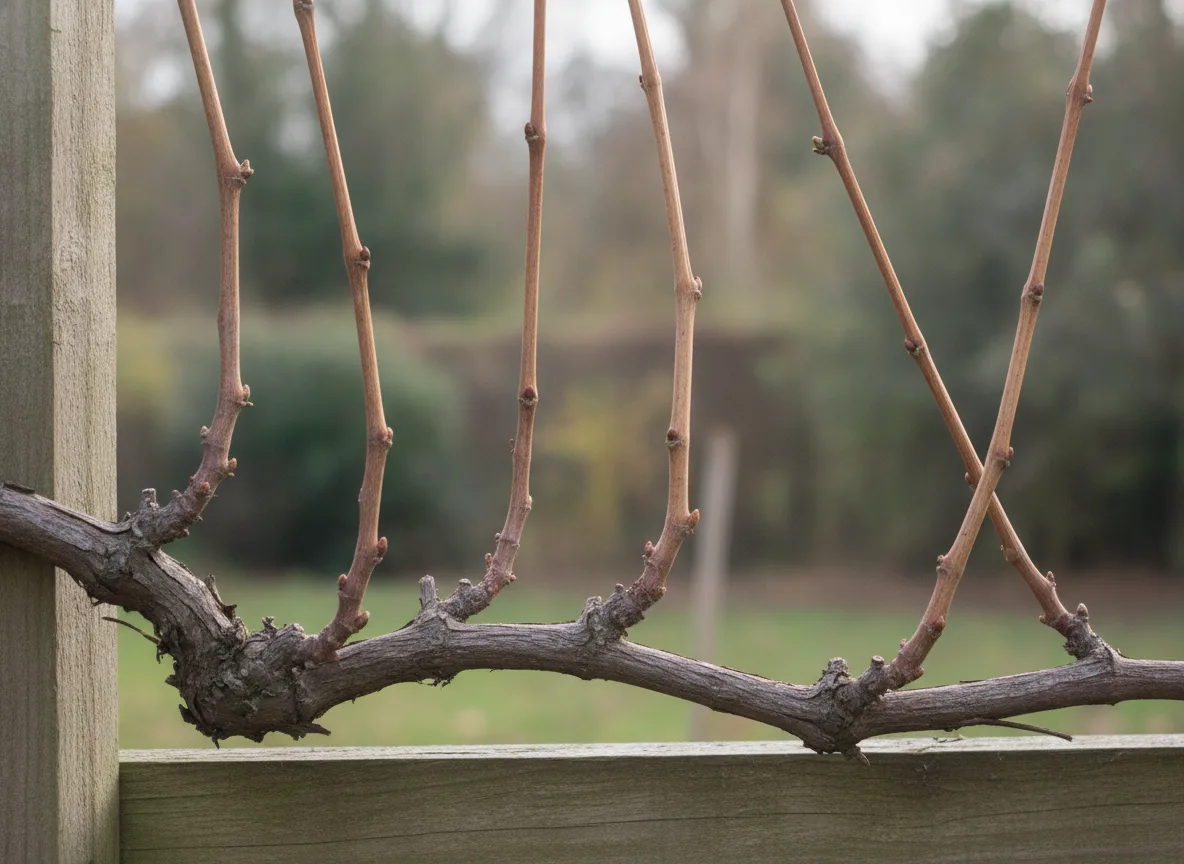 A woody vine cane with spurs and vertical shoots in late November — AI-generated illustration
Rod and spur: the two-bud cut
Most garden vines on a wall, fence or pergola are trained as a rod and spur, also called a cordon. There’s one permanent woody stem (the rod), with short knobbly stubs (the spurs) spaced along it. Every spur sent up one or more long shoots this summer, and those shoots carried the grapes.
The winter cut is the same on every spur:
- Pick the strongest, best-placed cane growing from each spur, ideally the one nearest the rod.
- Cut it back to two buds. Count two plump buds up from its base and cut about 2 cm above the second one. Slope the cut away from the bud so moisture runs off.
- Remove any other canes on that spur completely, flush with the spur.
Next spring each of those two buds sends up a shoot. Keep the stronger one and rub out the weaker. That shoot carries next summer’s bunches. Fruit always forms on new green shoots that grow from last year’s wood, so a vine cut hard to two buds isn’t losing its crop. That’s how the crop is made.
Over the years spurs get long and gnarled. Every few winters, saw an old spur off close to the rod. A dormant bud near the base will usually produce a new one. Also cut the top of the rod back to where you want it to stop, and take out any thin or dead wood.
Guyot vines: swap the old arm for a new one
Vines grown in rows on wires, the way vineyards grow them, are usually trained on the Guyot system. Here there’s no long permanent rod. There’s a short trunk, and each year one or two fruiting arms are tied along the bottom wire.
The winter job is a swap:
- Cut out the arm that fruited this year, right back to the trunk.
- Choose one or two strong new canes that grew from near the top of the trunk this summer.
- Bend each new cane down along the wire and tie it in, then shorten it to around eight to twelve buds.
- Leave one more cane cut to two buds as a spare. It grows next year’s replacement arms.
It looks brutal the first time: you remove almost everything the vine grew. But Guyot depends on renewing every year, and a vine left with its old arms soon fruits only at the far ends.
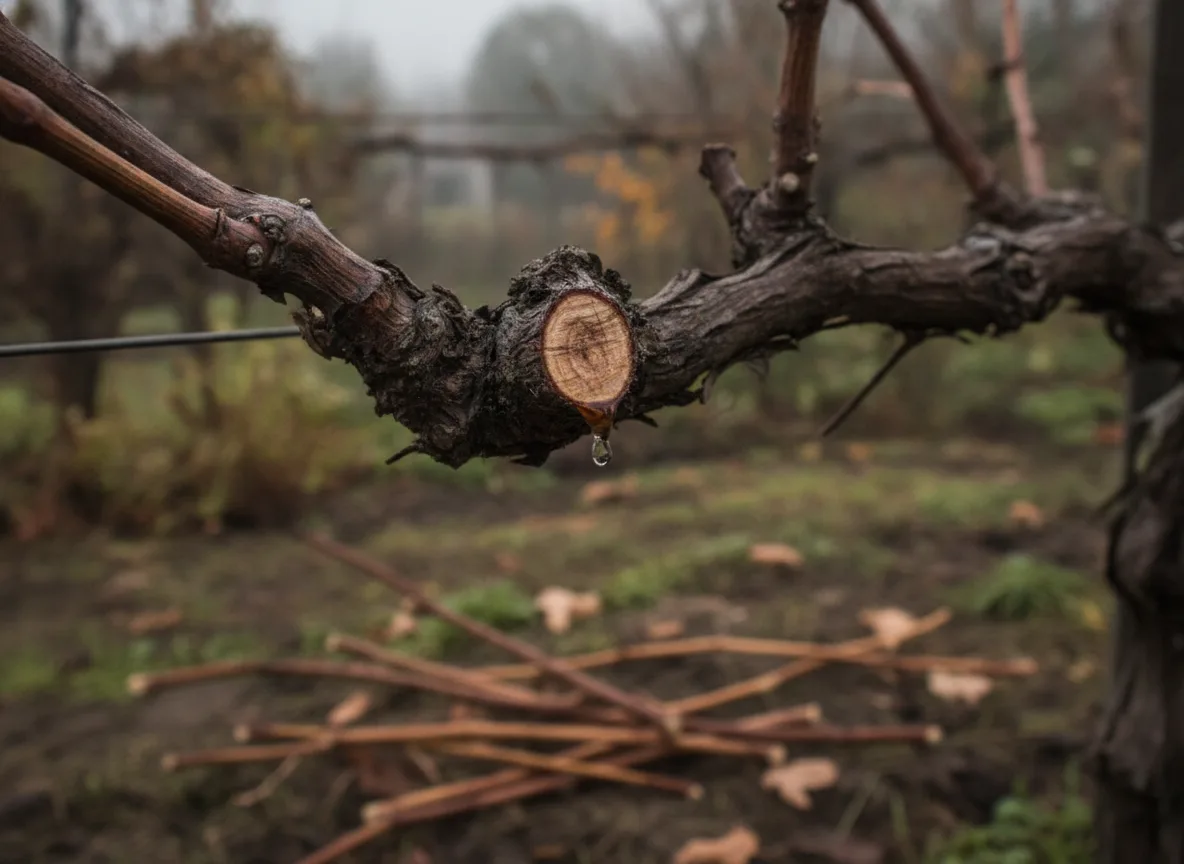 A clean, unsealed pruning cut on an old grapevine trunk in late November — AI-generated illustration
Seal the cut? Don’t bother
Wound paint doesn’t stop a grapevine bleeding, and it can trap moisture against the wood. The only reliable cure is timing. Prune when the vine is fully dormant and the cuts stay dry. If you see sap dripping after a late cut, leave it alone. It stops once the leaves open and start drawing the sap up.
Don’t bin the prunings. Pencil-thick lengths of ripe cane with three or four buds root well as hardwood cuttings. Push them two-thirds deep into a pot of gritty compost or a spare bit of border and leave them until spring.
The short version
Wait for the leaves to fall and the canes to brown, then prune between late November and the end of December. On a rod-and-spur vine, cut every spur back to two buds. On a Guyot vine, remove this year’s fruited arm and tie in a fresh one. Don’t leave the cut until January, when the sap is moving and the wounds bleed. It’s the same summer-pinch, winter-cut rhythm as wisteria’s winter prune to two buds. The Cresco pruning calendar flags the window for your own vine based on your local weather, so you’re not guessing from a date.