Why redcurrants aren’t pruned like blackcurrants
Most people who get redcurrant pruning wrong are copying the blackcurrant method. It’s an easy mistake: same family, same kind of bush, berries on strings. But the two crop in completely different places.
- Blackcurrants fruit mainly on last year’s young stems, so you cut a third of the oldest stems out at the base after picking and the bush replaces them from the ground.
- Redcurrants (Ribes rubrum), and white currants with them, fruit on short spurs along a permanent framework of branches, plus a few berries at the base of last year’s shoots. The branches stay; the cropping wood is clusters of buds a few centimetres long.
So the goal of a redcurrant prune is not renewal from the base. It’s a tidy, open bush of eight to ten main branches, each one studded with short spurs. Hack whole stems out every winter and you remove the very wood that was going to fruit.
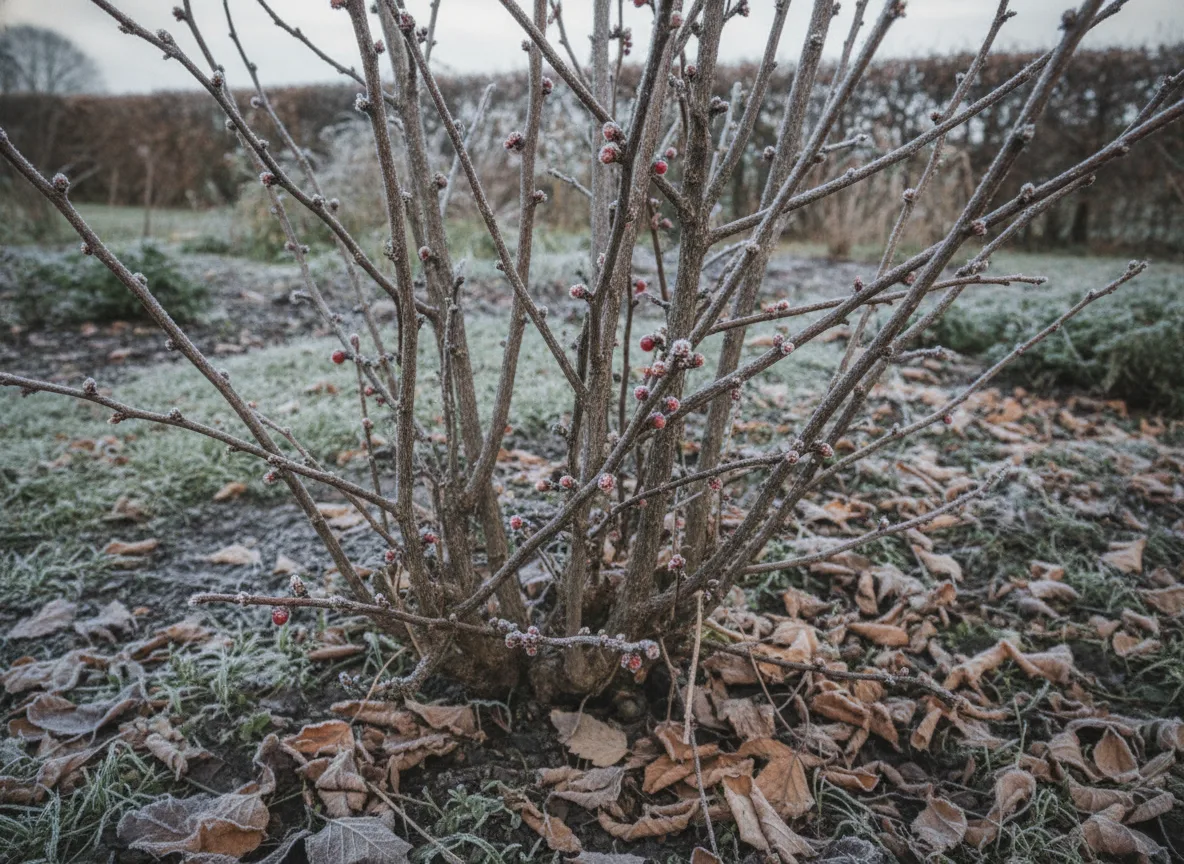 A redcurrant bush with short spurs in late winter — AI-generated illustration
When to do it: leaf-fall to late winter
Redcurrants are pruned twice a year. The July summer prune, when side-shoots are cut to five leaves, is about ripening the crop and letting in light. The winter prune is the structural one, and it’s the one that sets up next year’s spurs.
- Window: any time the bush is dormant, from leaf-fall in November to the end of February. The RHS points to late winter as ideal.
- Pick a dry, frost-free day. Frozen wood can split around a cut.
- If bullfinches visit your garden, wait. They strip currant and gooseberry buds over winter, and a freshly spur-pruned bush has very few buds left to lose. In bird-heavy gardens, leave the winter cut until the buds start to swell in late February or March, so you can prune back to buds you know survived.
November is a good moment to look the bush over now the leaves have dropped and you can see the framework, even if you hold the secateurs back until later.
The winter cut on an established bush, step by step
Work through the bush in this order. On a mature plant it takes ten minutes.
- Take out the dead, damaged and crossing wood first. Anything growing into the centre comes out too: the aim is an open goblet, like a winter-pruned gooseberry, so air moves through and the berries are easy to reach.
- Shorten each main branch leader. Cut last summer’s growth at the tip of each framework branch by about half, to an outward-facing bud. Once a branch has reached the height you want, cut its new growth back to one bud each year.
- Spur back every side-shoot to one or two buds. This is the cut that matters. Every side-shoot growing off a main branch is cut back to one or two buds from where it starts. Those stubs become the fruiting spurs, and each winter you keep cutting the new growth on them back to the same point.
- Thin old spur clusters. After a few years the spurs turn into knobbly, crowded clumps. Thin the oldest ones out with secateurs so the remaining buds get light.
Make each cut just above a bud, sloping slightly away from it. A long snag above the bud dies back and lets in coral spot, the pink-pustuled fungus that is the main disease of neglected currant bushes.
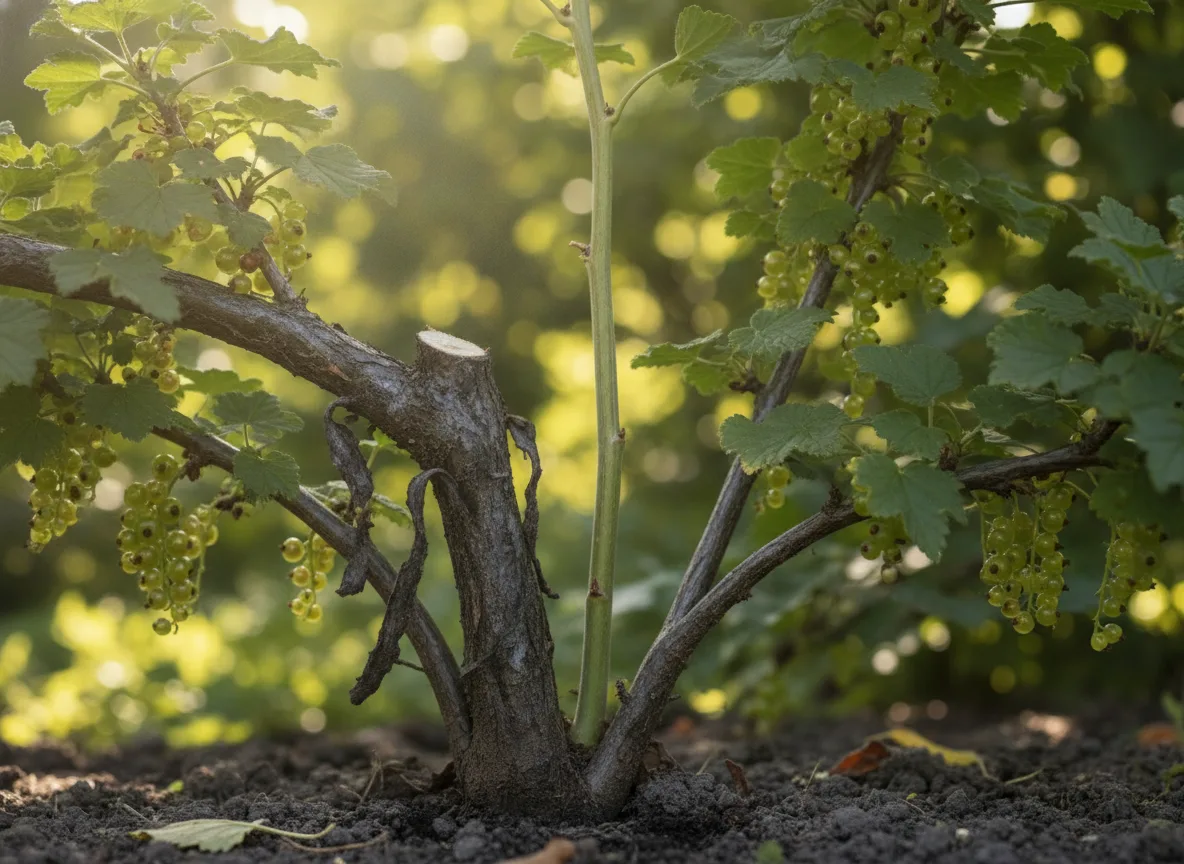 A redcurrant bush showing an old branch removed and new growth — AI-generated illustration
Renewing an old redcurrant bush
Redcurrant branches crop well for many years, but a branch older than about four years starts to slow down: fewer spurs, smaller strings, dark peeling bark. Don’t cut the whole bush hard at once. Instead:
- Remove one or two of the oldest branches each winter, cutting them back to the base or to a strong young shoot low down.
- Keep a vigorous young shoot from near the base as the replacement, and leave it unpruned at the tip for its first year so it can extend.
- Rub out shoots on the ‘leg’, the short clear stem of 10–15 cm that a redcurrant bush sits on. Shoots and suckers from below that point clutter the centre and should go.
Spread over three winters, this turns a tangled old bush back into a productive one without losing a season’s crop.
Cordons and fans: same cut, tighter
Redcurrants trained as single or double cordons against a fence, or as fans on a wall, are pruned on exactly the same spur principle, just more strictly:
- Cut every side-shoot back to one bud in winter.
- Shorten the leader by about a quarter of last summer’s growth until the cordon reaches the top wire, then cut it back to one bud each year.
Because cordons have no spare branches, the spur prune is everything. Done well, a row of cordons along a fence gives a generous crop in very little space.
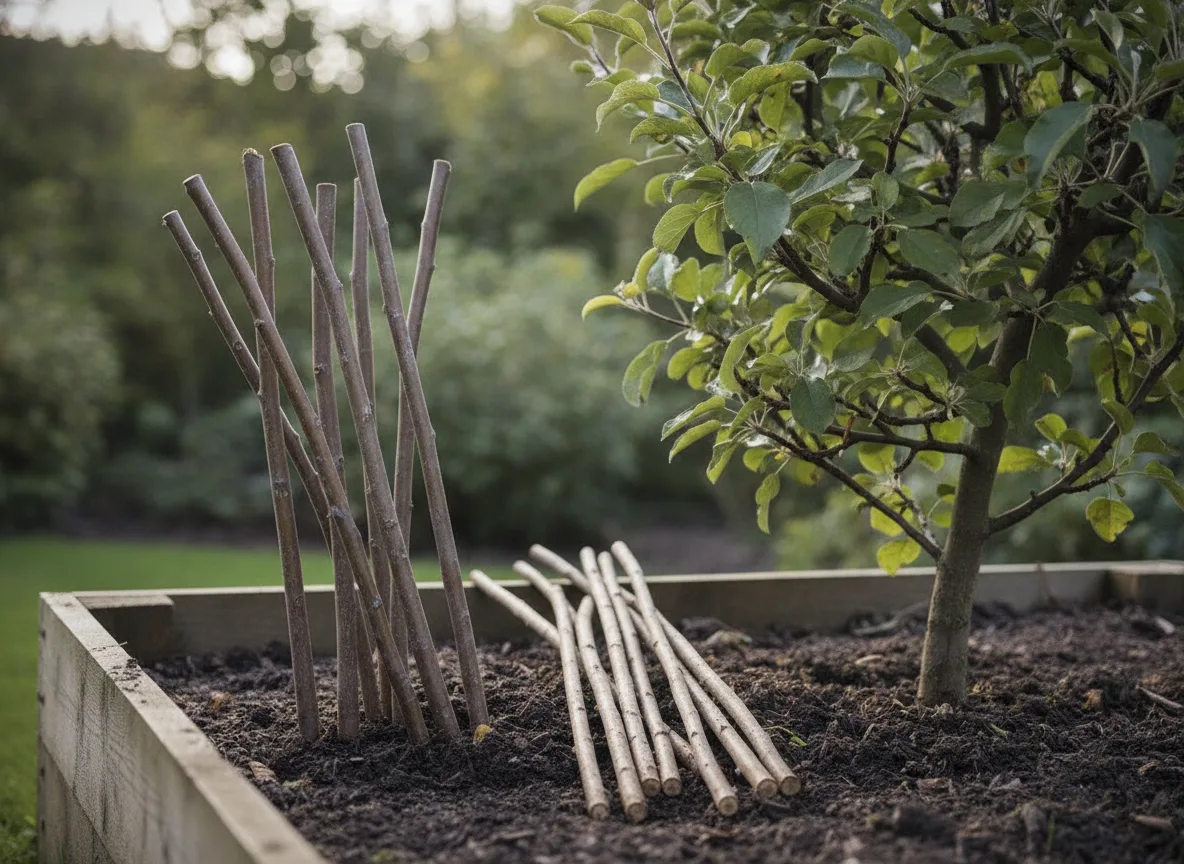 Hardwood cuttings planted next to a young tree — AI-generated illustration
Don’t throw the prunings away
The pencil-thick shoots you cut off in November make easy hardwood cuttings. Take 20–30 cm lengths of this year’s growth, rub off all but the top three or four buds so the new bush grows on a clean leg, and push them two-thirds deep into a sheltered patch of soil. By next autumn most will have rooted.
Quick checklist
- Redcurrants and white currants fruit on spurs on permanent branches, not on new stems from the ground.
- Winter-prune between leaf-fall and late February; delay until bud-swell if bullfinches visit.
- Side-shoots to one or two buds, leaders shortened by about half.
- Keep the centre open and the leg clean.
- Replace one or two of the oldest branches a year, never the whole bush at once.
If you’d rather not keep the dates in your head, Cresco can add your redcurrants to your garden and remind you when the summer and winter prunes come round.