A wreath cut is a prune, so make it a good one
Every December the same thing happens in gardens across Britain and the Low Countries. Someone goes out with a pair of kitchen scissors and a carrier bag, snips the best-looking tips off the front of the holly, the bay and the conifer by the gate, and comes back with enough for a wreath. The wreath looks lovely. The shrubs spend the next year looking chewed.
The fix is simple: treat every stem you take for decorations as a pruning cut. You’re removing wood from a living plant in winter, which is exactly what you’d do in a light dormant-season prune anyway. Do it the same way and the shrub barely notices, and some of them actually come out better for it.
Three rules cover almost every evergreen in the garden:
- Cut back to a fork or a bud, never leave a stub. Follow the stem you want down to where it joins a bigger branch or to a side shoot, and cut just above that. A bare snipped-off tip just dies back.
- Take from the inside and the back. The stems you want are long and leafy, and the shrub has plenty of them out of sight. Taking a few from the middle opens the plant up; taking them from the front leaves a hole everyone sees.
- No more than about a tenth of any one shrub. One wreath needs roughly two good armfuls of greenery. Spread that over four or five plants rather than stripping one.
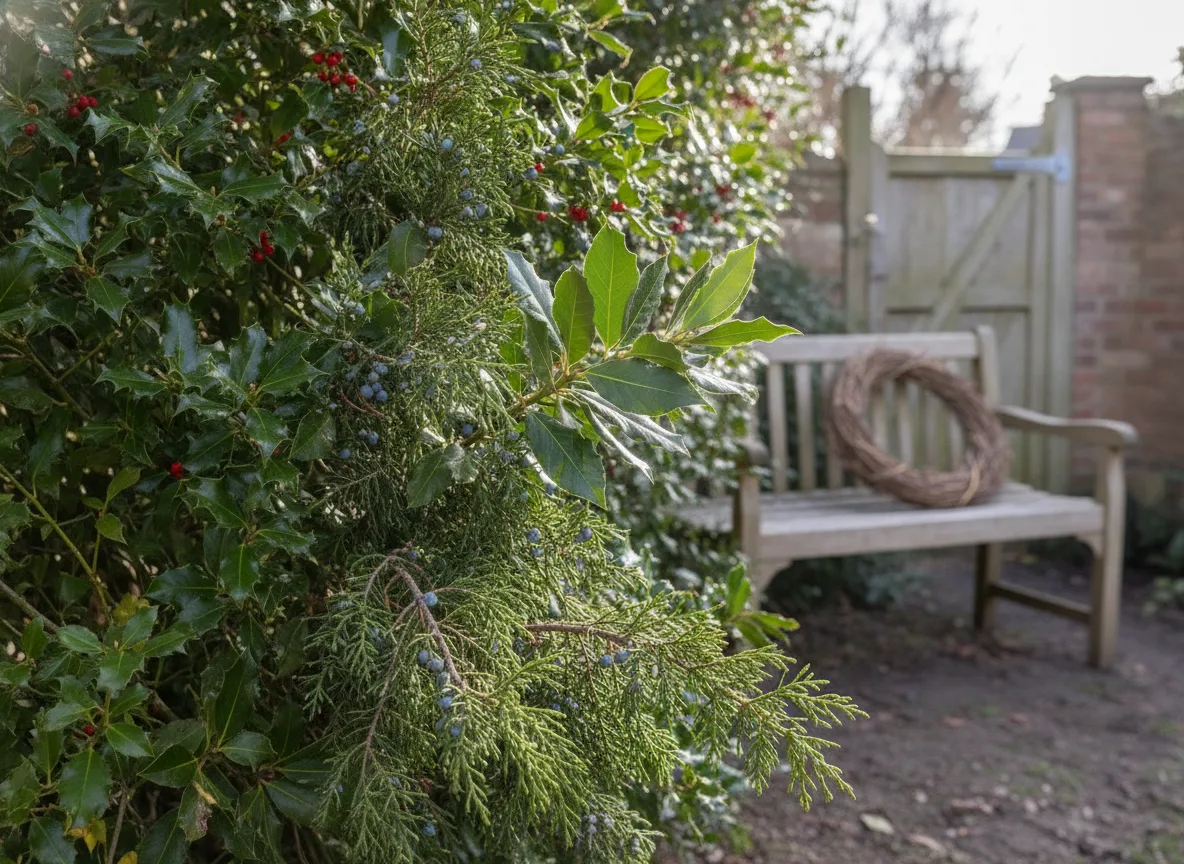 Lush green garden shrubs and an empty wreath on a wooden bench — AI-generated illustration
When to cut wreath greenery
Most evergreens keep well once cut, but they last longest when they go into the wreath fresh. Aim to cut in the first week or two of December, a day or two before you make the wreath. A wreath that hangs outside on a cold front door will easily stay green until Twelfth Night.
- Cut on a mild, dry day. Frozen stems are brittle and bruise, and the leaves on frozen holly and bay can blacken once they thaw indoors.
- Condition the stems overnight. Stand them in a bucket of cold water in a shed or garage. Woody stems drink better if you make a fresh slanting cut, or a short split up the base, first.
- Holly berries are the exception. Blackbirds and thrushes often strip a holly within days in late November. If you want berries on the wreath, cut a few berried stems as soon as they’re red and keep them in water somewhere cold, or throw a piece of netting over one branch and leave the rest for the birds.
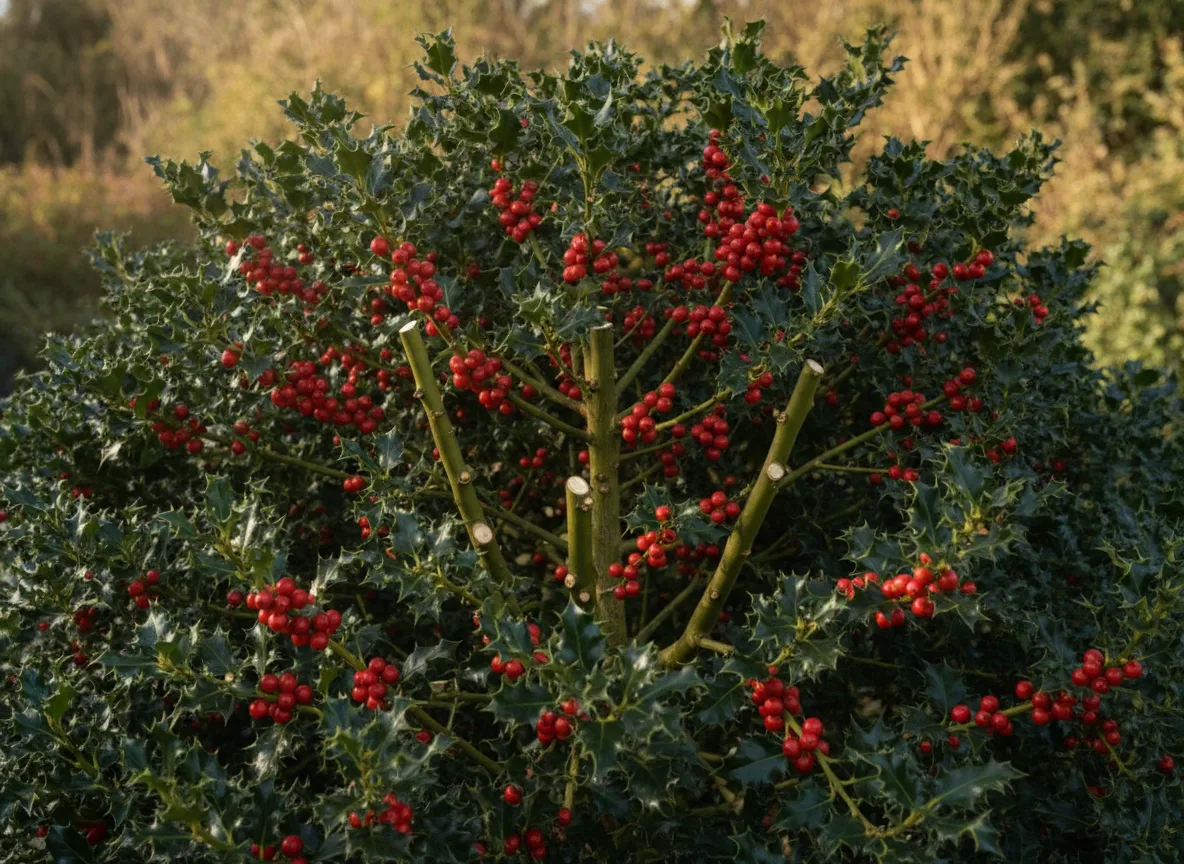 A holly bush with several cut stems visible, showing new growth — AI-generated illustration
The best shrubs to cut, and how to cut each one
Holly (Ilex)
The classic, and one of the most forgiving. Holly sprouts readily from older wood, so a few stems taken from inside the bush close over by summer. Cut each berried stem back to a side shoot or a leaf joint further down. Only female hollies carry berries, and the berries form on the previous year’s growth, so take berried stems from several places rather than clearing one side. If yours is a hedge, the main trim belongs in late summer: the holly trim that keeps its berries explains why.
Yew (Taxus baccata)
Yew makes a dense, dark green base that hardly drops a needle. It’s also one of the very few conifers that regrows from bare brown wood, so you can’t really go wrong with a few long sprays from the back of a hedge or a free-standing tree. That tolerance is why a yew hedge can be cut hard where leylandii would die. One warning: every part of yew except the red flesh of the berry is poisonous, so keep offcuts and dropped needles away from children and pets.
Leylandii, Lawson cypress and thuja
Good, soft-textured filler with a resinous smell, and most gardens have more of it than they want. The catch: these conifers do not regrow from brown wood. Only cut a spray back to a point where green foliage remains behind the cut, never into the bare inner zone. Do that and the gap never fills; see why you never cut leylandii into the brown.
Ivy (Hedera helix)
Ivy comes in two forms. The trailing, lobed juvenile stems are perfect for winding round a wreath, and you can pull them off a fence or wall by the metre. Pull, don’t snip: trailing ivy simply snaps away from its roots. The bushy adult form at the top of a wall, with rounded leaves and round flower heads, is the one feeding late bees and, later, birds. Take a few sprigs for texture, but leave most of it, the same reason flowering ivy shouldn’t be trimmed until late winter.
Bay (Laurus nobilis)
Bay leaves dry on the wreath without going limp, and they smell wonderful. Cut short side shoots back to a leaf joint, choosing stems from the inside of the crown. Avoid cutting on a frosty day: cold-damaged bay leaves brown at the edges, and in a hard winter a bay needs all its leaves.
Eucalyptus, pittosporum and elaeagnus
These give the wreath silver, pale green or variegated contrast. Eucalyptus and pittosporum both regrow well from a cut to a pair of leaves or a side shoot. Elaeagnus is tough but grows in one direction; cut the shoots that stick out of the outline, and you’ve done its tidying for the year at the same time.
Shrubs to cut lightly, or not at all
Not every evergreen should give up stems in December.
- Viburnum tinus and skimmia. The clusters you’d want are next spring’s flower buds. Every stem you take is a flower head you won’t get. If you take any, keep it to one or two; the real pruning waits for after viburnum tinus has flowered.
- Rosemary and lavender. Neither regrows from old, bare wood. Take a few soft green tips only.
- Box. Box cuttings are fine in small amounts, but if box caterpillar or box blight is around, don’t carry infected sprigs indoors and then onto the compost heap. Check under the leaves for webbing or black-streaked stems first.
- Rhododendrons and camellias. The fat buds at the stem tips are next spring’s flowers. Leave them alone.
- Anything in someone else’s garden, a park or the countryside. Ask first. Cutting greenery from the wild without permission isn’t foraging, it’s taking.
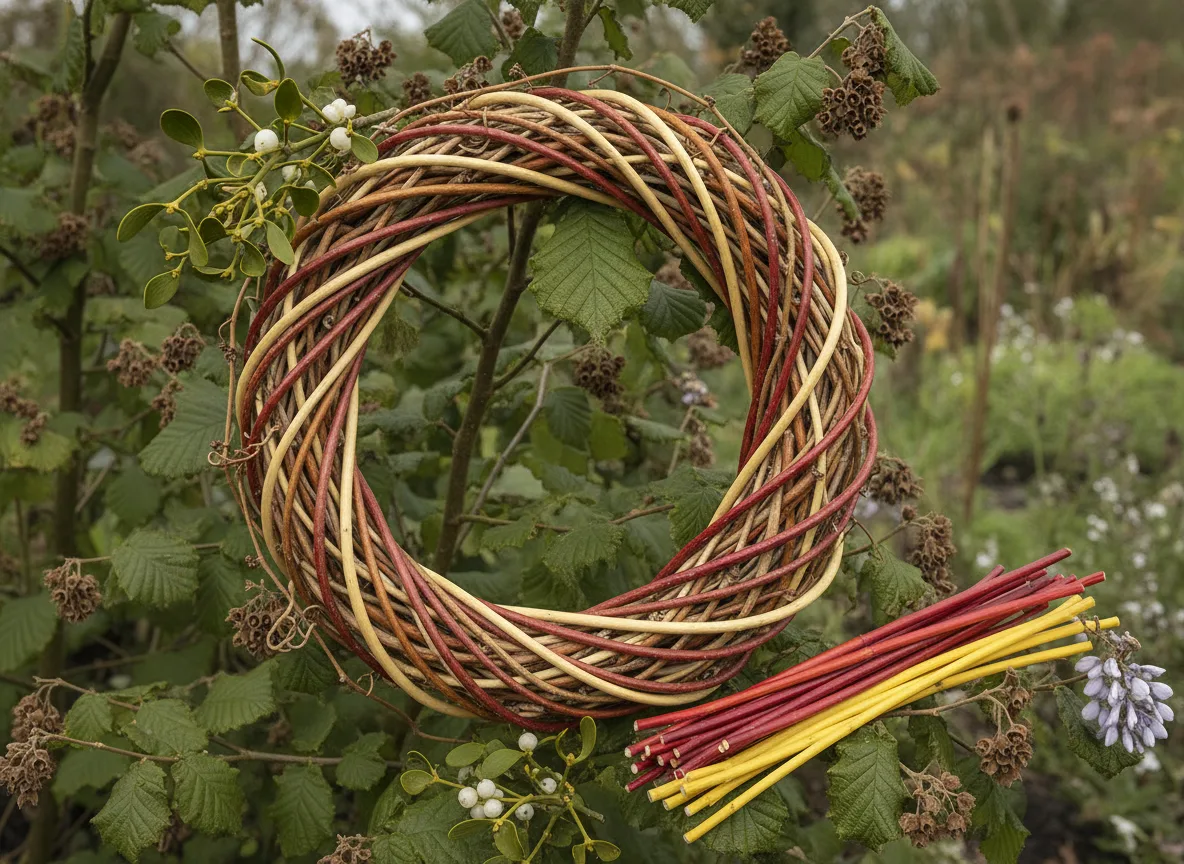 A wreath, dogwood stems, seedheads, and mistletoe — AI-generated illustration
The rest of the wreath: stems, seedheads and mistletoe
The greenery is only half a wreath. A lot of the rest comes from winter jobs you’d be doing anyway.
- The base ring. Long, pliable whips of willow, hazel, dogwood, wisteria or clematis bend into a circle without snapping. Wisteria’s long summer whips are cut back in its winter prune anyway, so that’s free material.
- Red and yellow stems. Cut a few dogwood stems right at the base for colour. The full hard cut that brings the brightest stems still happens in spring: dogwood’s winter stems come from a spring cut, and a handful taken now won’t change that.
- Dried hydrangea heads. Mophead and lacecap hydrangeas carry next summer’s flower buds just below the faded heads. Cut the head with a short stalk only, above the first fat pair of buds, so the frost protection of the rest stays in place. Why you shouldn’t prune mophead hydrangeas in autumn shows where those buds sit.
- Seedheads, cones and hips. Teasels, honesty and alliums dry well; rose hips add red where you have no holly berries.
- Mistletoe. If an old apple tree carries a heavy clump, cutting it for Christmas does the tree a favour, provided you cut below the clump and not just across the top. How to remove mistletoe from an apple tree covers the right cut.
After Christmas
When the wreath comes down, the softer greenery can go on the compost heap. Holly and conifers rot slowly, so chop them into short lengths and spread them under a hedge as a mulch instead. The wire or willow ring keeps for next year.
Then look at the shrubs you cut from. If a gap shows, it tells you exactly where to shape the plant when its proper pruning time comes round, whether that’s late summer for holly and yew or spring for most flowering evergreens. If you’d like a reminder for each of those windows, the Cresco app tracks the right pruning time for every plant in your garden.