Around now, with the leaves off almost everything else, winter jasmine (Jasminum nudiflorum) starts to look like a job. It has sprawled over the fence, flopped off its wires and grown a brown, twiggy mat on the inside. In the same weeks the first fat buds show yellow on the bare green stems. That’s the problem. A tidy-up in November cuts away the flowers it’s about to give you from now until March.
Why November is the wrong week
Winter jasmine flowers on the green stems it grew the summer before. The arching shoots you’re itching to shorten are the ones covered in tight flower buds right now. From late November until about March they’ll open, a few at a time, on bare wood, often the only bright yellow in the garden.
Cut them now and nothing grows back to replace them before spring. The shrub doesn’t make new flower buds in winter, so every stem you take off in autumn is a stem of flowers gone. It’s the same logic as leaving forsythia alone until after it blooms, just shifted a few months earlier because winter jasmine flowers so early.
Despite the name, it isn’t a close cousin in the garden to summer jasmine. It has no scent, it doesn’t twine, and it’s really a lax, wall-trained shrub rather than a true climber. Summer jasmine wants its cut after its summer flowers. Winter jasmine follows the same rule, but its “after flowering” lands in early spring.
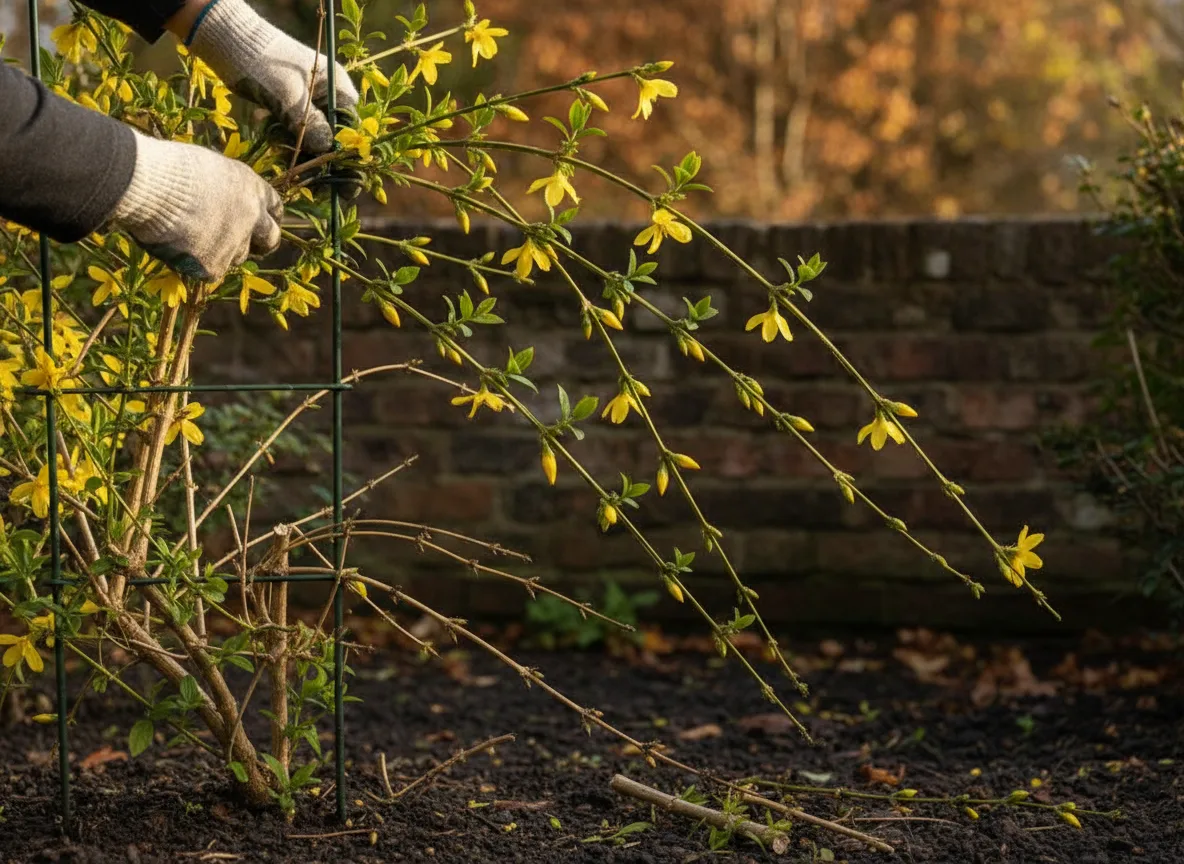 Hands tie winter jasmine stems to a support in a garden — AI-generated illustration
The only autumn jobs that are safe
You don’t have to ignore the plant until March. Three things are fine now:
- Tie in loose stems. Long shoots that have flopped off the wall can be bent back and tied loosely to the wires or trellis. This saves them from being snapped by winter wind and keeps the flowers where you can see them.
- Take out dead wood. Brown, brittle stems with no green in them won’t flower. Cut them out at the base or back to live green growth. Scratch the bark with a thumbnail if you’re unsure: green underneath means alive.
- Clear what’s in the way. If a stem is blocking a path or a gate, shorten that one stem. You lose its flowers, not the whole display.
Anything more than that waits.
The March cut: back to two buds
The window opens when the last flowers drop, usually in March, sometimes early April after a cold winter. Prune within a few weeks of that. The plant then has the whole summer to grow new green stems, which will ripen and set buds for next winter.
The main cut is simple:
- Shorten every stem that flowered back to two or three buds from where it joins the main framework. Cut just above a pair of buds; winter jasmine’s buds sit opposite each other, so you’ll see them in pairs.
- Keep the framework. On a wall-trained plant, the older stems tied to the wires are the skeleton. Leave them in place and prune the side shoots that grow off them.
- Tie in a few new long shoots where there are gaps in the framework, spreading them out in a fan rather than bunching them upright.
Done every year, this keeps the plant flat against its support, with fresh flowering shoots all over the surface instead of only at the top.
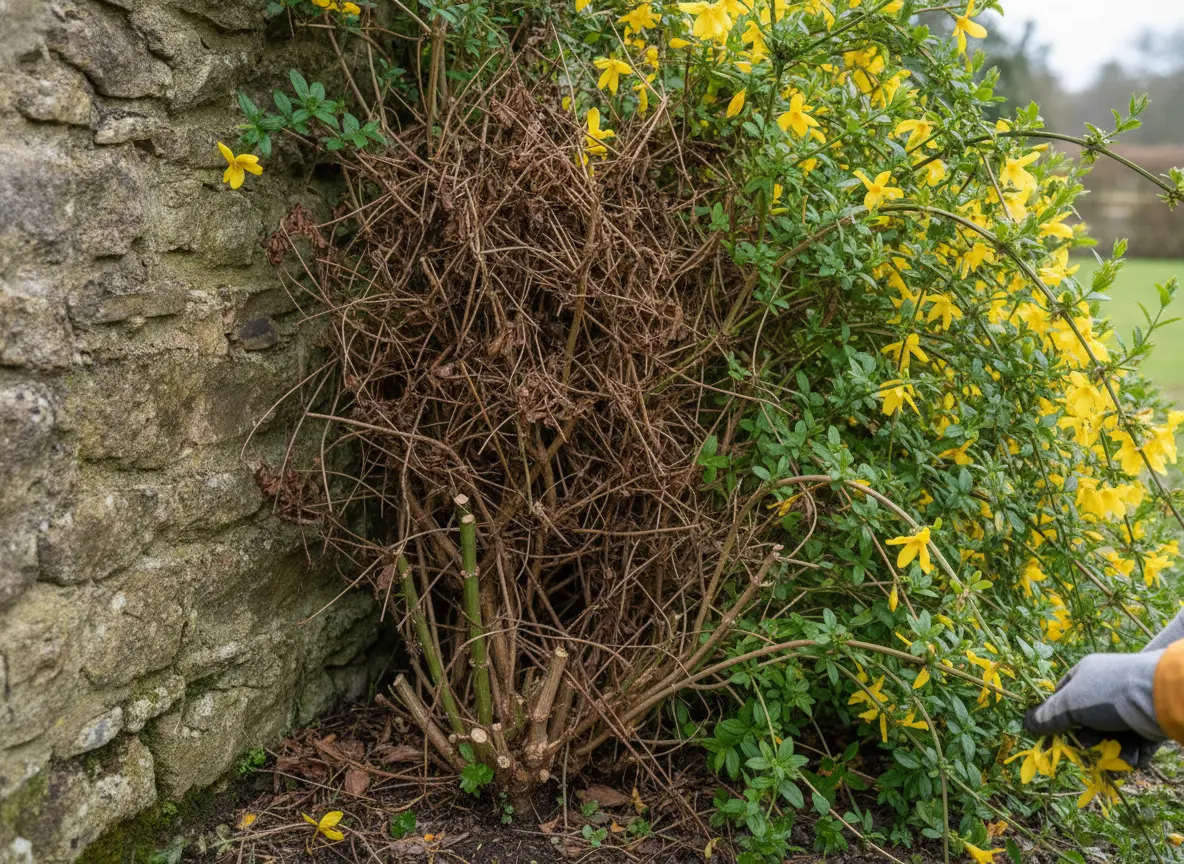 A winter jasmine shrub with brown, dead stems showing inside — AI-generated illustration
Clearing the brown mat inside
Left unpruned for a few years, winter jasmine builds a thick layer of dead, brown stems underneath the green outer layer. That mat holds damp, shades out new growth and makes the whole plant stick out further from the wall each year.
Every two or three years, in the same March window, take out about a quarter of the oldest stems at the base. Cut them low, close to the ground or to a strong young shoot, and pull the dead material out by hand. It’s a fiddly job, but it lets light back into the middle and keeps the plant from going bare at the bottom.
Renovating a tangled, overgrown plant
If the shrub is beyond tidying, it can take a hard cut. Straight after flowering, cut the whole plant back to about 60 cm from the ground. Winter jasmine is very forgiving and will push out plenty of new shoots from the old stems over the summer.
The cost is one winter without flowers, because the stems that would have bloomed are gone. Through summer, choose the strongest new shoots, tie them into a fan and remove weak or crossing ones. They’ll flower the winter after. If losing a whole season feels like too much, spread the renovation over two or three springs, taking out a third of the old growth each time.
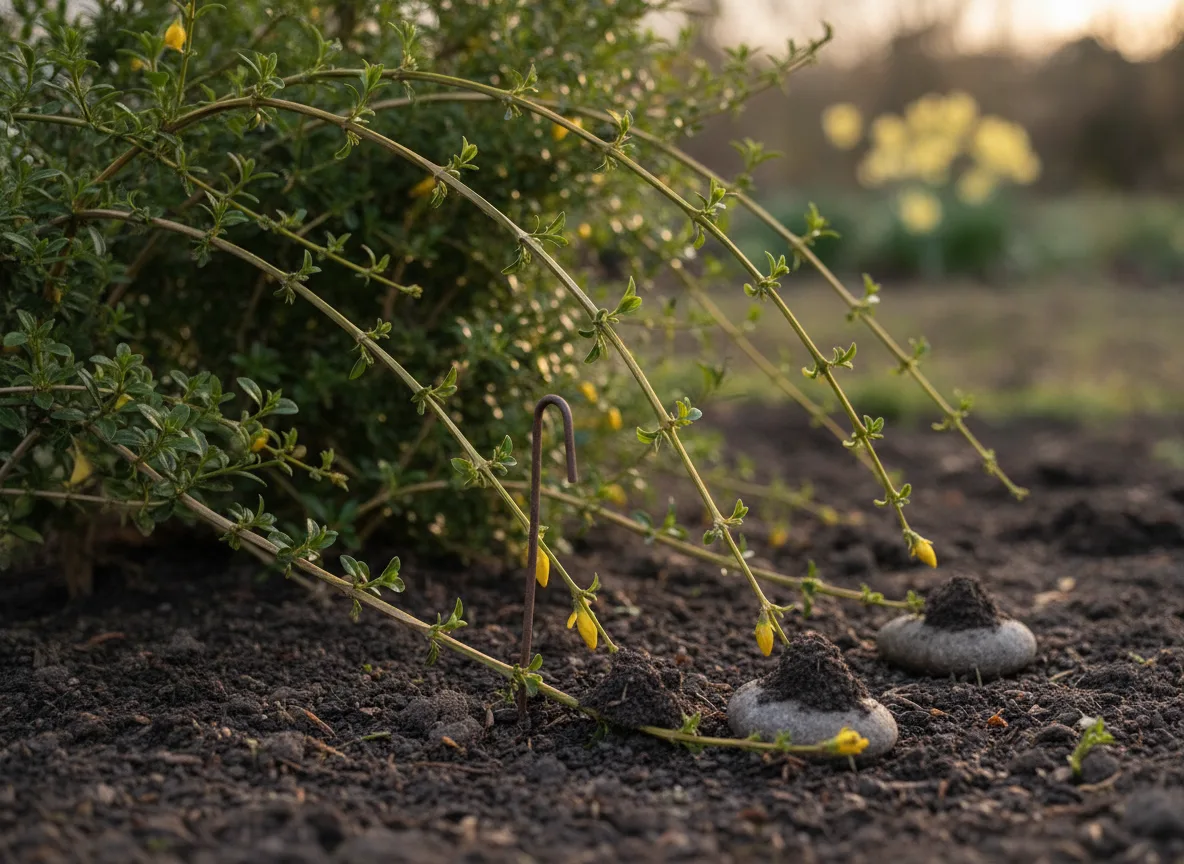 Winter jasmine stems pinned to the ground with wire and stones — AI-generated illustration
Free plants from the stems that touch the ground
Winter jasmine roots wherever a stem tip lies on soil, which is partly why it spreads so easily. You can use that. In autumn, pin a low, flexible stem to the ground with a bent wire or a stone, cover it with a little soil and leave it. By next autumn it will usually have rooted; cut it from the parent and move it where you want a new plant.
The prunings you take in March also root well, the same way many shrubs do from hardwood cuttings. Push 15–20 cm lengths into a pot of gritty compost and keep them somewhere sheltered.
In short
Winter jasmine flowers on last summer’s green stems, so leave the shears in the shed this autumn. Tie in loose shoots and clear dead wood, then wait. When the flowers fade in March, cut the stems that flowered back to two or three buds, and thin out the oldest wood every few years. If you track your garden in Cresco, it schedules that March cut for each plant based on your local weather, so you don’t have to remember it.